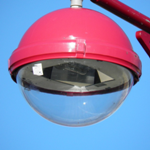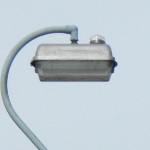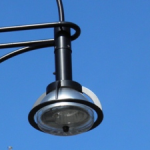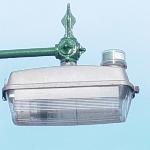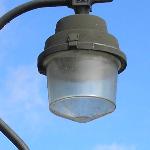
Local Top-Entry Thorn Beta 5s

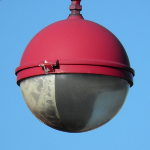
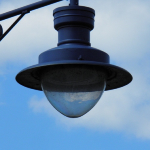
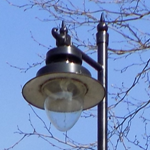
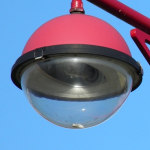
 The Beta 5 is a very common lantern pretty much all over the UK - this includes Derbyshire; where the lantern is probably the commonest fitting seen on residential streets. It has been used here for many years and so three nearby streets may have several versions of the Beta 5 along them - as is the case below.

For side-entry examples, please click here.


The first example is an early top-entry Beta 5 mounted to an unsleeved Stanton column in Darley Abbey. The lantern is controlled by a Zodion SS55 two-part cell.

(The column was replaced at some point in mid 2005.)

Another Darley Abbey example; again with a Zodion two-part cell. This column, for the time being, remains in-situ.


A slightly later example here is seen mounted to a Revo swan neck on a Bleeco cast iron column. This Beta 5 probably replaced a top-entry tungsten fitting - which would quite likely have been an ESLA.


The opposite setup now - a Revo column and Bleeco bracket - notice how the photocell only just fits below the finial decoration!


This is the more modern equivalent - there are many streets in Derby with identical installations to this. I am not sure if the side-entry brackets have always had these top-entry converter sections fitted; or if side-entry lanterns were fitted at one time. If this was the case, the lantern choice would almost certainly have been a small mercury lantern.


This Beta 5 is fitted to a restored Revo pole bracket in the South Derbyshire village of Coton-in-the-Elms.


Old meets new here! This unusual setup can be seen in Findern and is due to road realignment in the mid 1990s as a result of the A50 Southern Derby bypass being constructed. What was previously part of Heath Lane is now a public footpath, lit with side-entry Beta 5s on Abacus drop-down columns. The original 'road' lanterns, top-entry Beta 5s mounted to wooden Electricity Board poles, still survive, although they have long since been disconnected.

The lantern closest to the remaining road has had its lamp removed (left photograph), whereas the lamp remains in the other lantern (right photograph). I wonder if it would still work if powered up again these days. The Sirebeck S300 cells fitted to both lanterns are a giveaway sign of when the lanterns were last used.


BACK TO LOCAL LANTERNS PAGE

BACK TO INDEX PAGE

© 2002-2008 Mike Barford