Abacus Unknown
Lantern acquired in June 2026.
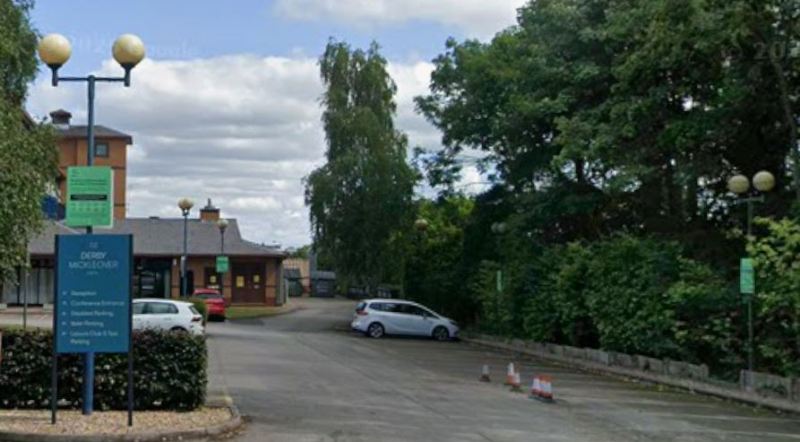
This lantern was one of a number that were employed to illuminate the car park of the Best Western Derby Mickleover (formerly, the Mickleover Court) Hotel from its opening in 1992 to June 2026, when LED floodlights were fitted to the existing brackets instead. While these ran internal-ignitor 70 Watt SON lamps originally, in December 2023, they were converted to run LED 'corn' lamps instead. Presumably, the brightness of the new lamps was considered to be too dim, and so the floodlights were installed instead. This lantern is actually made up of parts taken from several lanterns, as the conversion saw the internal wiring altered somewhat - in one lantern, the gear components were removed completely, and a GES (Goliath Edison Screw) E40 lampholder had been fitted instead of the original E27 one. In other lanterns, the components remained, but were disconnected. In one such example, a replacement Parmar ballast had been installed in place of the original Philips one, but was a poor fit, and the internal cover had been omitted when the lantern was rebuilt by contractors at the time.
This image, taken from Google Street View, shows a selection of the globe lanterns installed around part of the car park.
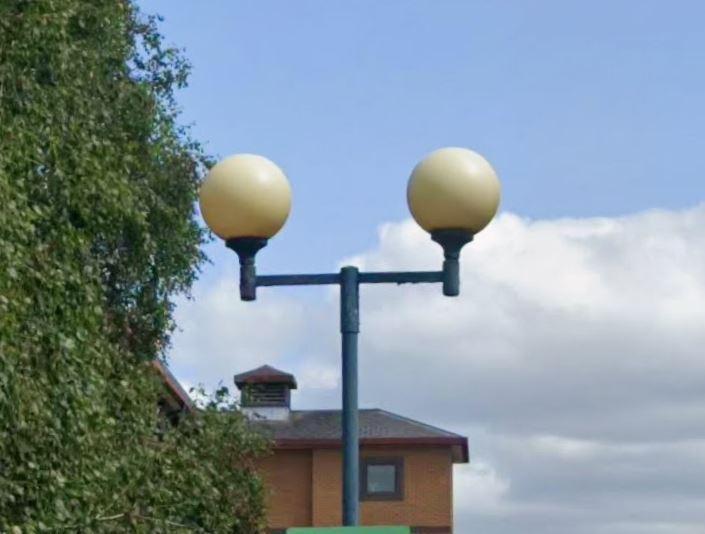
A close-up of the first column encountered when entering the car park.
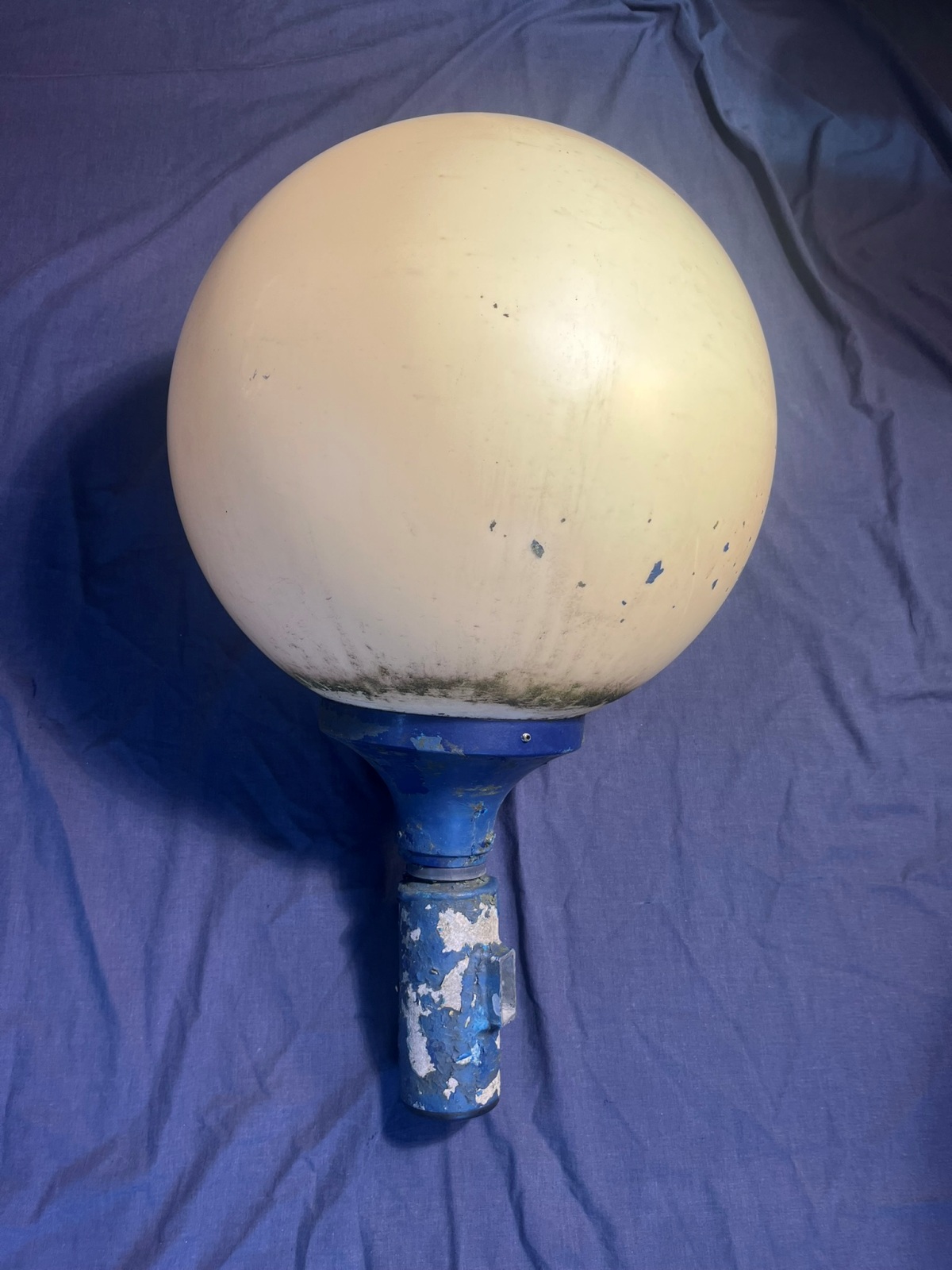
Moving on to June 2026, and work was well underway to replace the lanterns. Perhaps surprisingly, only one of the globes was broken during this process.

The lanterns are believed to be an Abacus product (or at least, sold by Abacus in the UK, but made by Indalux in Spain in reality) as the columns were produced by them, and much of the other original lighting infrastructure in the car park carried their branding too. All still had their bracket connections attached - these being cut off with an angle grinder, with the floodlights being attached to the outreach arms.
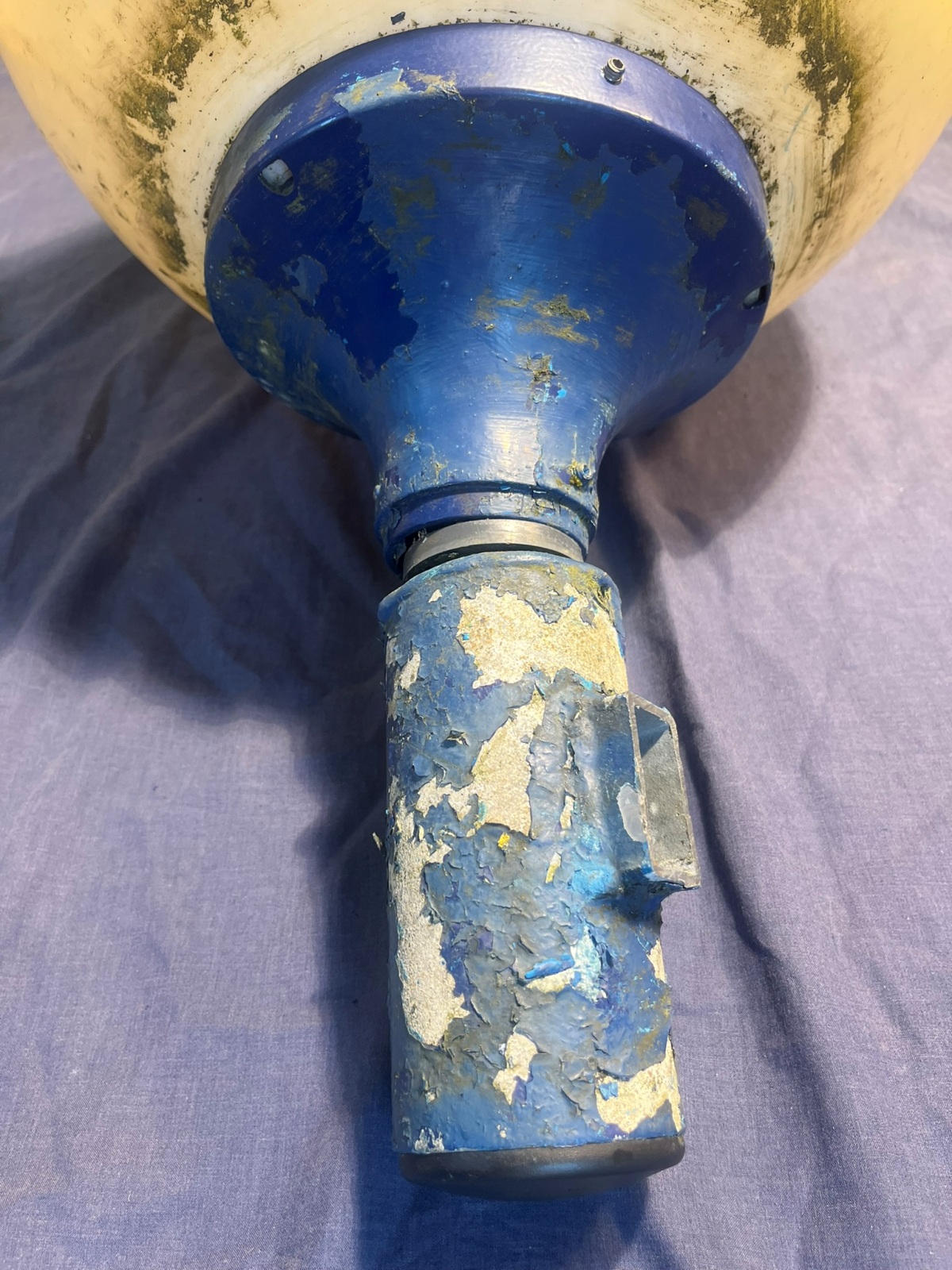
The paint is flaking heavily from the bracket stumps, as it is from the lantern bases. Another indicator that the lanterns were intended for the European market is that they utilise 60 mm diameter post-top spigots, rather than the 76 mm diameter that is more common in the UK. The globes attach to the base sections using a bayonet-type action, and are then secured with a small single grub screw (visible here). The bases also attach to the brackets with narrow grub screws, and, of course, these are jammed - in fact, trying to remove them resulted in the screws cracking.
Removing the globe reveals the internal construction, complete with a baffle plate that would be positioned directly above the lamp (ordinarily - the pop rivet holding it steady has worked loose). This seems a rather token gesture at limiting the amount of light sent skyward, considering that the globe itself has no form of optical control, other than being translucent! The original blue paint finish still exists on the internal metalwork that was not exposed to the elements.
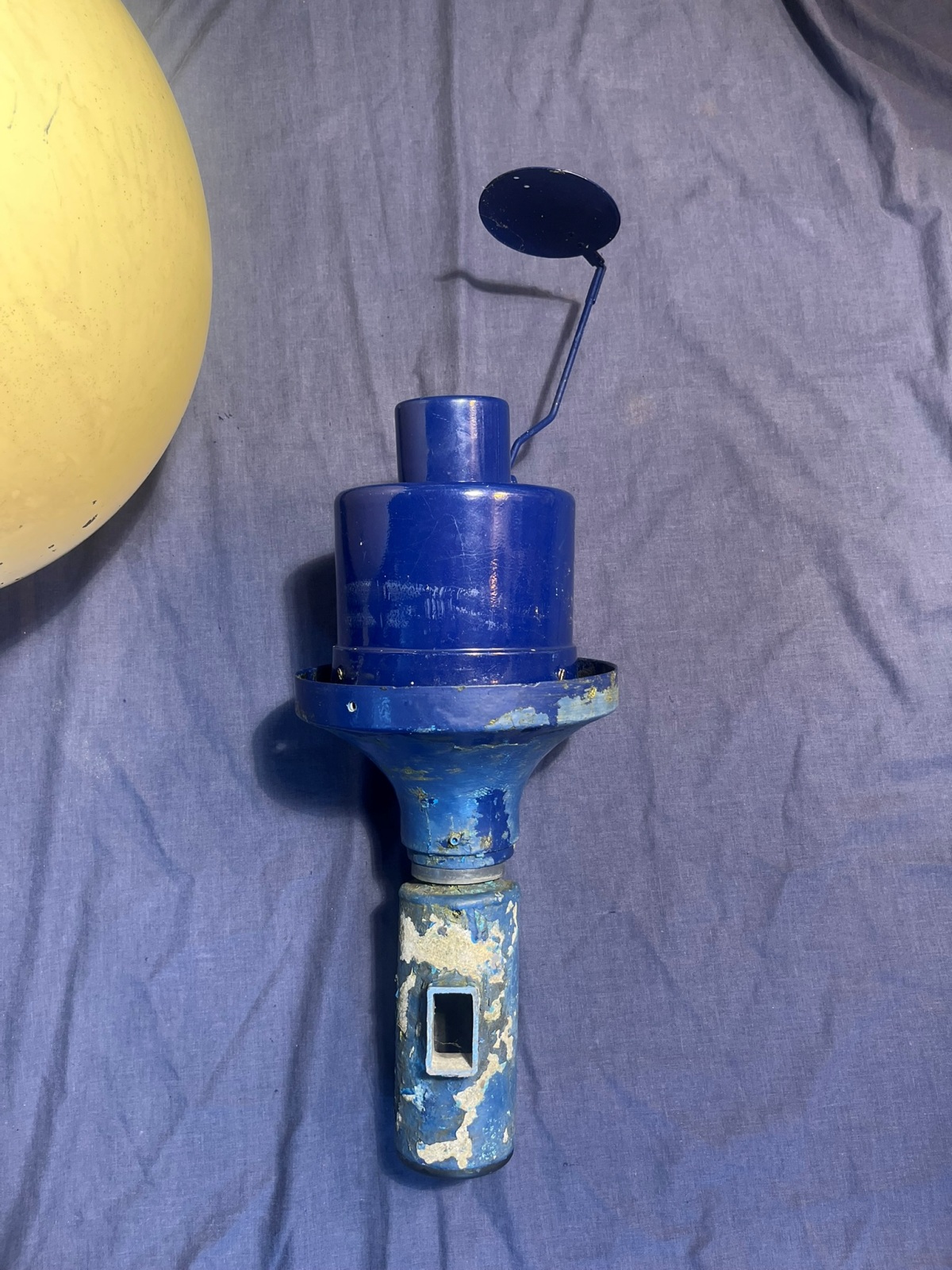
This metal cover obscures the internal wiring and gear components. This view reveals the lampholder within the cover.
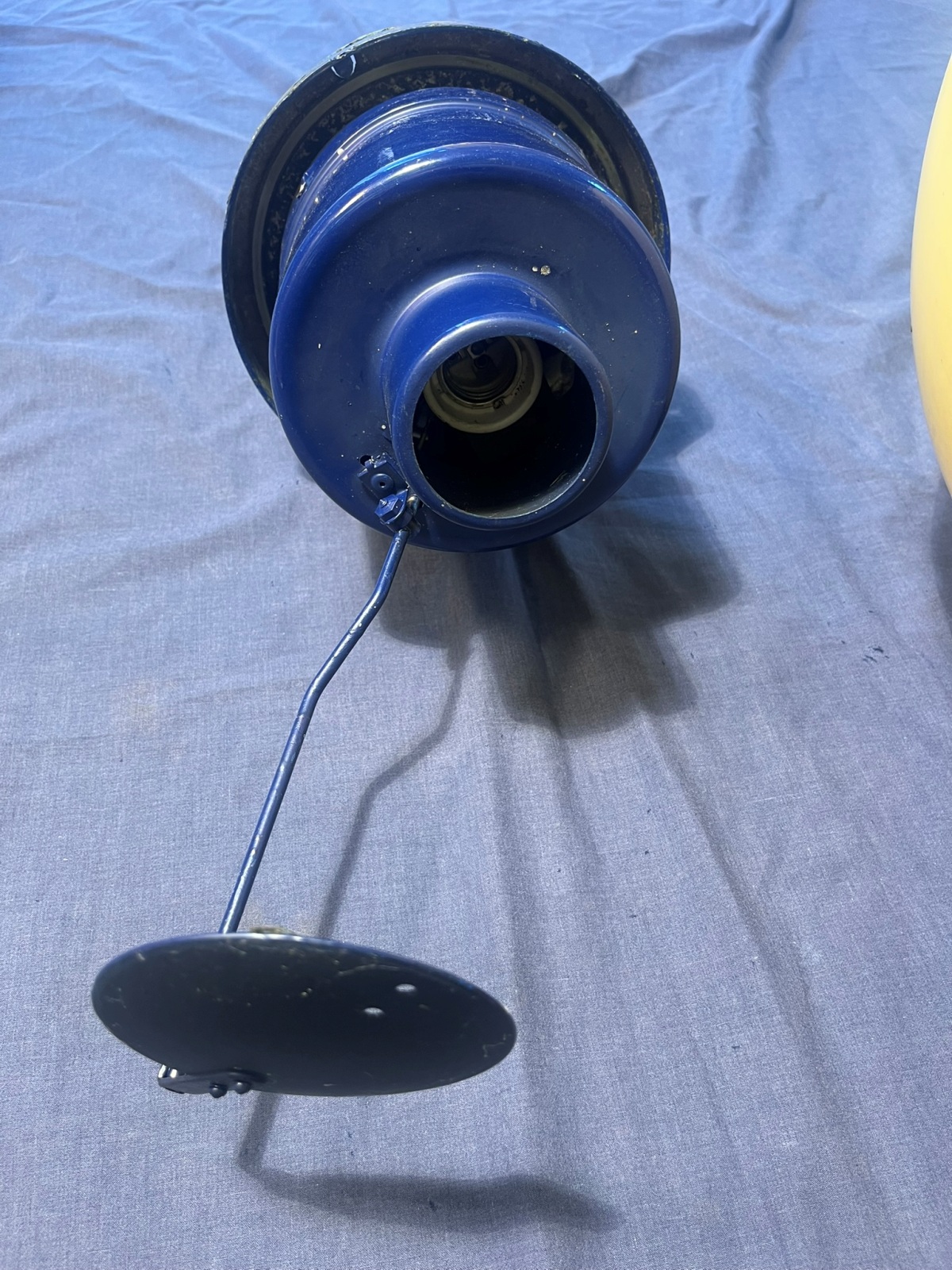
Removing the cover reveals the internal construction.
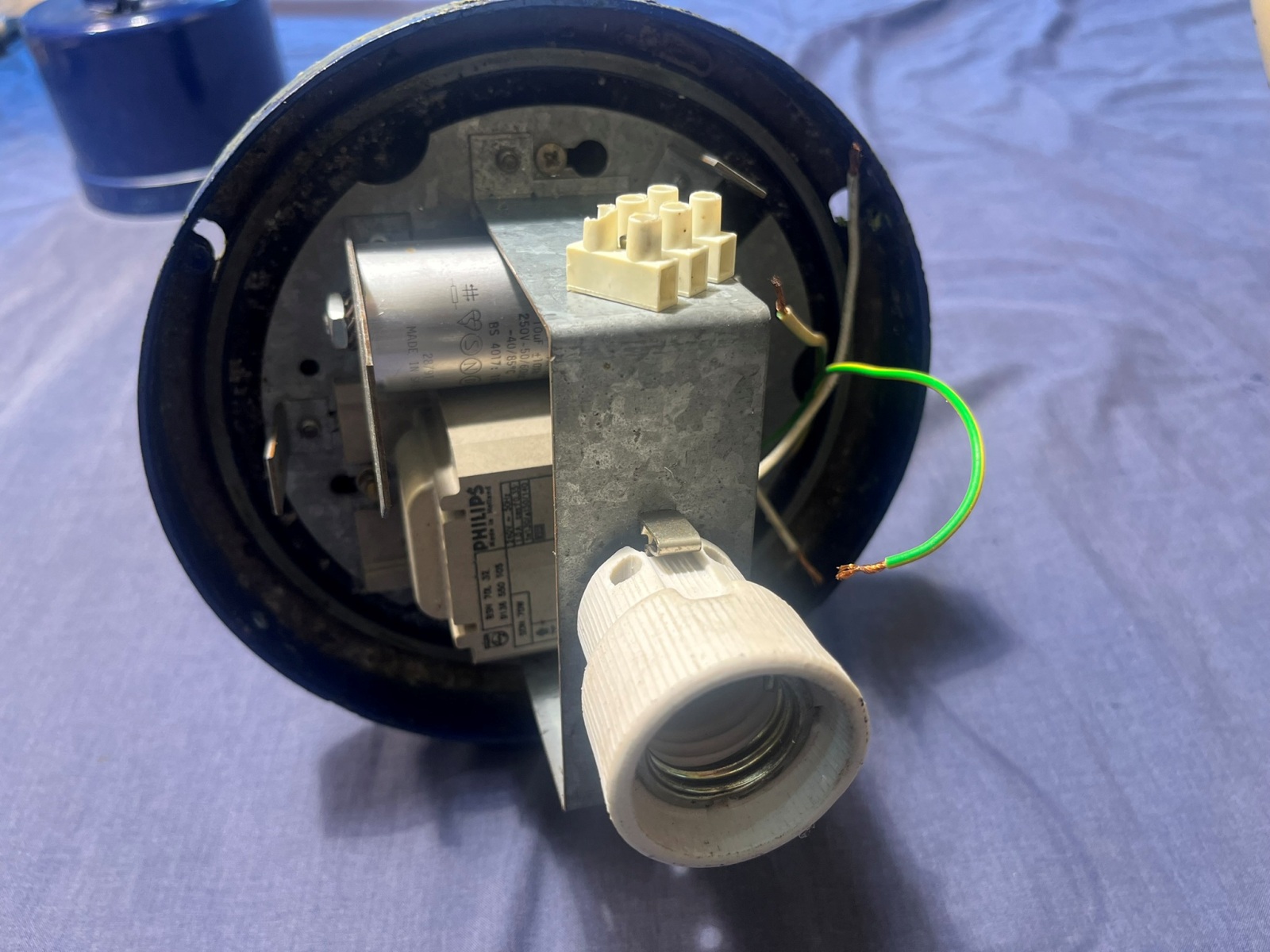
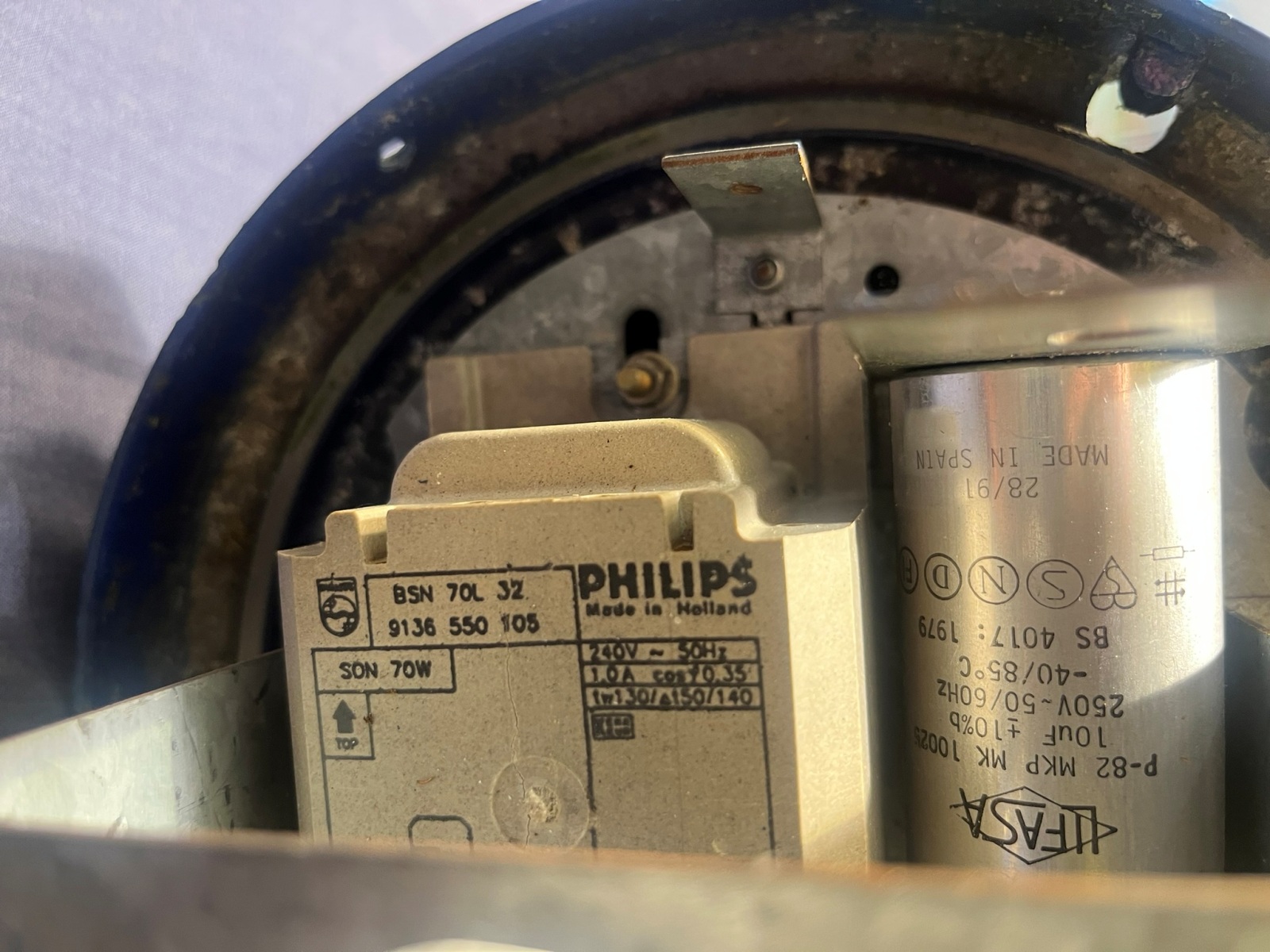
The gear comprises a Philips BSN 70L ballast and Lifasa - a company founded in Barcelona in 1949, and still in business to this day - 10 µF Power Factor Correction capacitor. This includes the manufacturing date of 28/91, meaning that it was produced between the 8th - 14th July 1991.
This video features me talking about the lantern.
CLICK HERE TO MAKE A MONETARY DONATION
© 2002 - English Street Lights Online