Trafford Park Road / Ashburton Road West, Trafford Park / Main Avenue, Mosley, Stretford, Trafford, Greater Manchester With thanks to AgentHalogen_87 for informing me of these Survivors. Trafford Park itself has historical links to the street lighting industry, thanks to American businessman and engineer George Westinghouse constructing a factory there in 1899 for the new British Westinghouse company (later becoming Metropolitan Vickers ("Metrovick") after the joint obtaining of British Westinghouse's holding company by the Metropolitan Carriage, Wagon and Finance Company (Metro-Cammell) and Vickers Ltd in 1917). In 1928, Metrovick merged with former rivals British Thomson-Houston; itself, the British division of the American Thomson-Houston (General Electric) group - the new merged parent company being known as Associated Electrical Industries (AEI), although both companies continued to operate as separate entities until 1959, when rivalries between the two companies saw them consolidated, finally, under a single AEI banner. The AEI name lasted until 1967, when a takeover by the British General Electric Company Plc. saw it disappear. AEI's Street Lighting division would become part of Sir Jules Thorn's Atlas Lighting, which was part of Thorn Electrical Industries, and already ran the lighting division as a joint operation with AEI since 1964. The much more lowly Wardle Engineering was also based in the Trafford area. Today, the area remains a vast industrial estate, and several notable lighting installations are to be found amidst the labyrinth of roads and industrial premises.
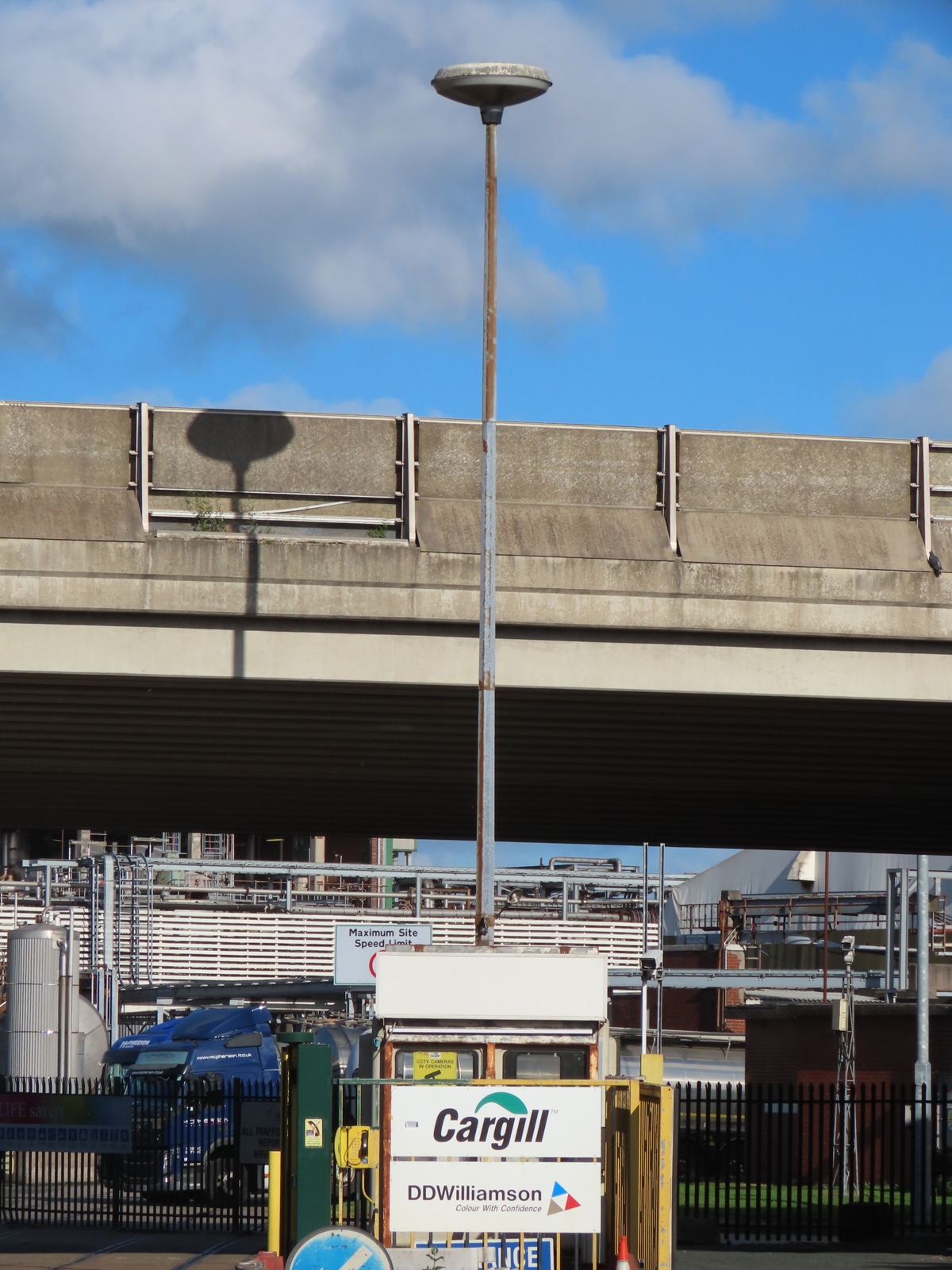
This Thorn Gamma 4 is attached to a 10 m sectional sheet steel column on Trafford Park Road, near the Centenary Way flyover.
Unlike my own 3 ft example of a Gamma 4, this appears to be the larger 4 ft example - my quest to find such an example is, apparently, over - I just need to save it for the Collection now! Notice that the three pegs that are required to support the outer section of the base casting, along with the bowl, during maintenance, are not fitted to the column; however, as it has a tapering shaft, the casting would not be able to slide too far down the column anyway.
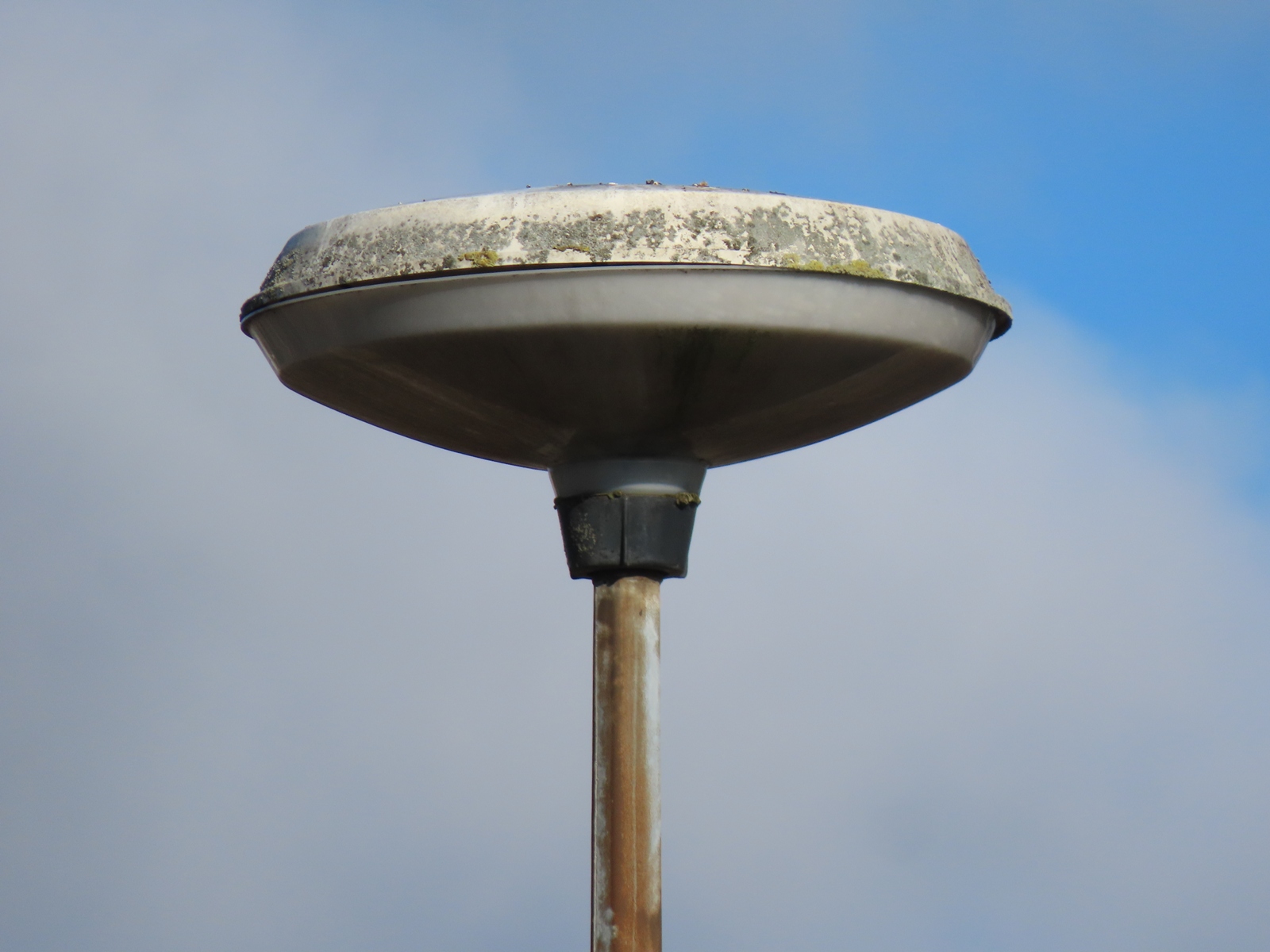
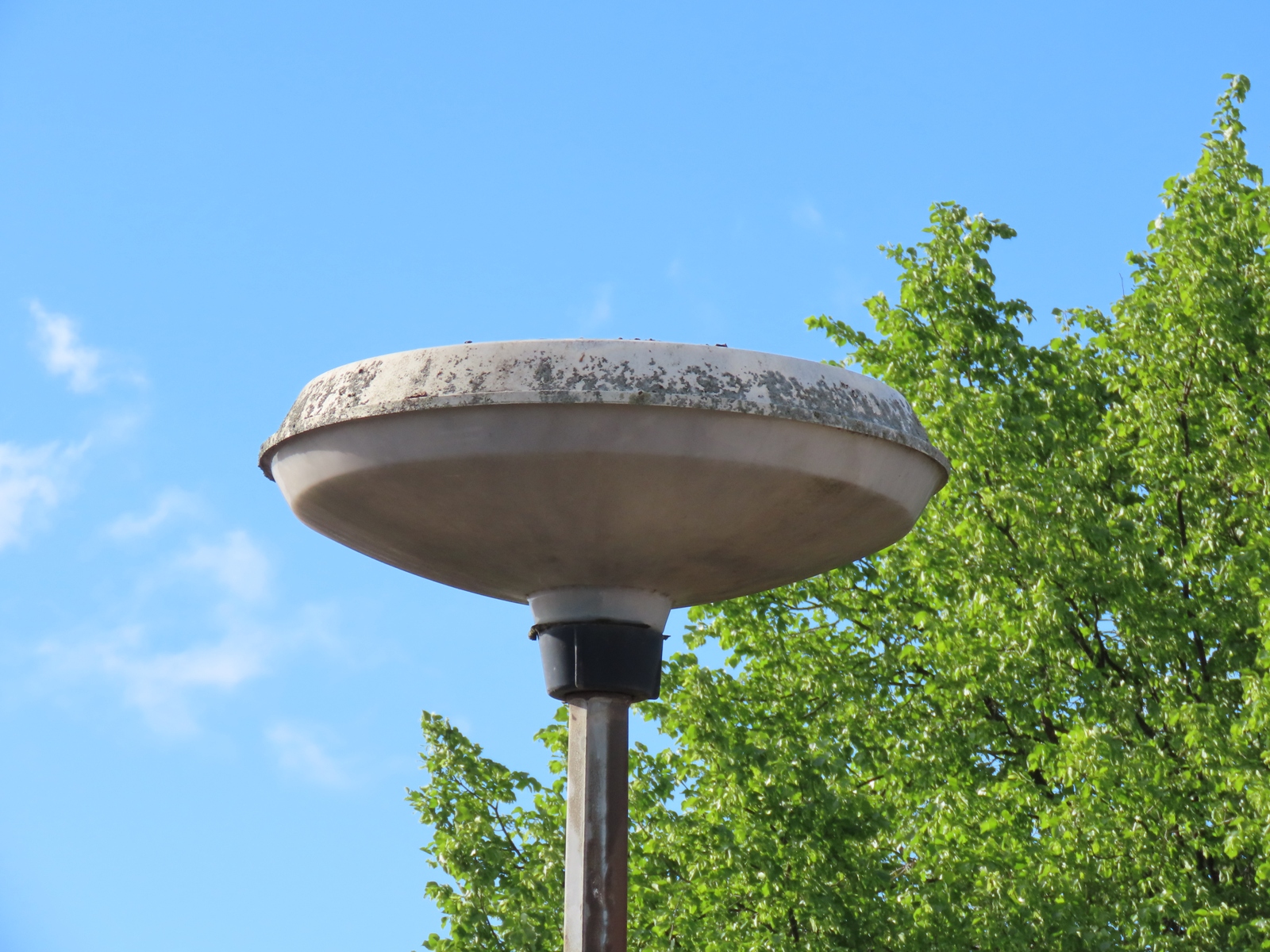
Both versions of the Gamma 4 could accommodate a maximum of three 250 - 400 Watt MBF (mercury vapour) and SON (high pressure sodium) lamps. Earlier catalogues stated that two 500 Watt GLS (tungsten filament) lamps, or three 135 Watt SOX / 140 - 200 Watt SLI/H (low pressure sodium single / linear) lamps (4 ft version only), were all options too. The picture below was taken from the vantage point of Centenary Way.
Ashburton Road West is home to this shorter column supporting an early example of a Thorn Alpha 9, for 90 Watt SOX lamps, with the lamp control gear housed within the lantern.
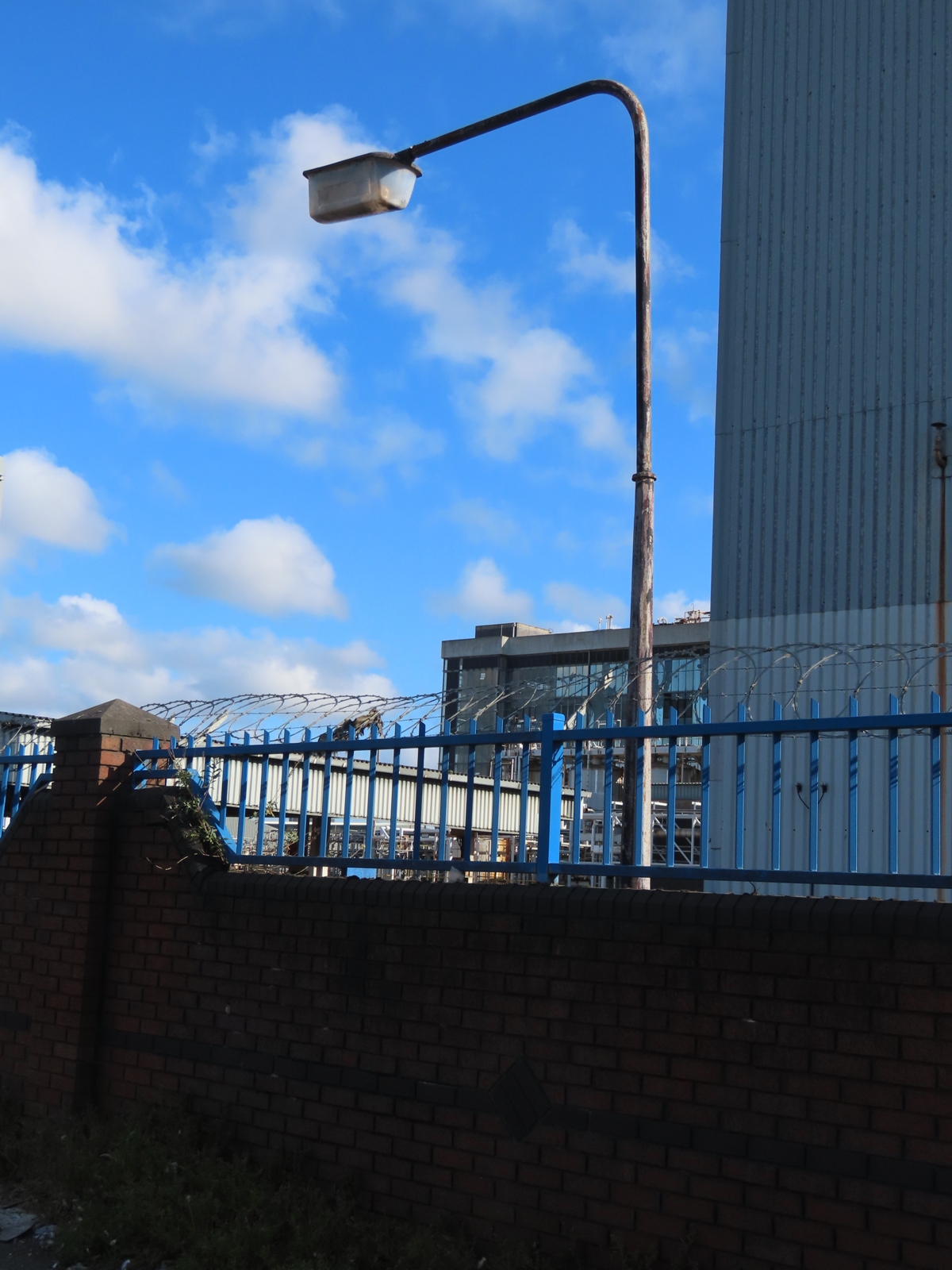
Ignoring the attention-seeking, photo-bombing gull, given the history of this site, this lantern could be labelled as an AEI Amber instead; in which case, it would be the final incarnation of the Amber before becoming known as the Alpha 9.
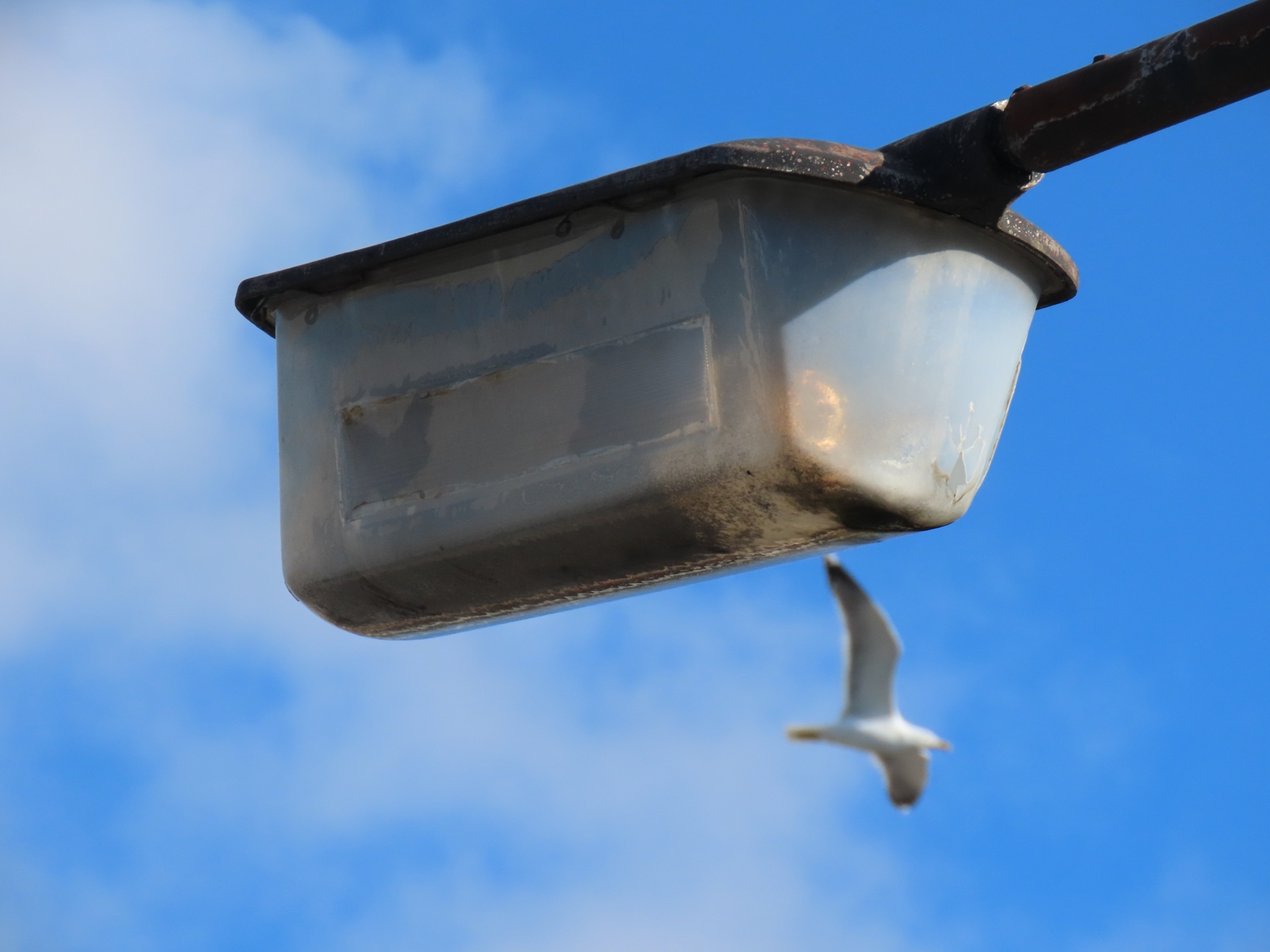
These lanterns feature a characteristic deep bowl - a necessity, owing to the size of the ballasts used on these fittings. The bracket entry design would be revised on later versions of the Alpha 9.
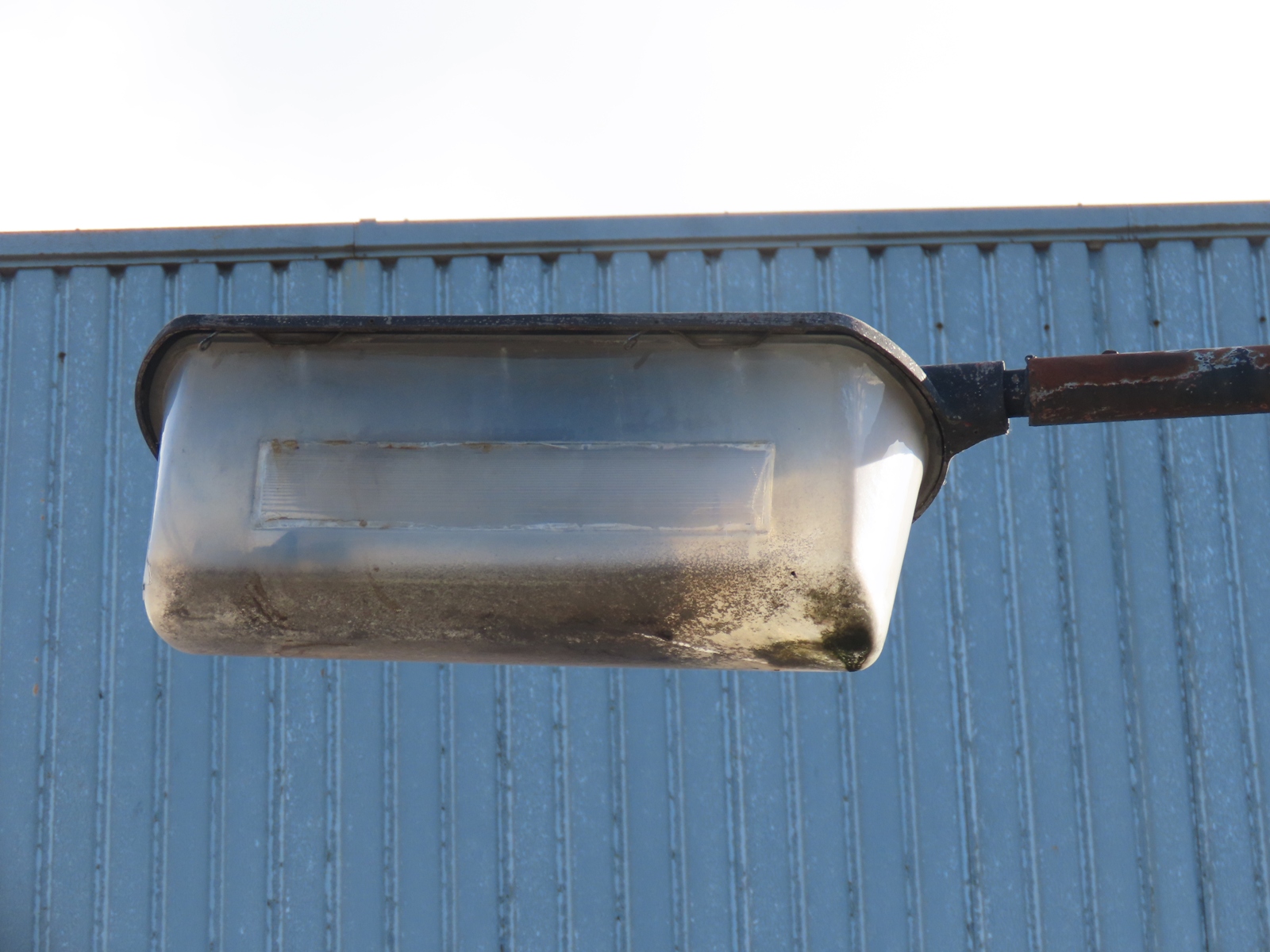
A lamp is still fitted within the lantern, though the likelihood that it still works is rather low.
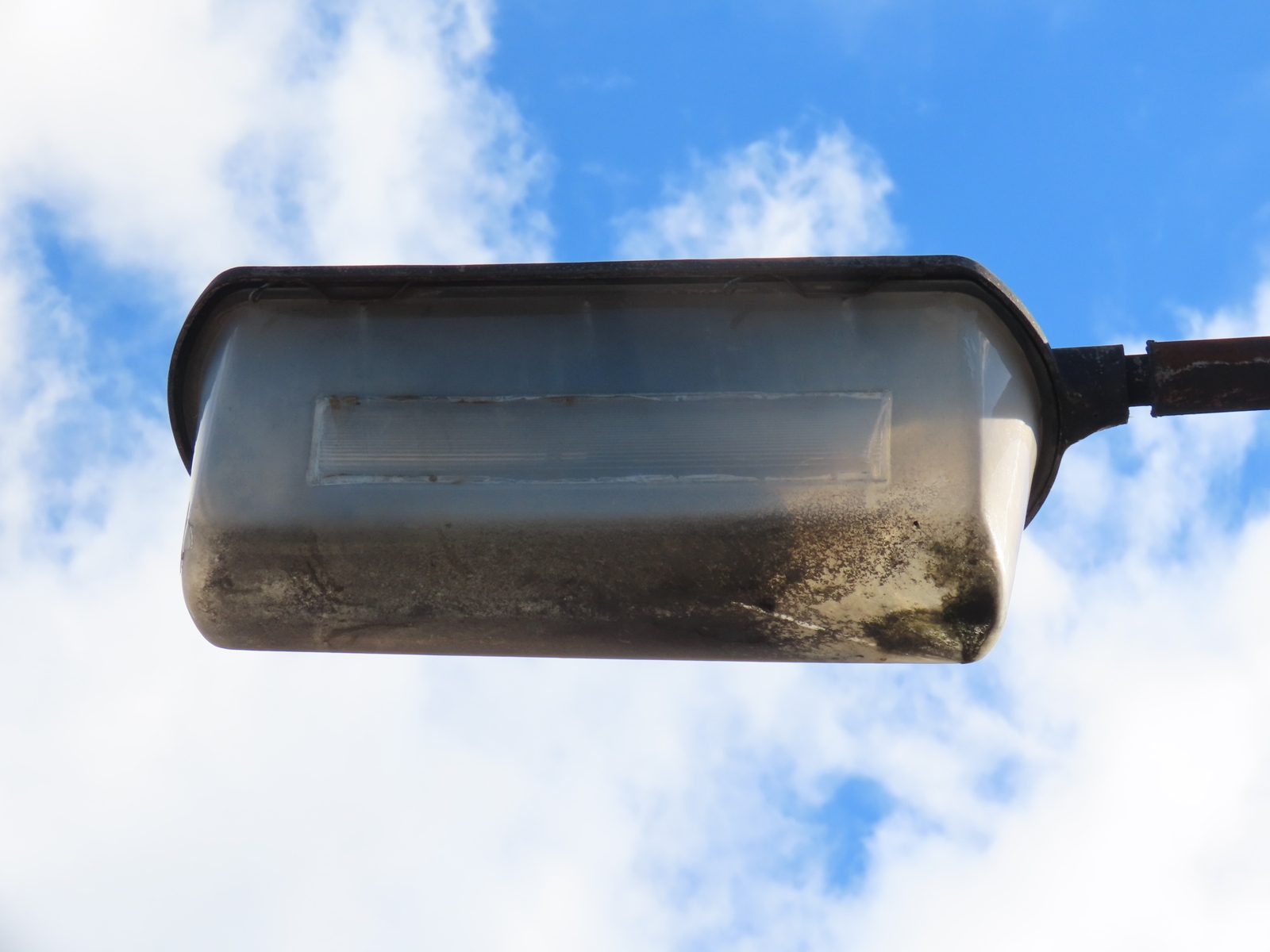
The bracket has twisted by 90 degrees, causing it to be parallel with the perimeter fence, rather than perpendicular. The modern Glasdon Lumino City sign light unit provides an interesting comparison with the old lantern.
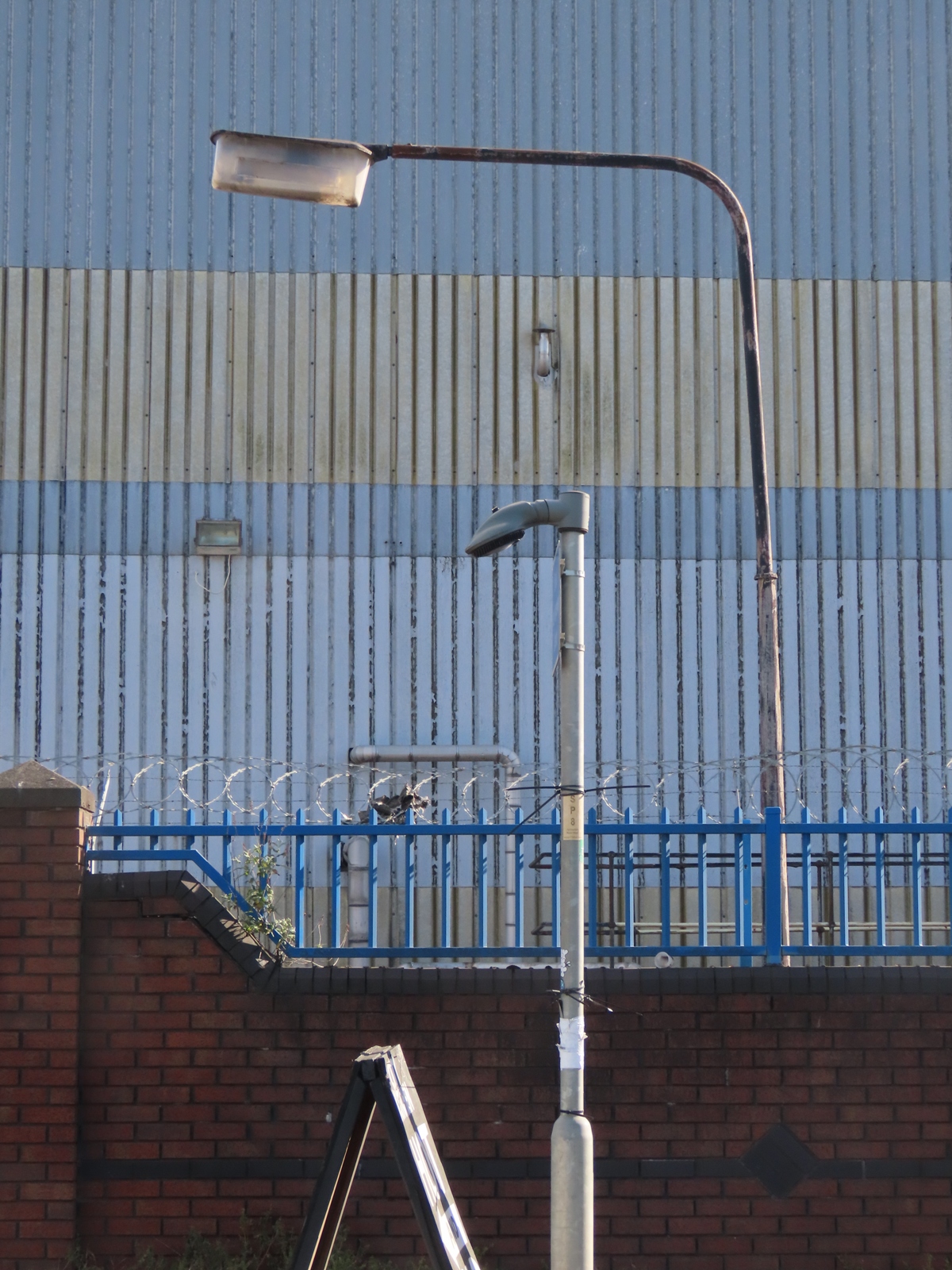
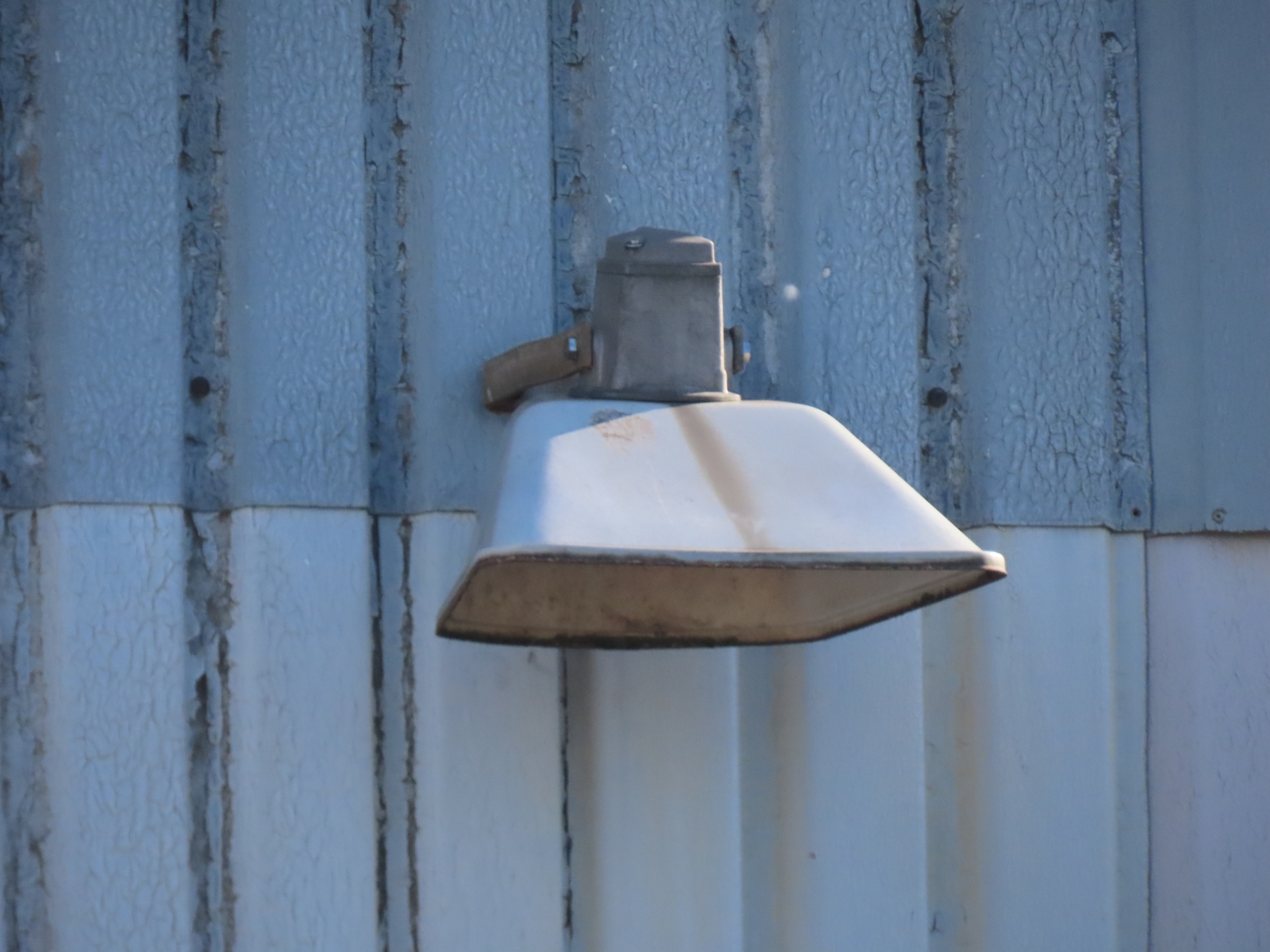
This shovel floodlight was attached to a nearby building within the same compound as the column.
Although the original Westinghouse factory is long gone, with GEC becoming the eventual owner of that electrical group, a legacy item still remains on Main Avenue, which was sandwiched between two of the imposing factory buildings - this Z8426 is attached to a Concrete Utilities-made 25 ft (8 m) 'Highway-X' column with single-arm, side-entry 'Highway' bracket.
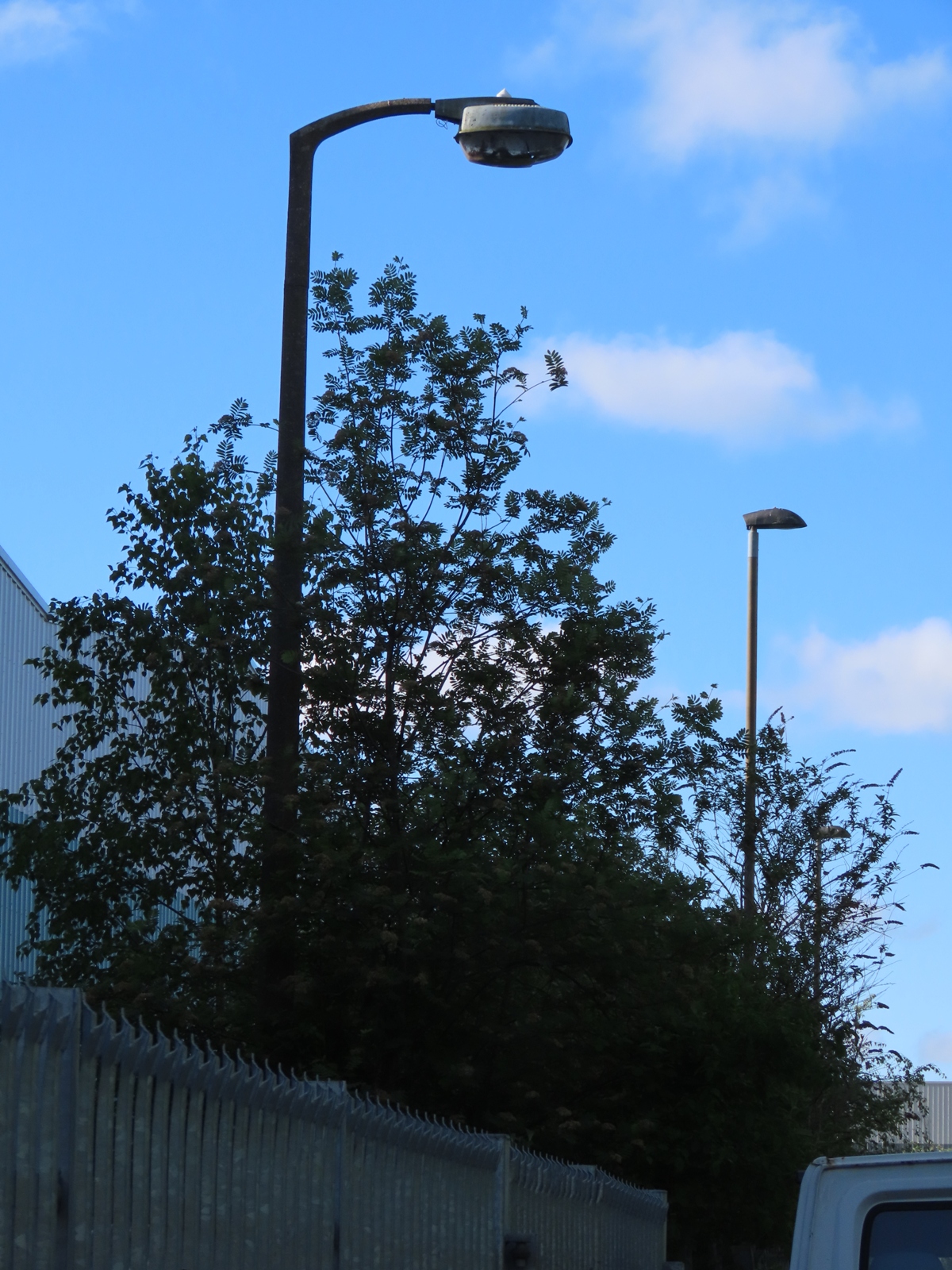
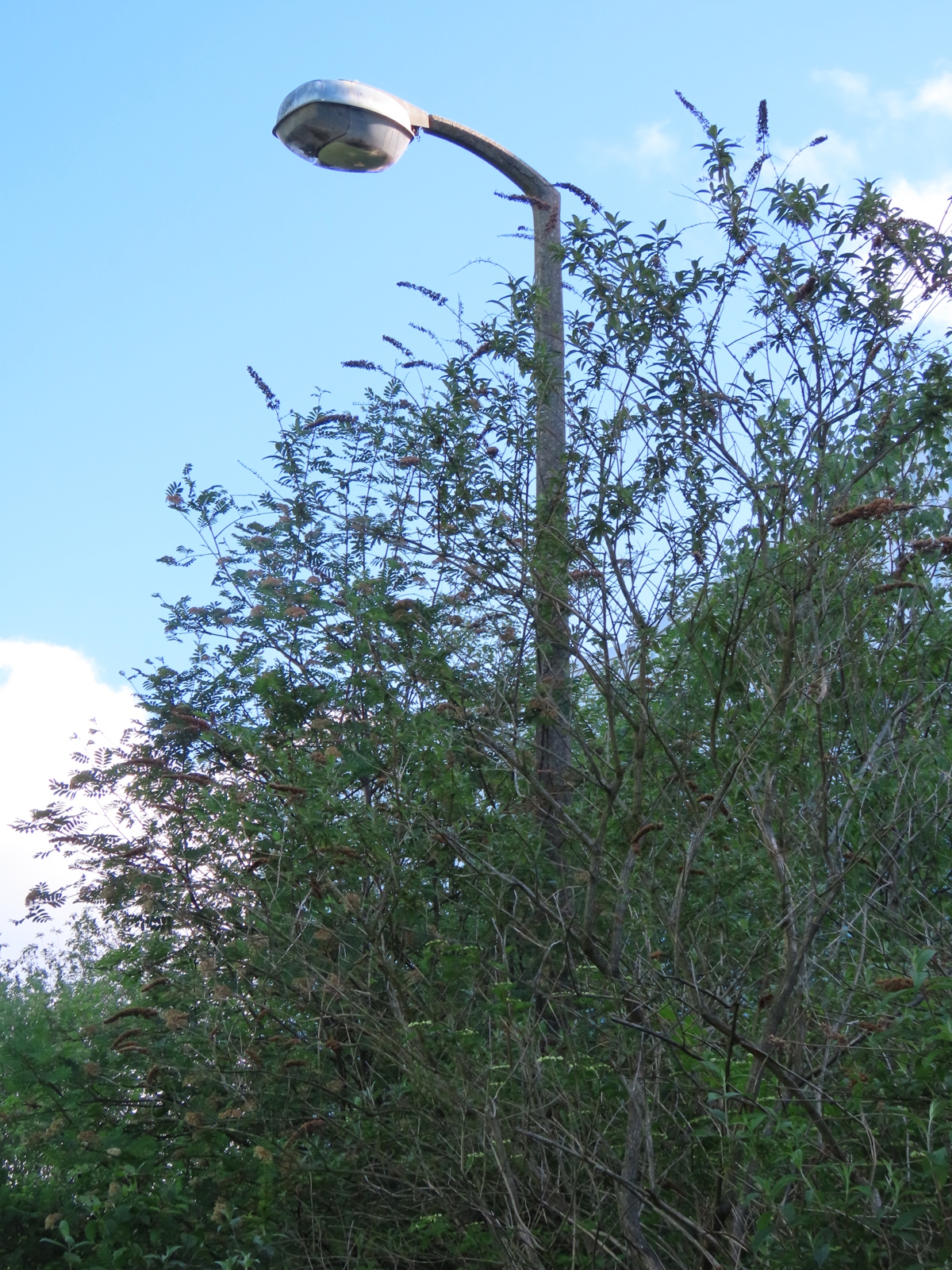
Despite the installation appearing to have become abandoned (not least, because of the heavy growth of bushes around the column base), the bracket shows little evidence of spalling.
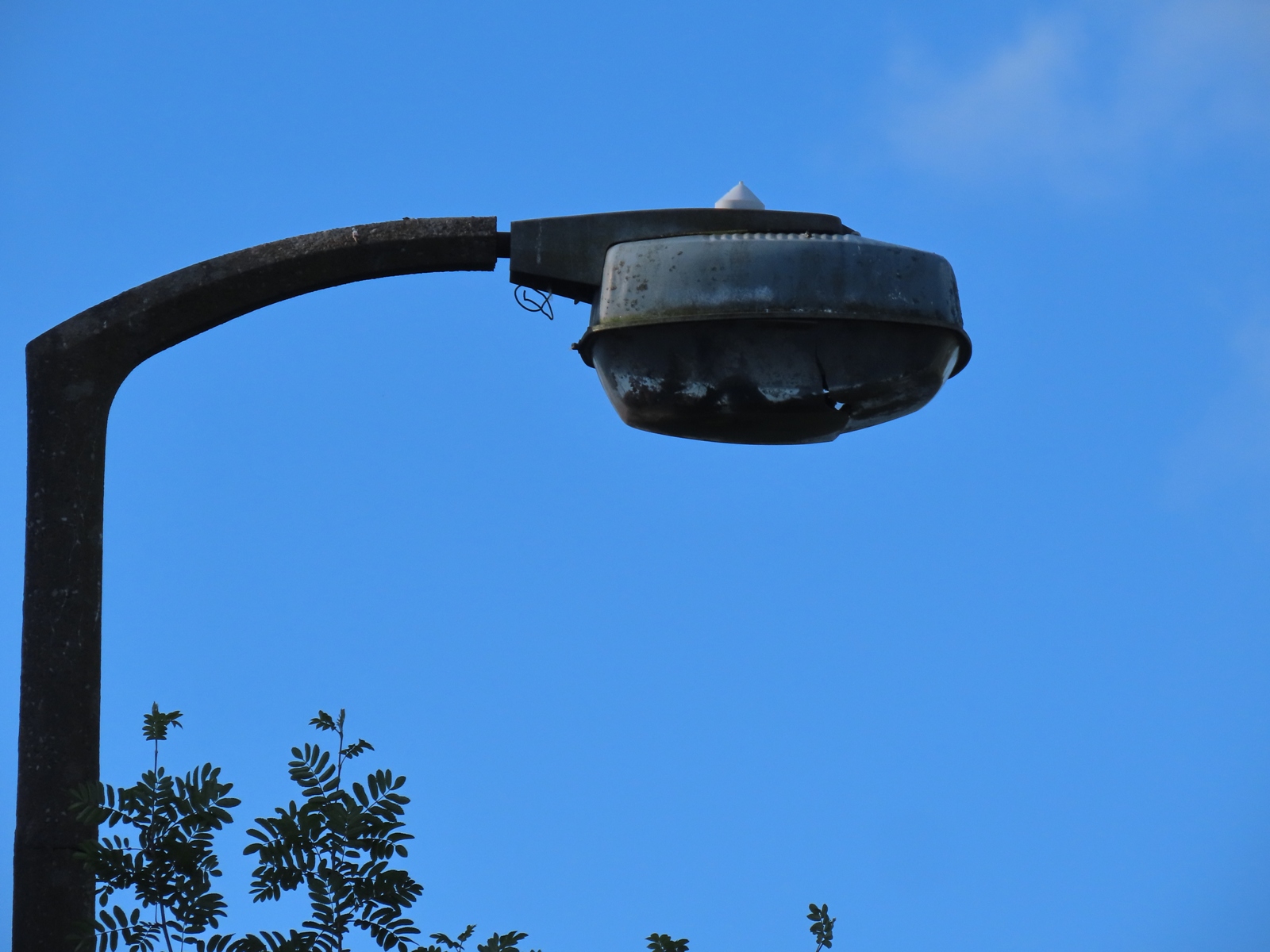
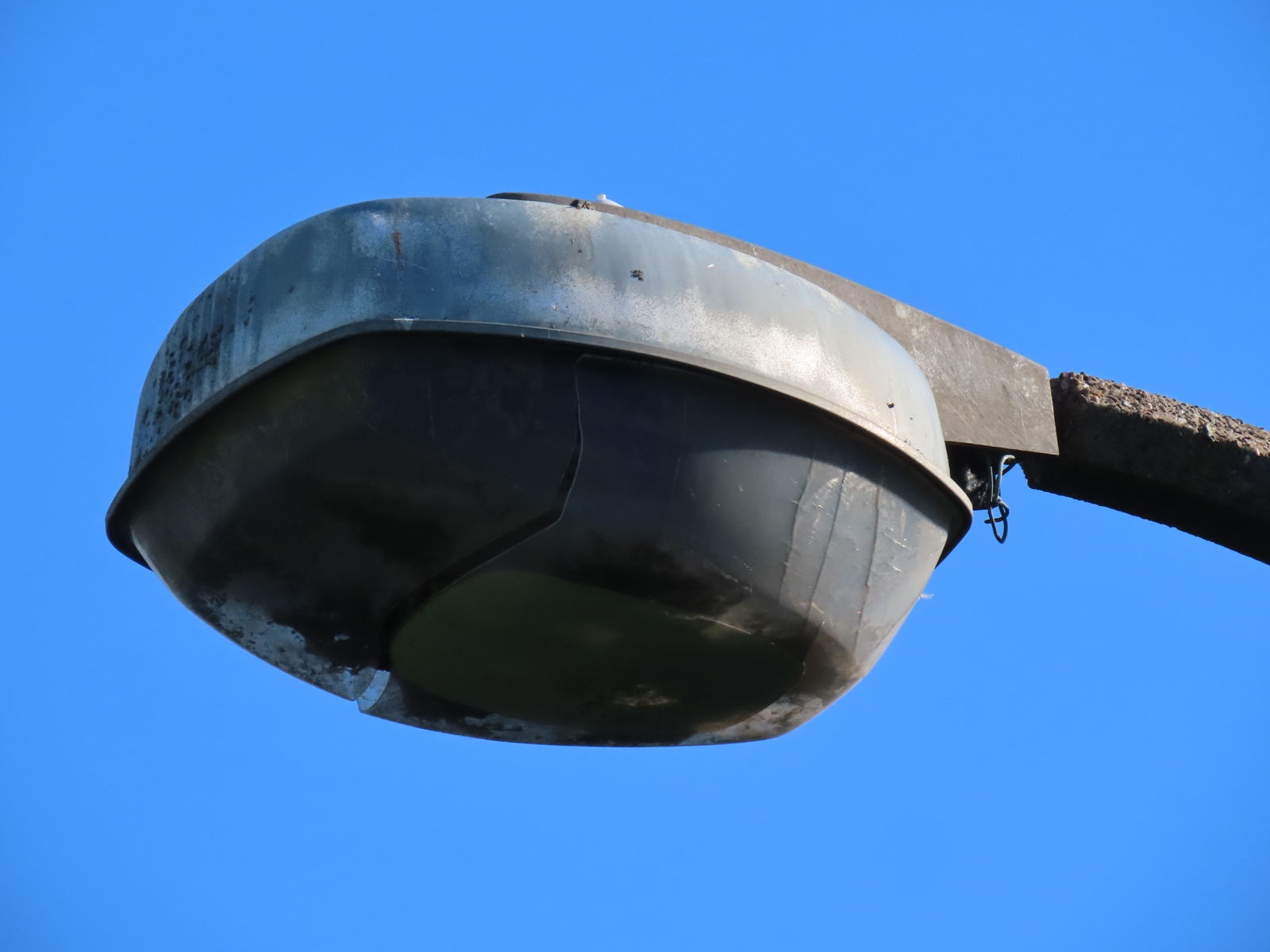
The lantern is in poor condition, with a large crack existing in the bowl. Ordinarily, the bowl is fixed permanently to the canopy, which hinges forwards to allow access to the lamp and internal wiring; the aluminium casting that passes over the canopy remaining fixed. As can be seen, the retaining clip for the canopy looks to have been damaged too, requiring a twist of wire to hold the canopy in place. A 1970s' Fisher-Karpark SS4 photocell (potentially, the lantern's original cell) can be seen above the fixed section.
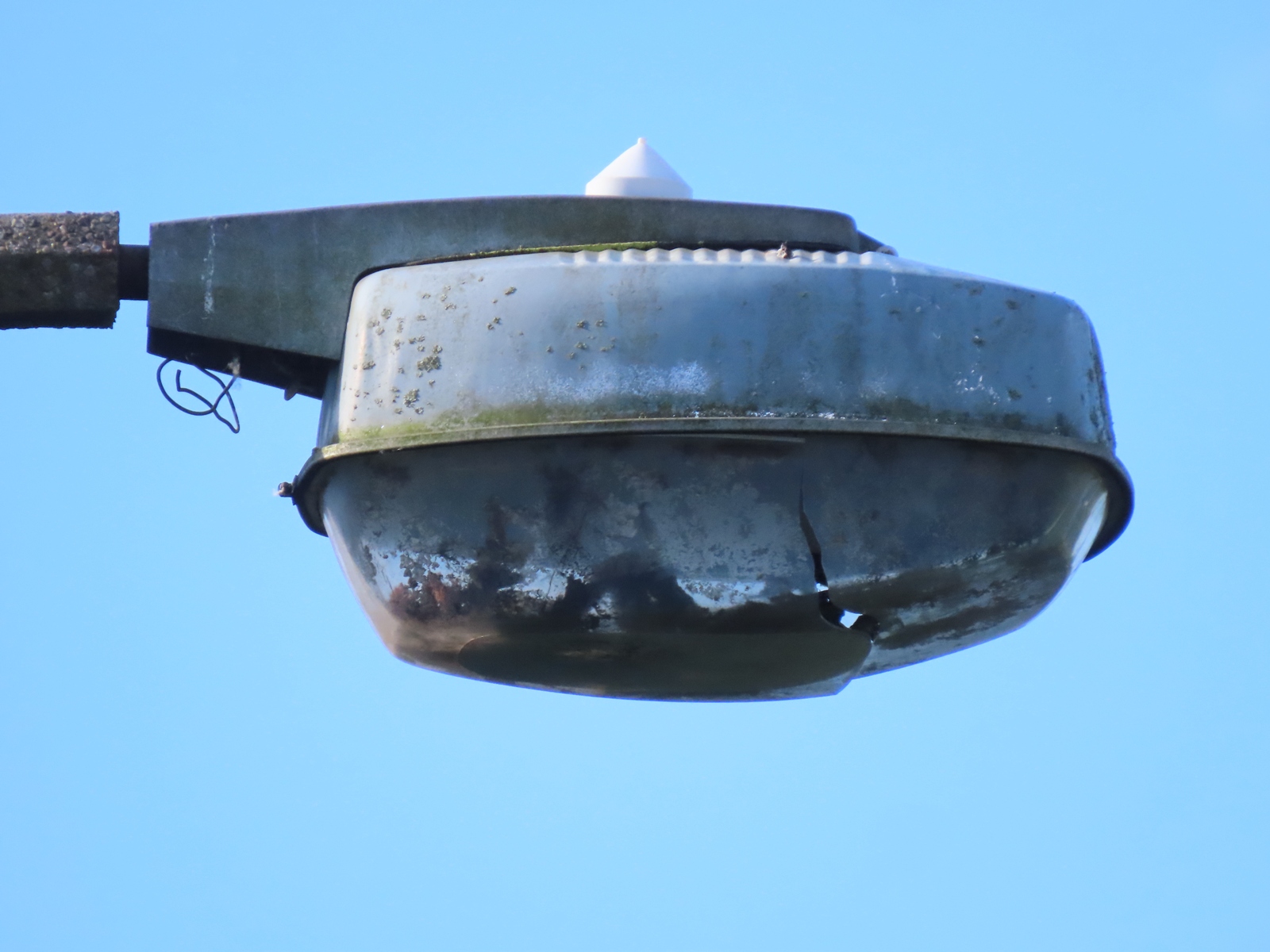
The fact that the bowl is held into the canopy could have saved the section behind the split from falling away completely.
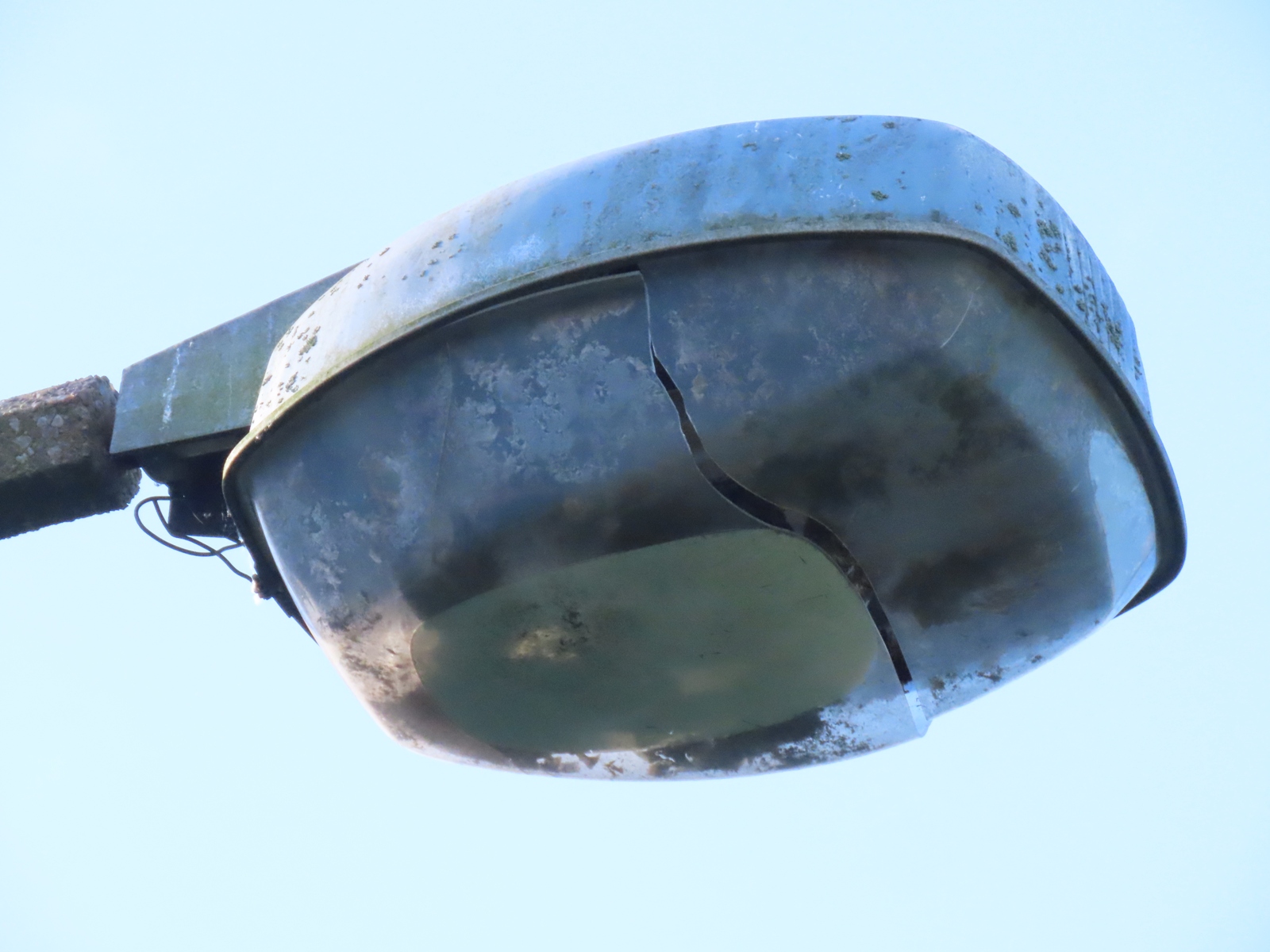
Further, separate cracks are evident on the other side of the bowl.
Such is the length of abandonment that the buddleia bushes are not far off the height of the column itself now.
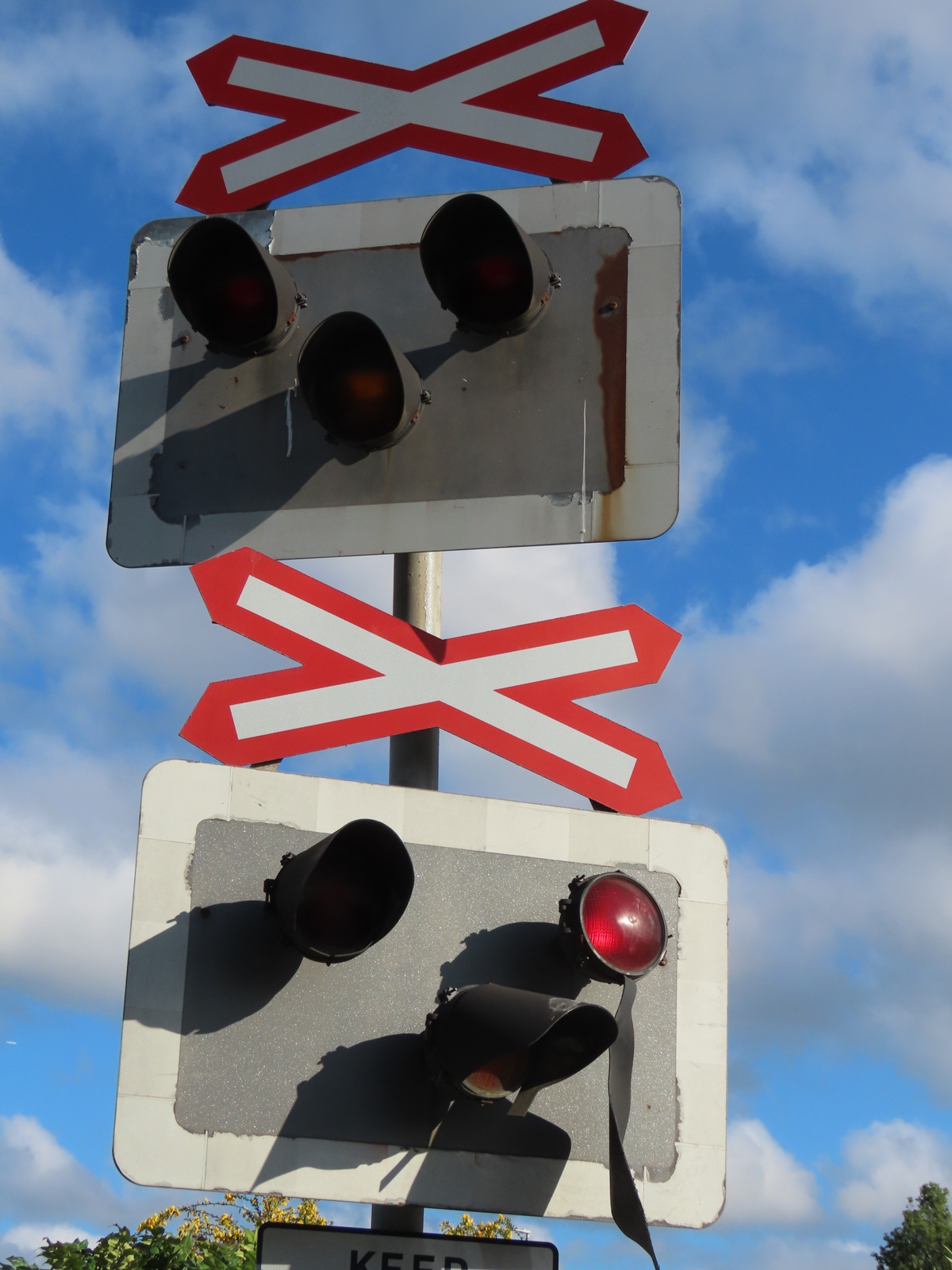
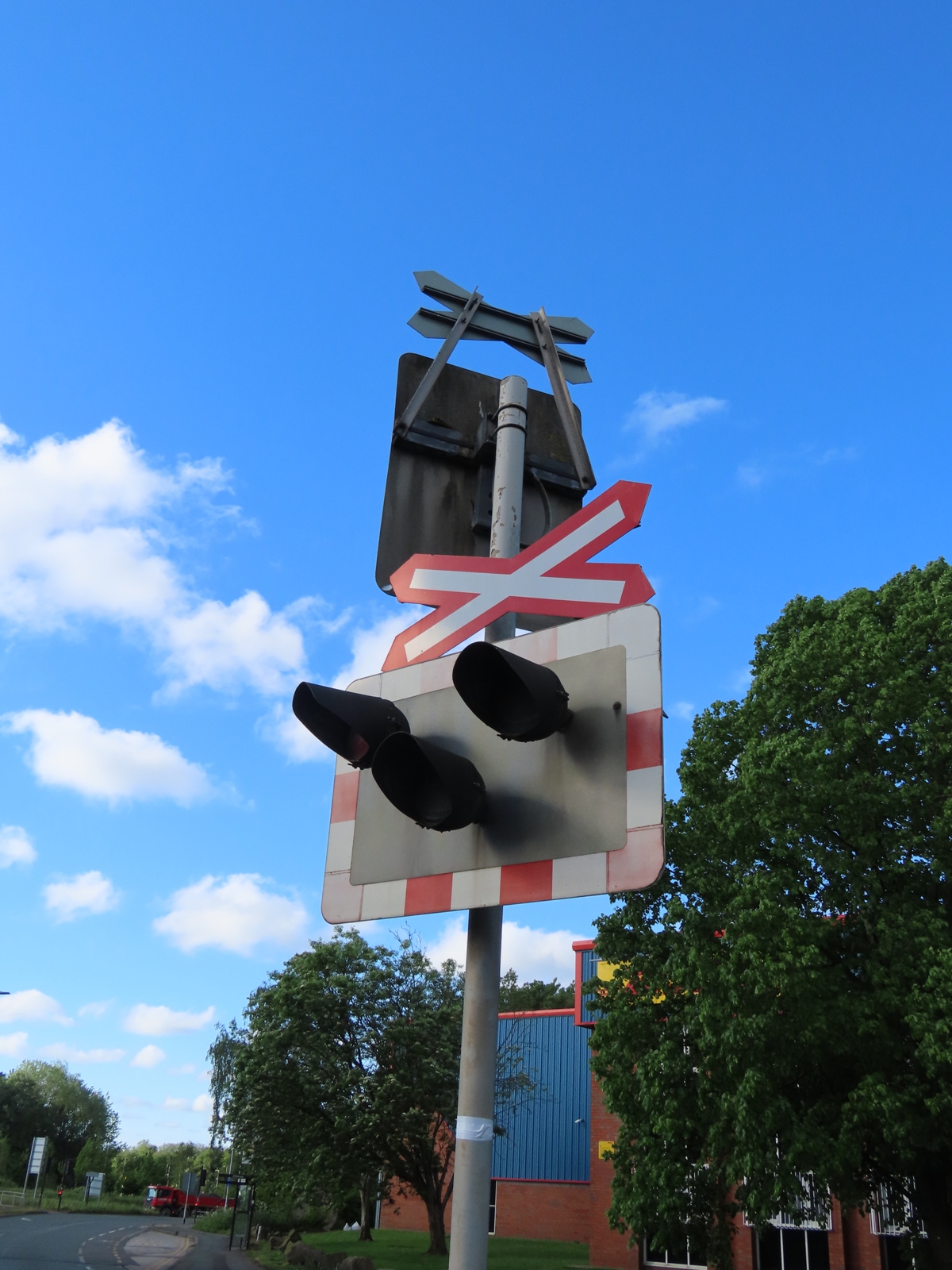
Another notable remnant that still survives around the Trafford Park estate is the old railway infrastructure, with tracks embedded in some of the roadways now leading to nowhere, and numerous level crossing flasher lights still in existence, despite the estate railway system having closed in 1998. These first examples are also on Trafford Park Road.
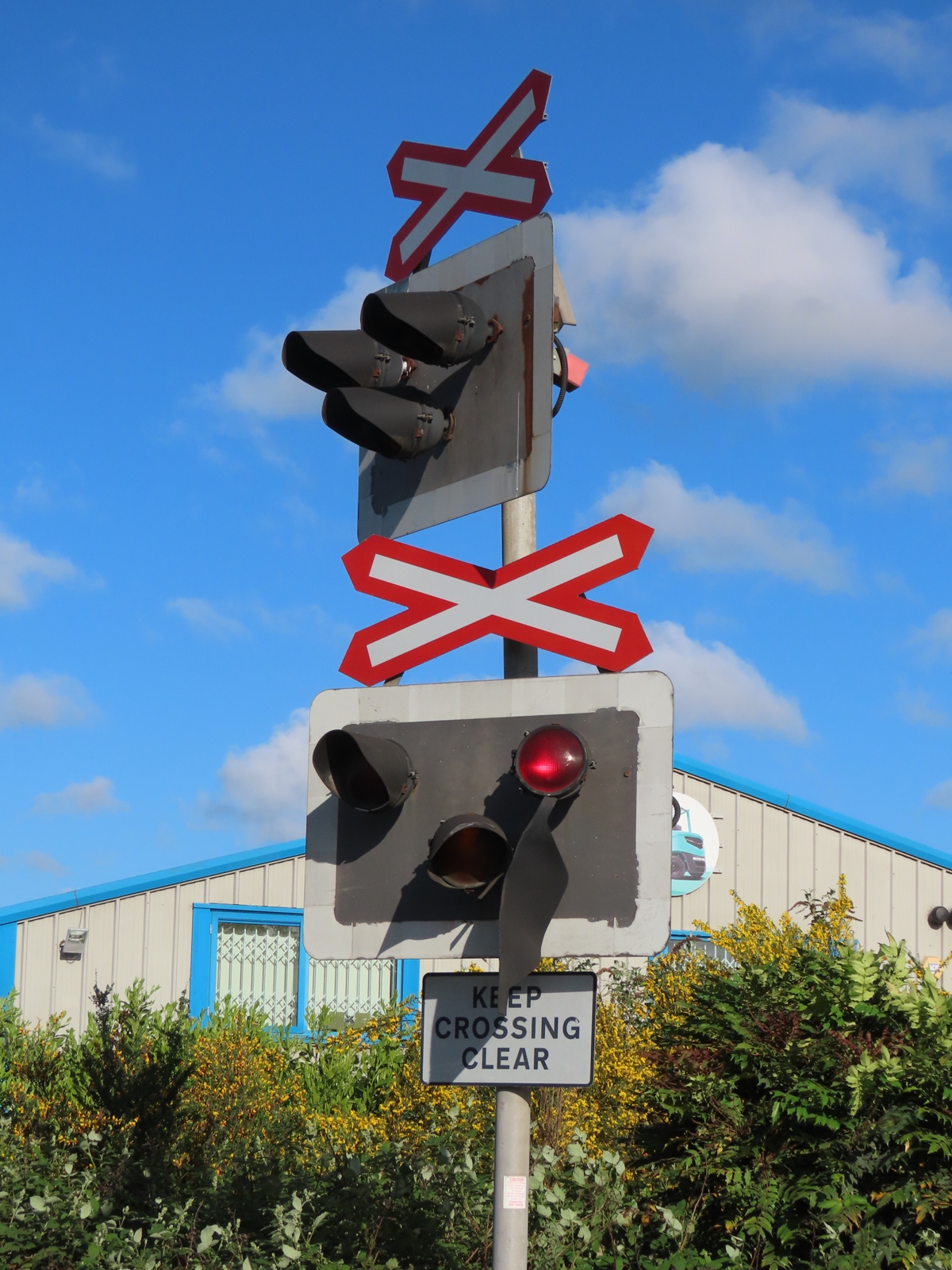
The cowl surrounding the right-hand red optic on the lower flasher unit has been pulled away, exposing the optic.
This unit is on the other side of the road. Although the signal heads would have had red and white reflective bands around them prior to the closure of the railway system, the red parts have now faded sufficiently to give the impression of older signal heads, which only featured a white reflective strip around their perimeters.
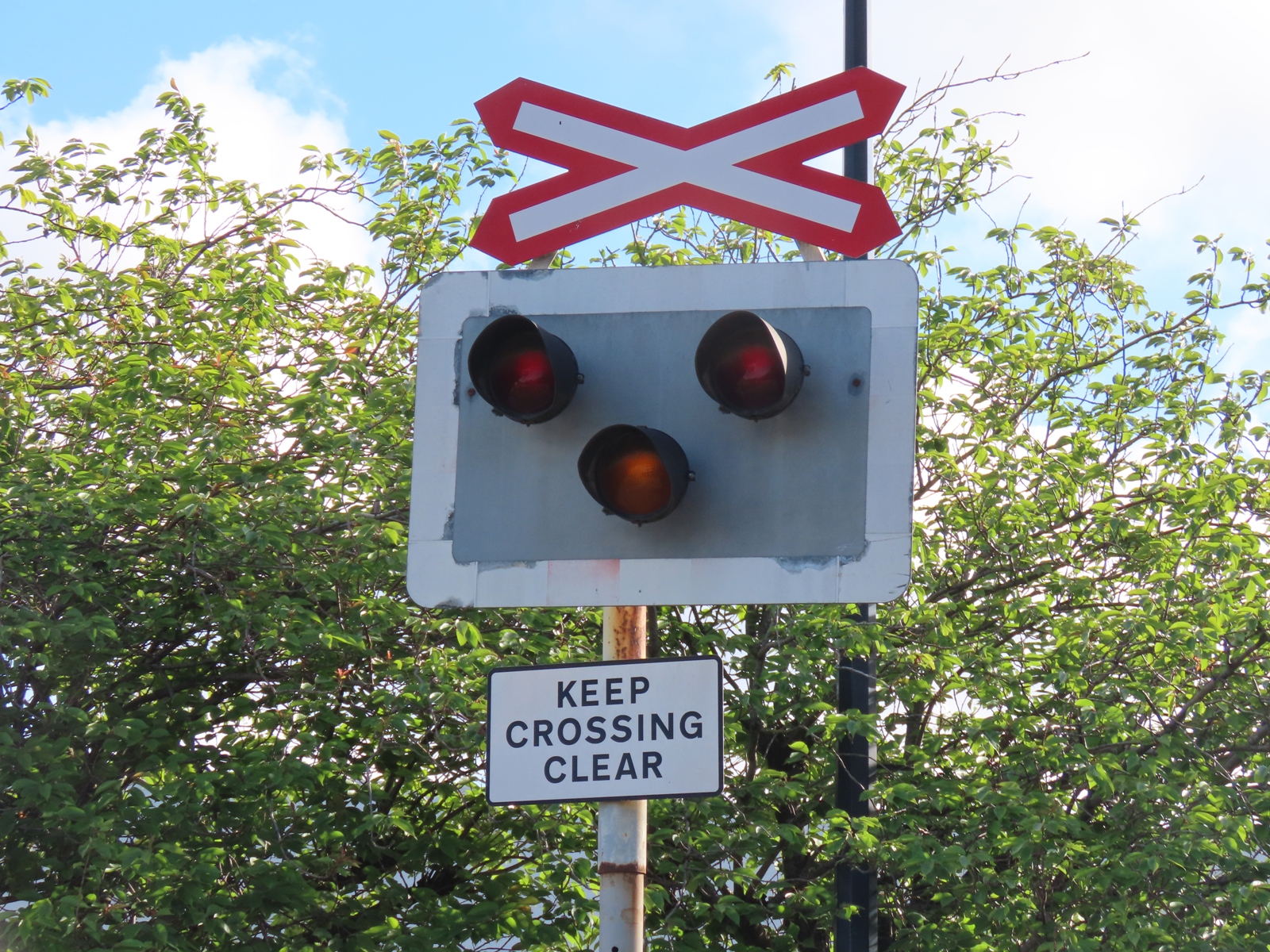
The cowls are noticeably different in shape and length in comparison to traffic signal heads.
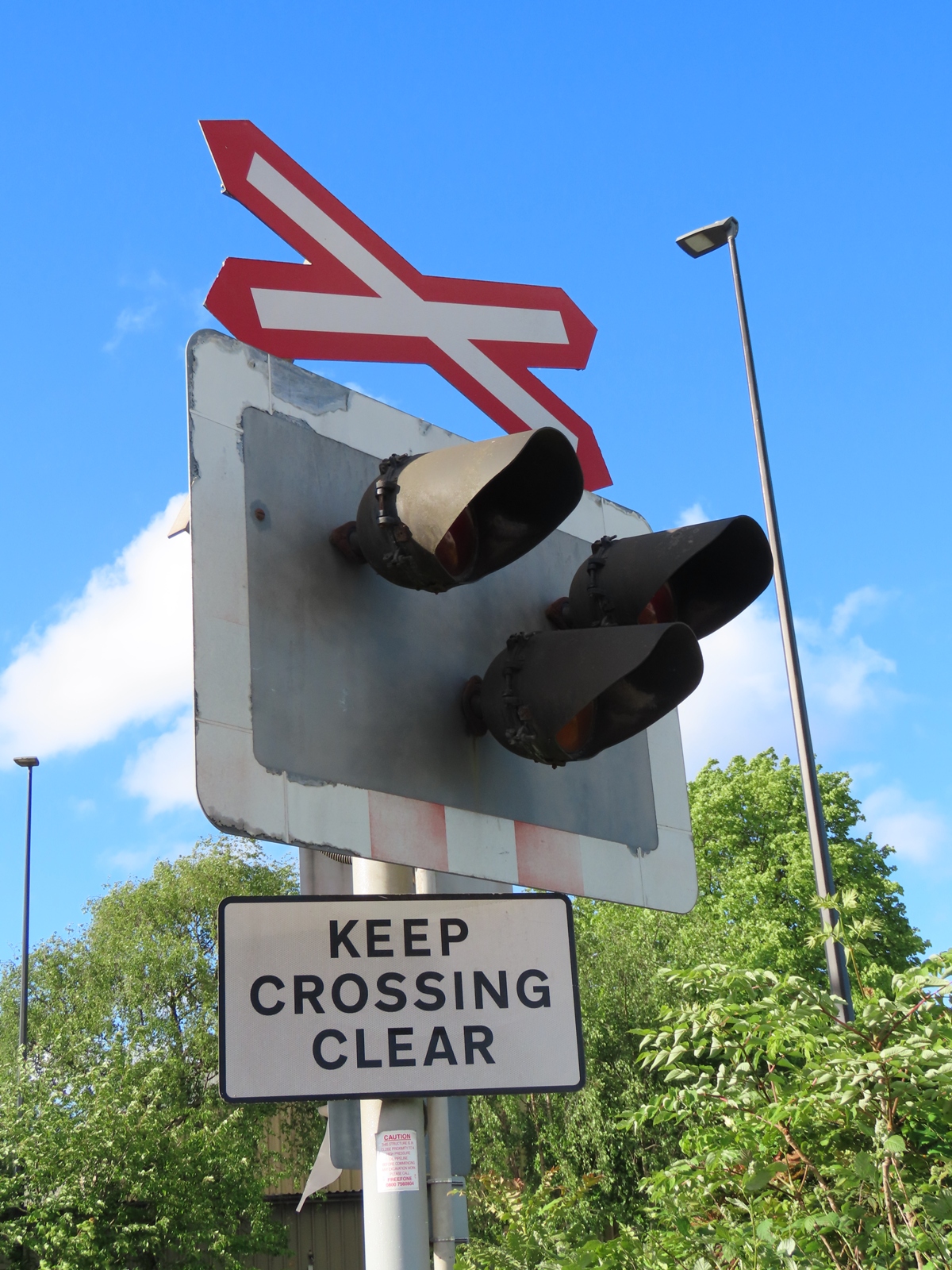
This unusual narrow signal head is on Ashburton Road West. The red sections of the striped border have survived here.
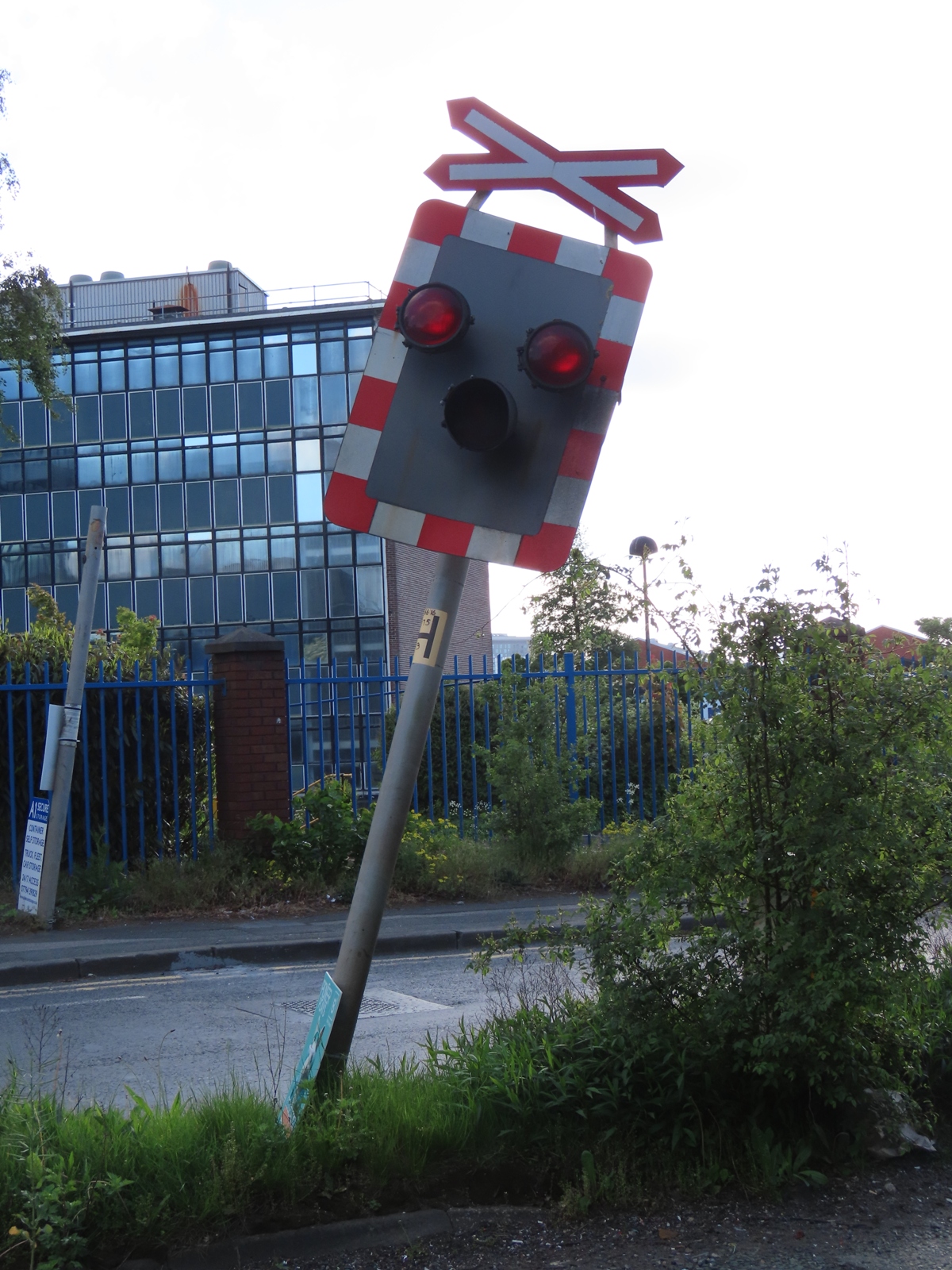
A conventional width unit is installed on this post, with another narrow one above it.
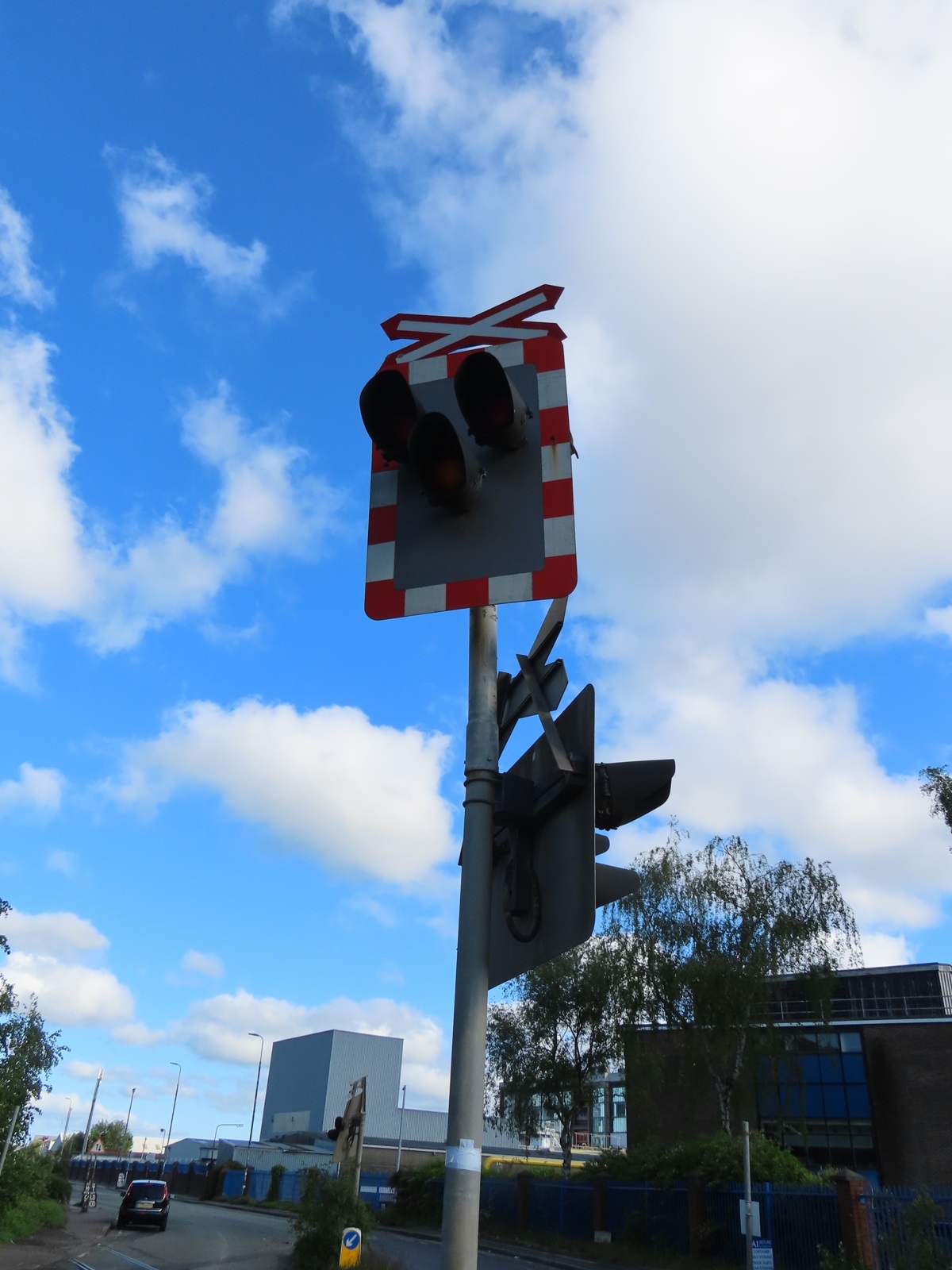
The same installation from the other side. The red and white diagonal crosses positioned above each signal head indicate a level crossing that has no barriers.
BACK TO SURVIVORS IN GREATER MANCHESTER
CLICK HERE TO MAKE A MONETARY DONATION
© 2002 - English Street Lights Online