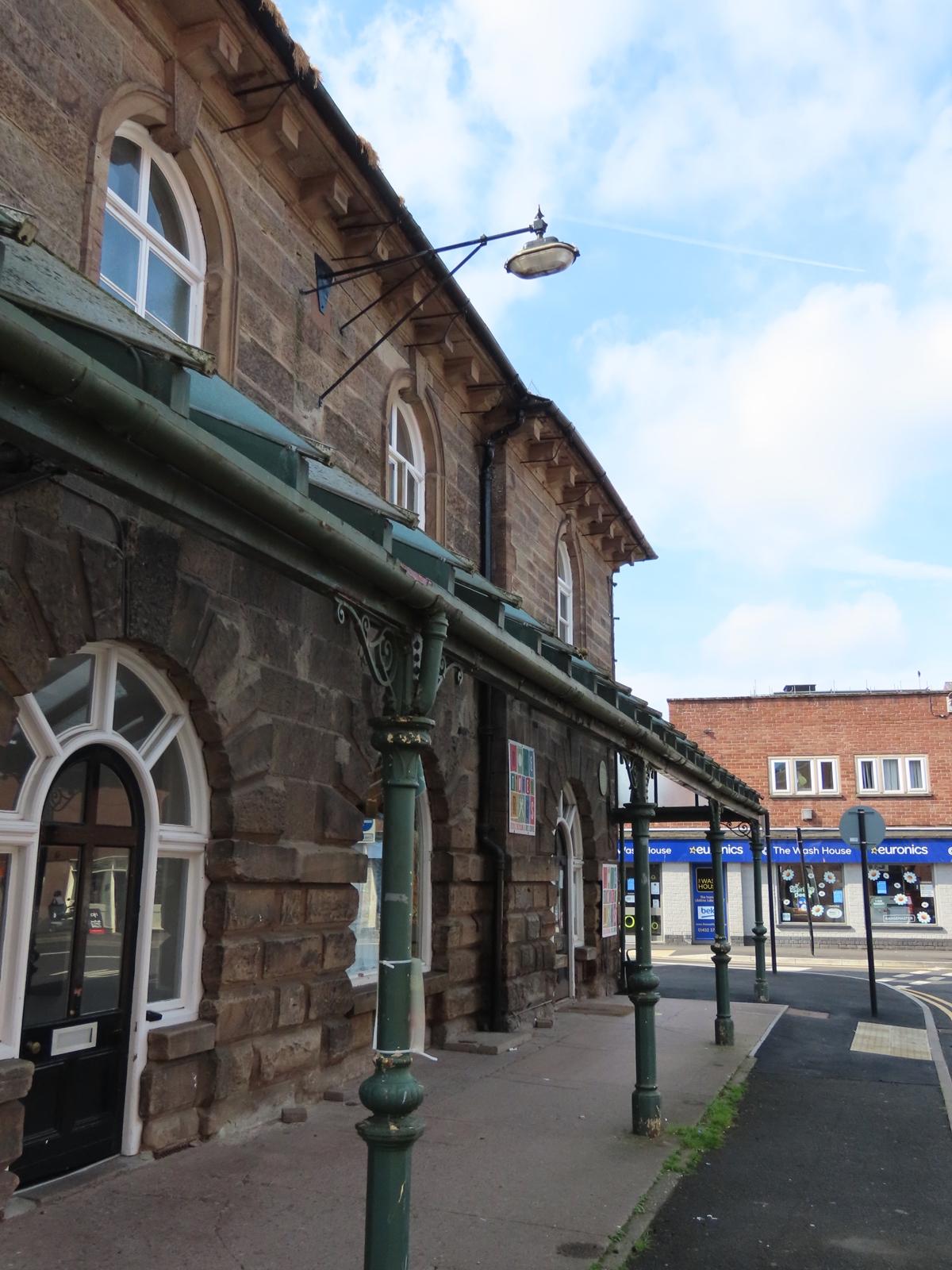
Off Union Walk, Portfields, Hereford With thanks to Adrian Barnes for informing me of this Survivor. Attached to a building that is adjacent the city's Country Bus Station, by means of a cast iron wall bracket, is a GEC 'Dioptrion' Z8431 lantern, intended for running a 250 - 400 Watt MA (medium pressure mercury vapour) lamp, although this type was superseded by the high pressure MB-type lamp in the 1960s, so it is unlikely that it still runs this earlier type, if indeed, it works at all in the modern era. The Dioptrion was introduced in 1948; its largely glass construction being testament to limited metal availability in the immediate post-Second World War years, but seems to have been discontinued by the 1960s - probably, in response to the introduction of the MB lamp, and new optical capabilities.
While the Dioptrion may be the last remnant of an earlier lighting scheme for the bus station era, I have not found any photographic evidence to prove this as yet.
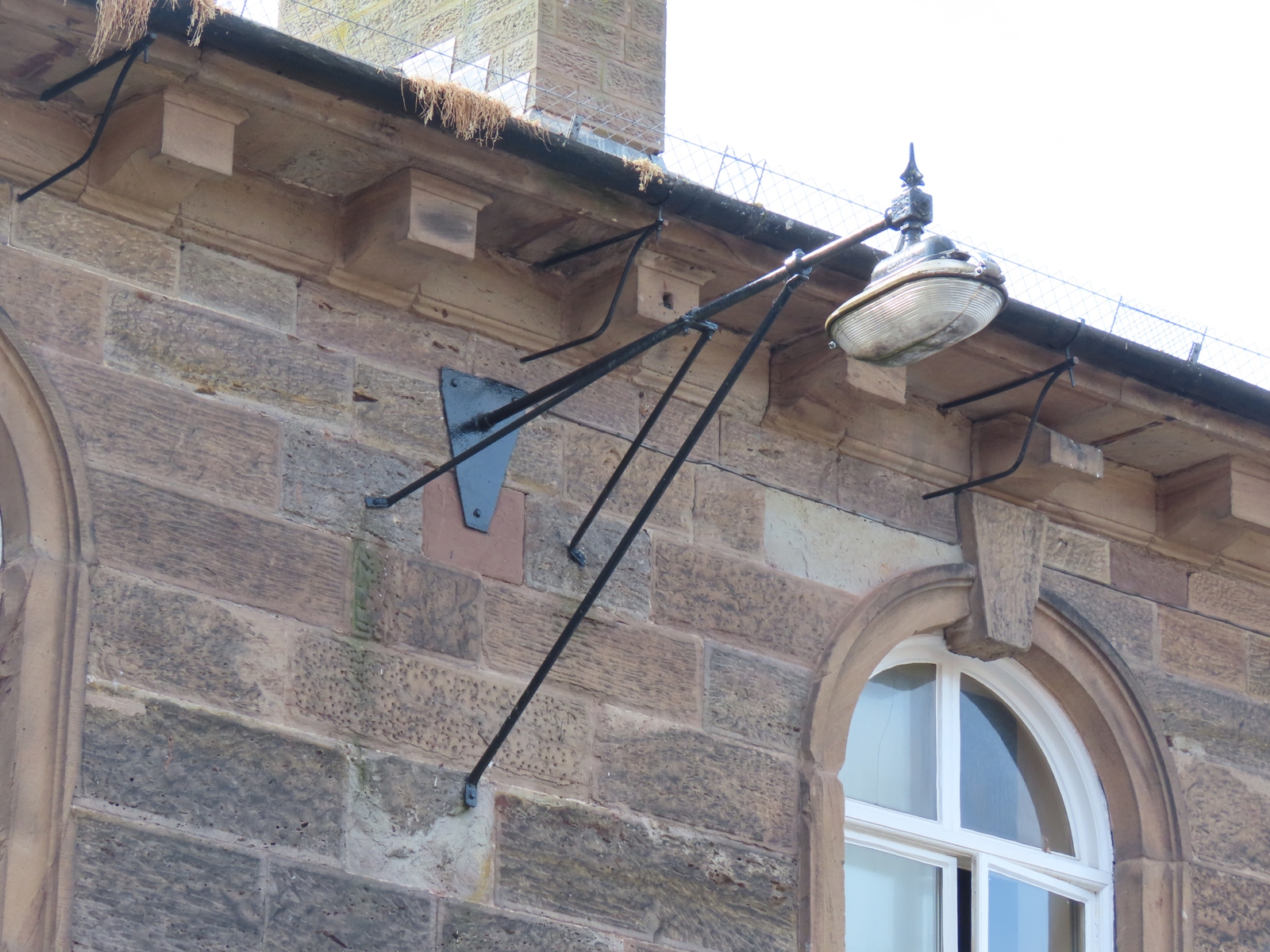
The combined length of the bracket outreach, and weight of the lantern, means that three support bars between the bracket and the wall are provided.
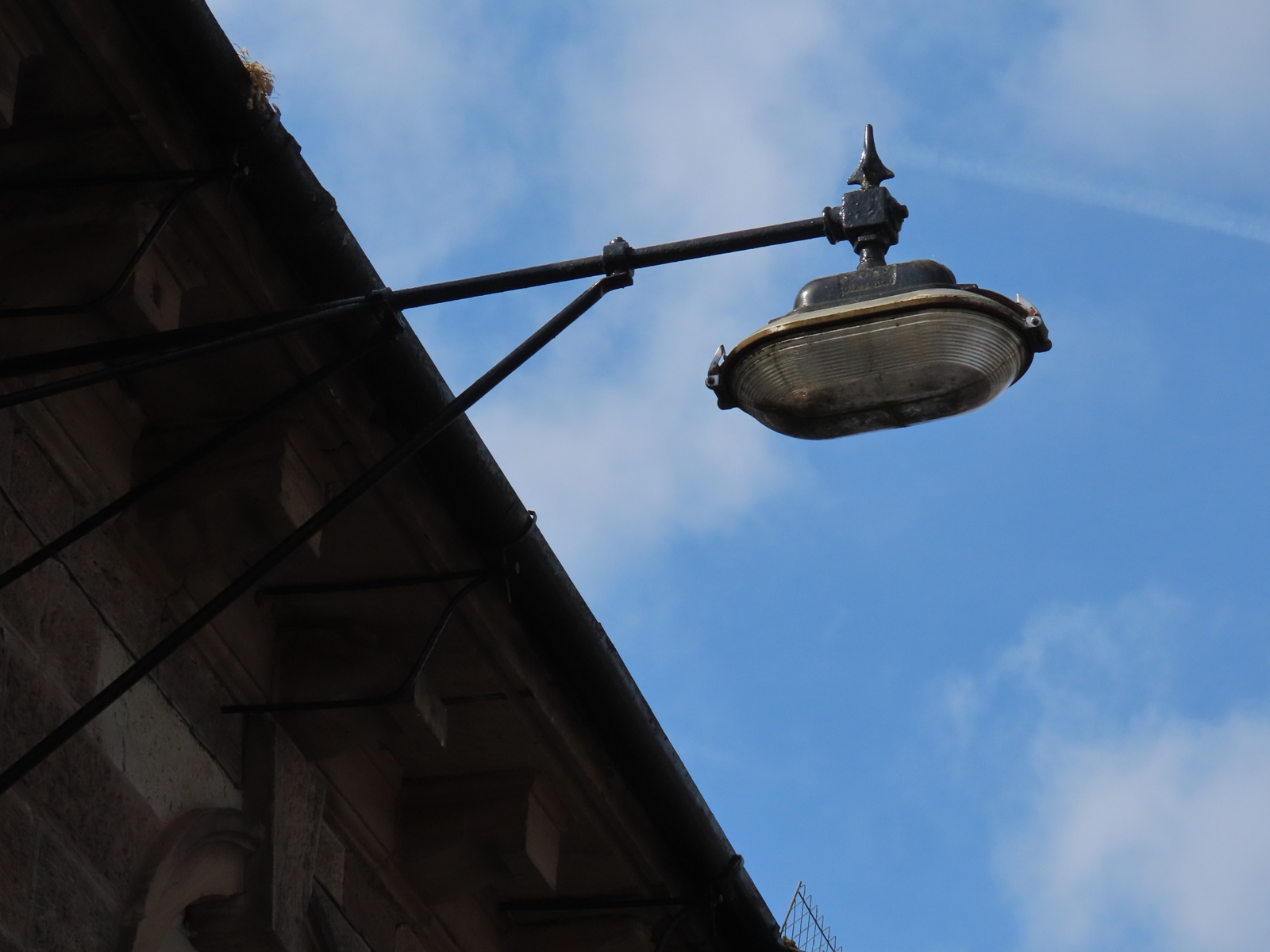
The lantern's top metalwork is painted the same gloss black as the rest of the structure is.
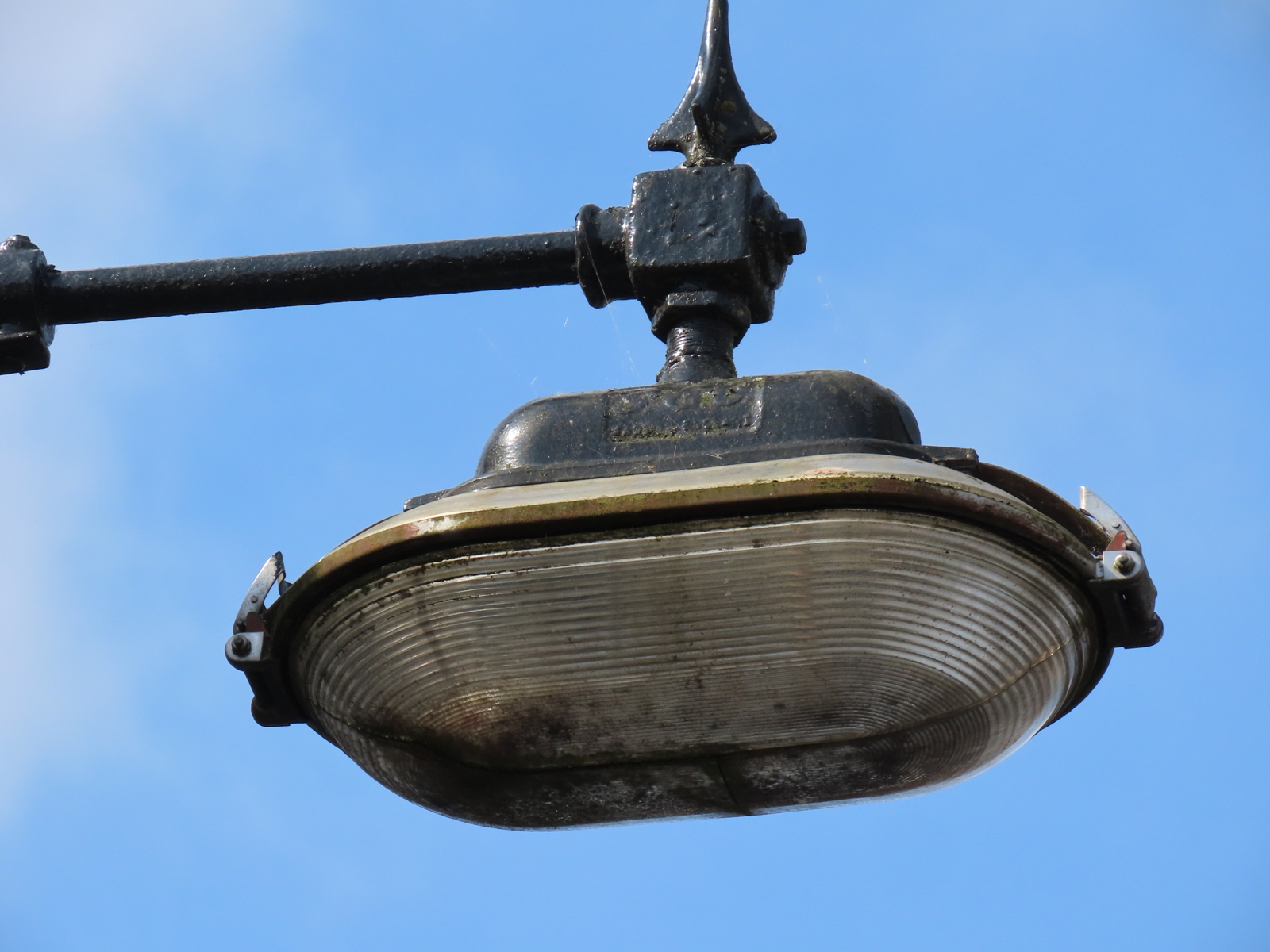
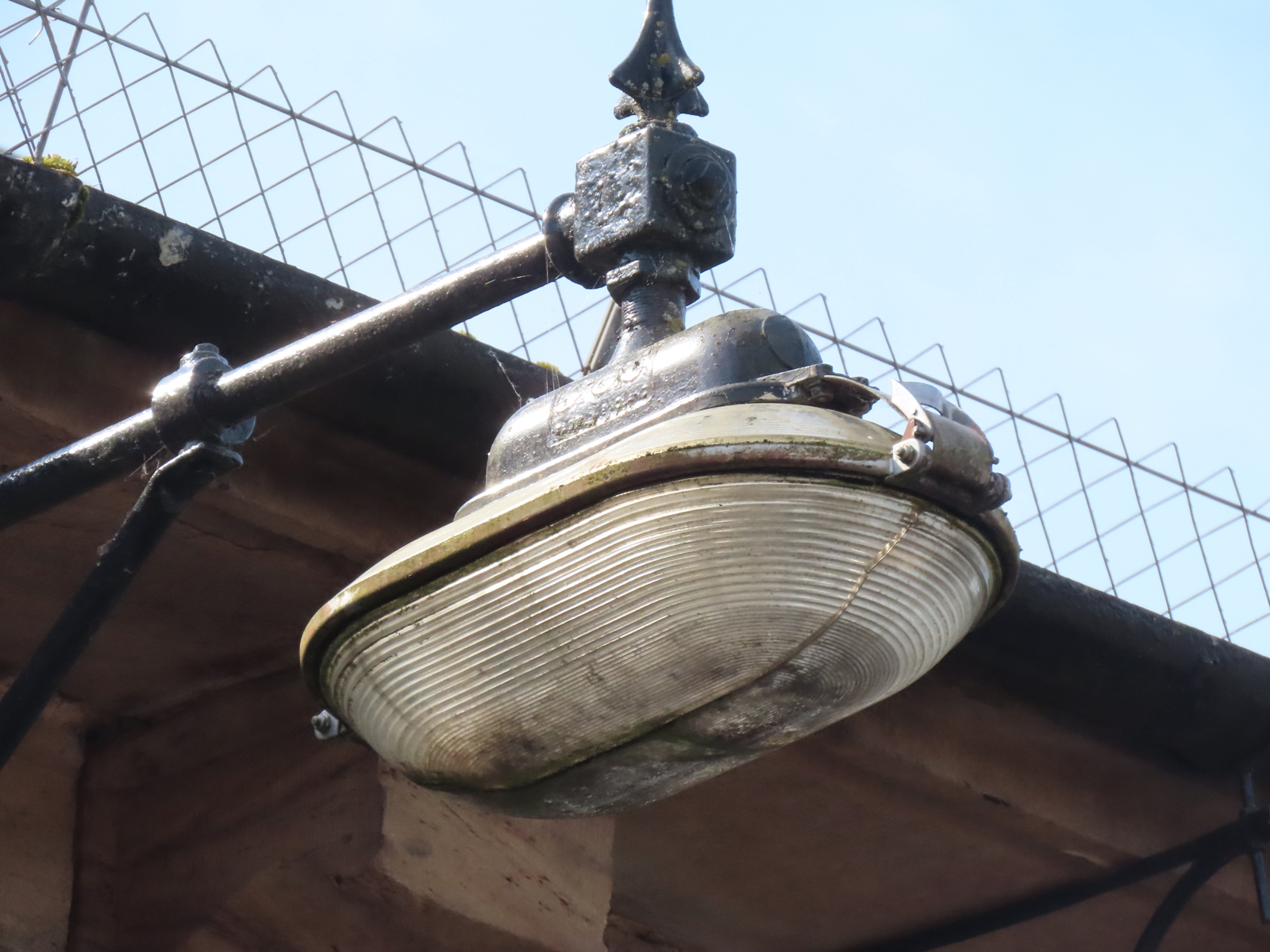
Sadly, the lower bowl of the lantern is broken into three pieces, though all remain in place within the lantern. Notice that the lantern isn't quite perpendicular with the outreach.
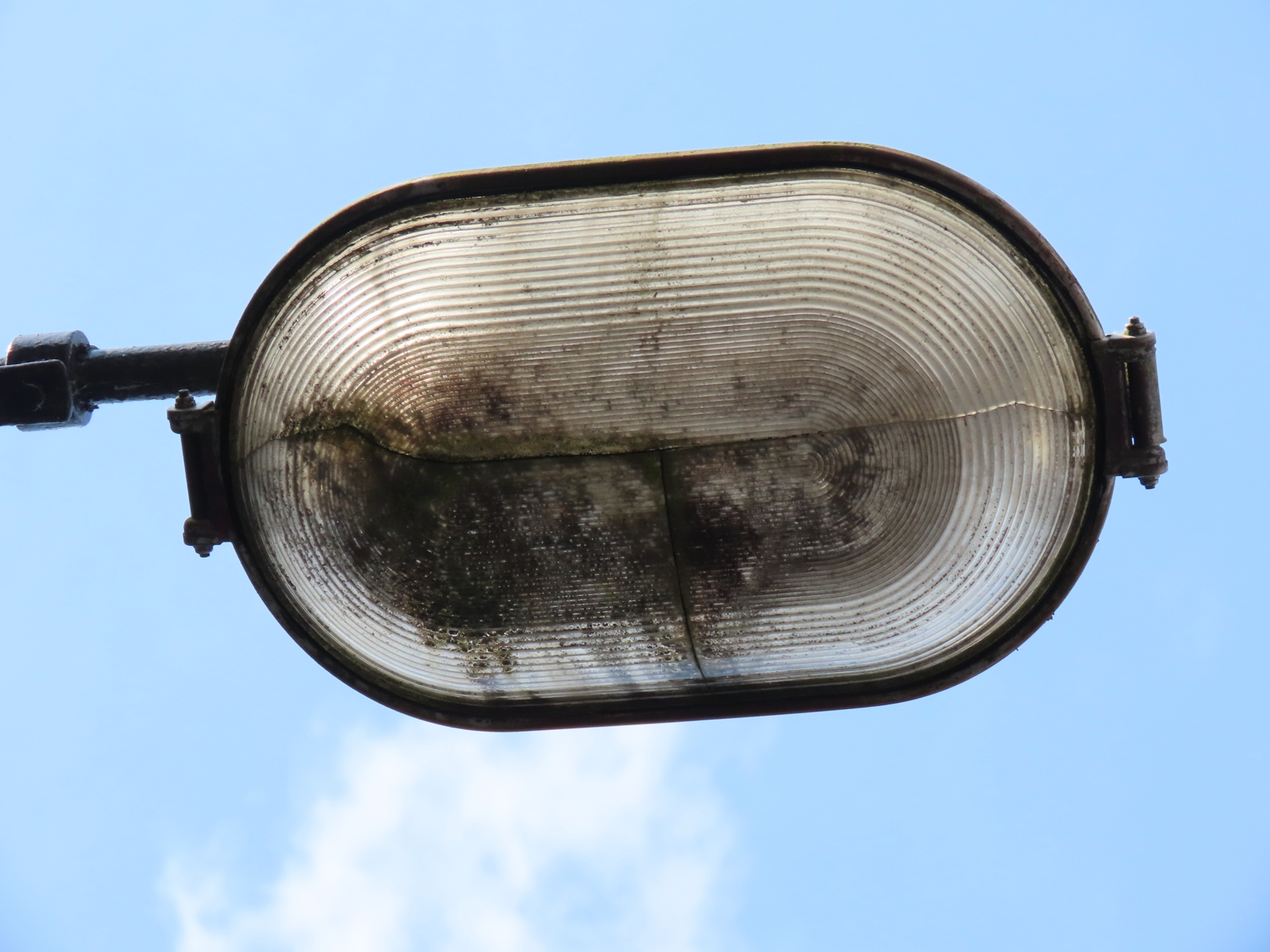
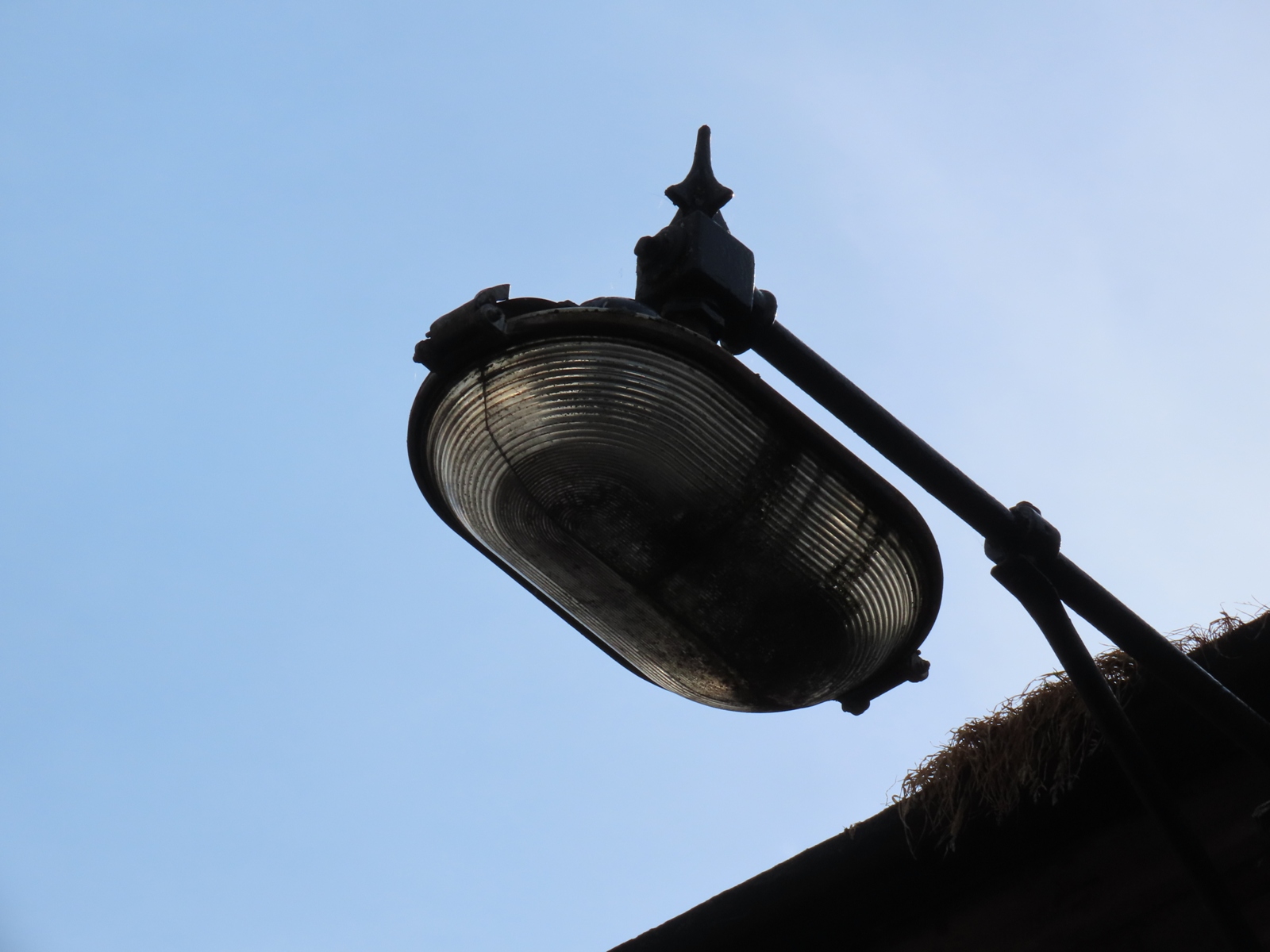
Despite the lantern's possible abandonment, the prismatic refractors continued to do their job by diffusing the early morning sunlight.
The supply cable to the bracket can be seen emerging from the right-hand side of the back plate, and passing almost invisibly along a cement course of the building. It terminates into a steel conduit 90 degree inspection box that is out of sight, before a conduit run passes down the building and underground. At no point along the whole run is there any enclosure housing the necessary lamp control gear, fusing and (possible) means of switching the lantern; the cable may divert inside the building, where all of these pieces of apparatus could have been located.
The blanked-off and unused side-entry connection is visible on the front of the cast part of the lantern, as it appears here.
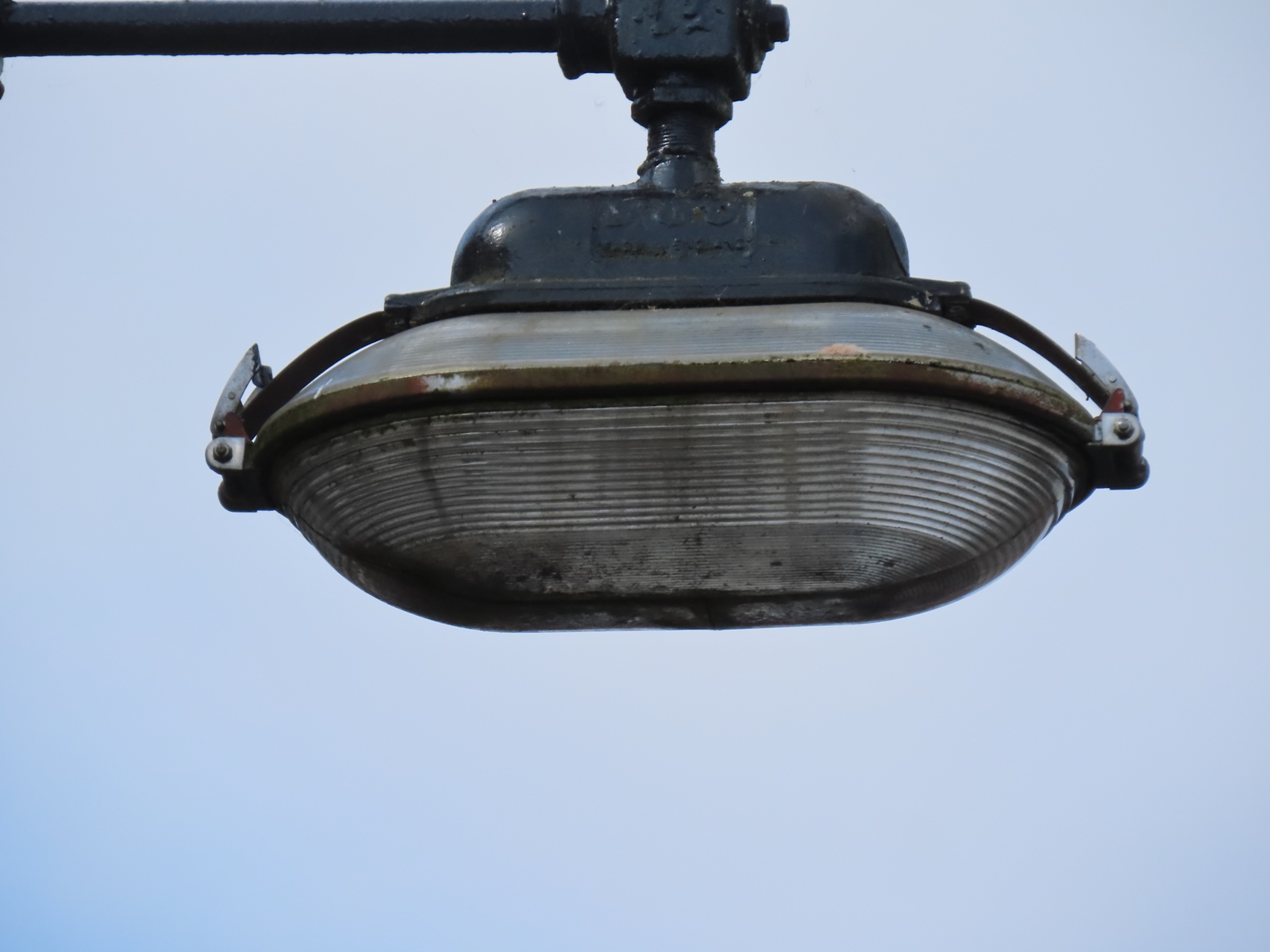
This view demonstrates the different refractor patterns employed at different depths of the lower bowl.
BACK TO SURVIVORS IN HEREFORDSHIRE
CLICK HERE TO MAKE A MONETARY DONATION
© 2002 - English Street Lights Online