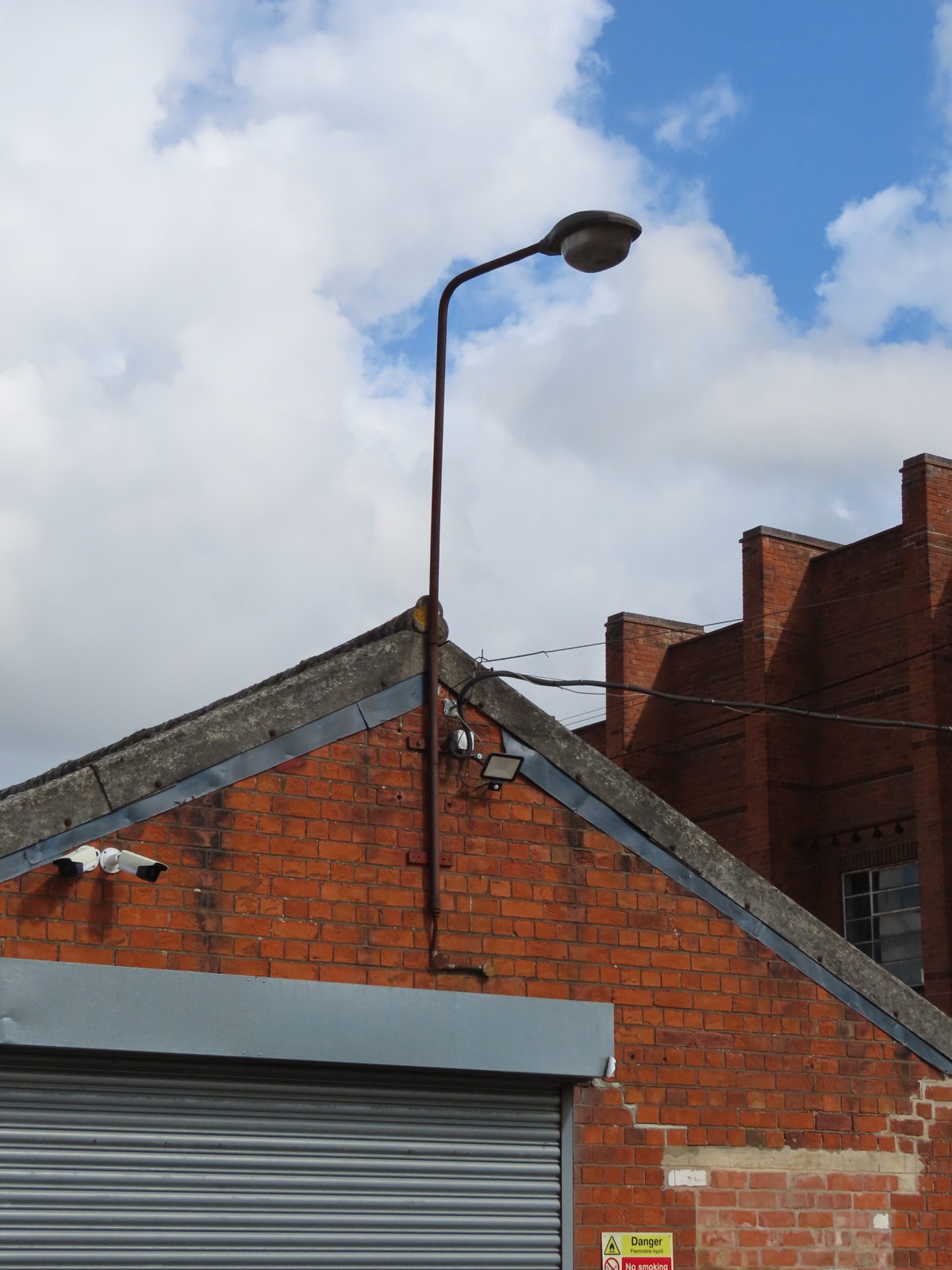
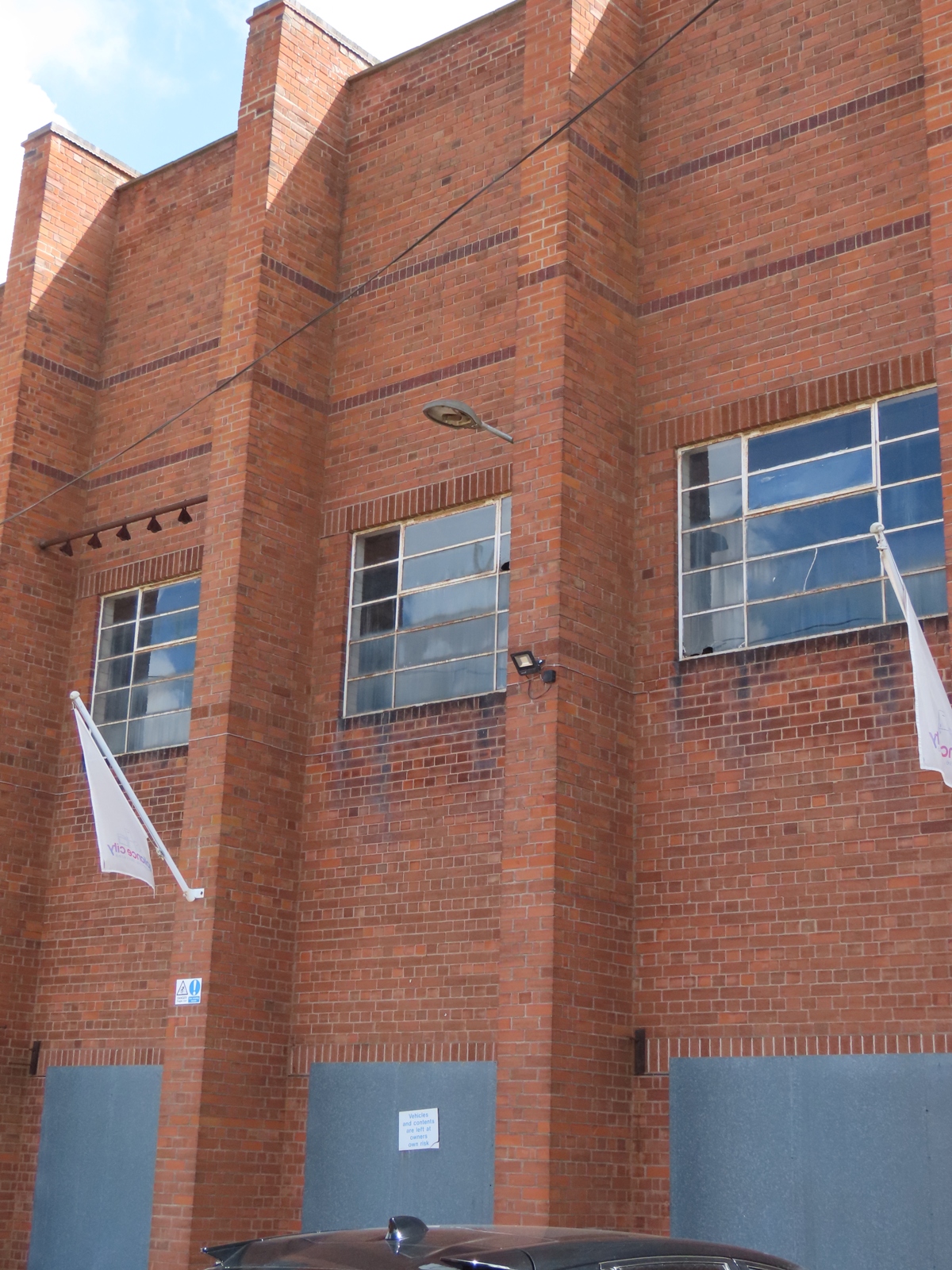
Off Gotham Lane, Bunny, Rushcliffe, Nottinghamshire With thanks to AgentHalogen_87 for informing me of these Survivors. Located around an imposing red brick warehouse facility, which today forms part of the Bunny Trading Estate, but is shown on historical maps as being an "Engineering Works", are several Atlas Alpha 7 lanterns, designed for running a 250 - 400 Watt MBF (mercury vapour) lamp. These lanterns will date back to the 1960s, and were designed specifically for the then-new MBF lamps, instead of being re-engineered lanterns that were optimised for the older medium pressure mercury (MA) lamps. All of the lanterns are attached to the building structures using wall brackets.
The near-identical AEI Brampton and Phosware P151 lanterns
The first lantern to be seen, attached to a low building between the main warehouse and the car park, uses a wall bracket that increases its overall mounting height beyond the roofline of the building. The presence of an LED floodlight also on the building suggests that this lantern is abandoned.
The lantern features a prismatic refractor bowl that was also employed on the very similar AEI 'Brampton' lantern; the Alpha 7 being something of an evolution of the AEI product, although both lanterns were produced by their respective manufacturers until 1967, when Thorn Lighting bought the remainder of AEI's Street Lighting division, and all other AEI electrical divisions became part of GEC.
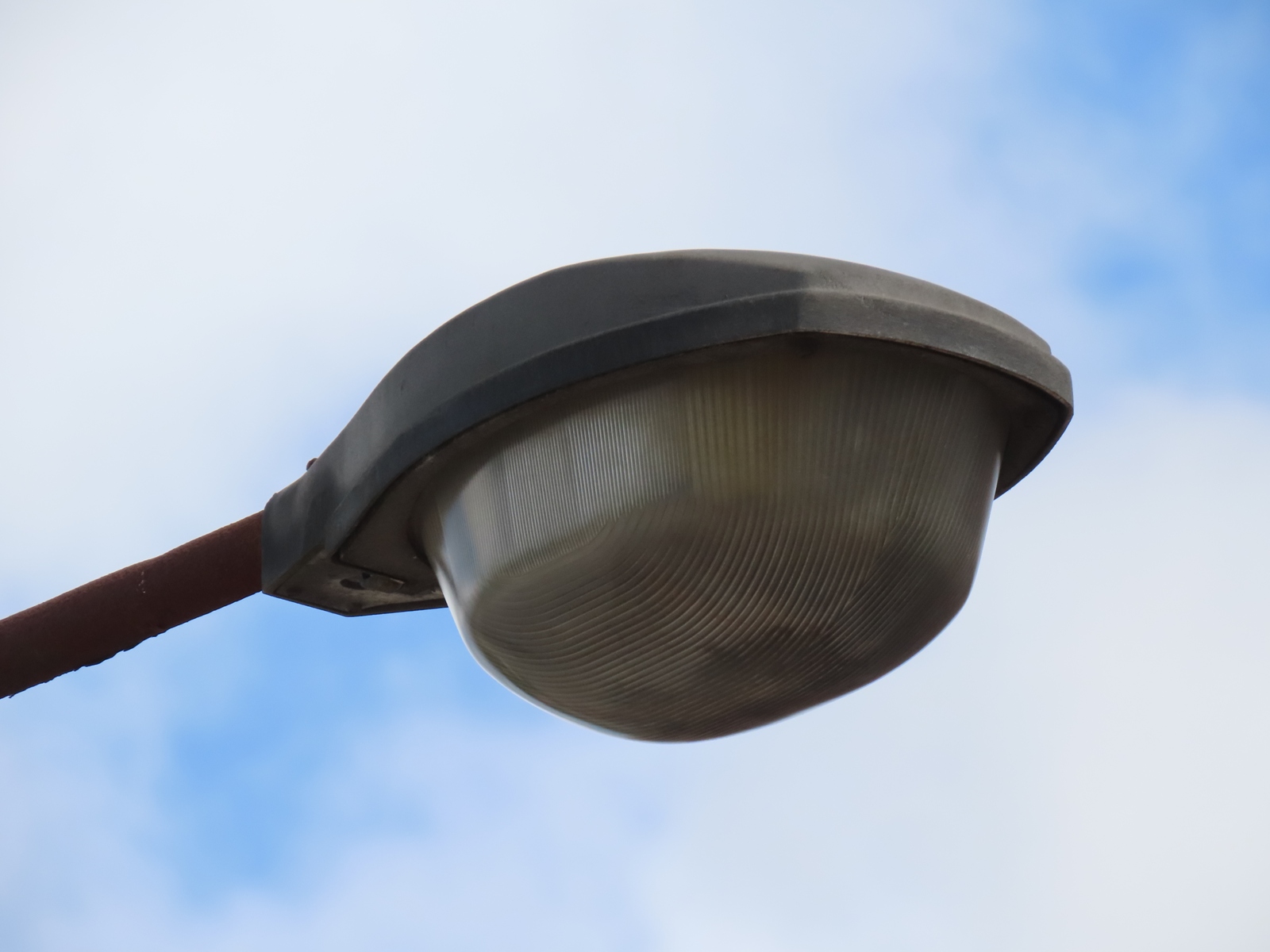
The symmetrical appearance of the bowl is demonstrated here.
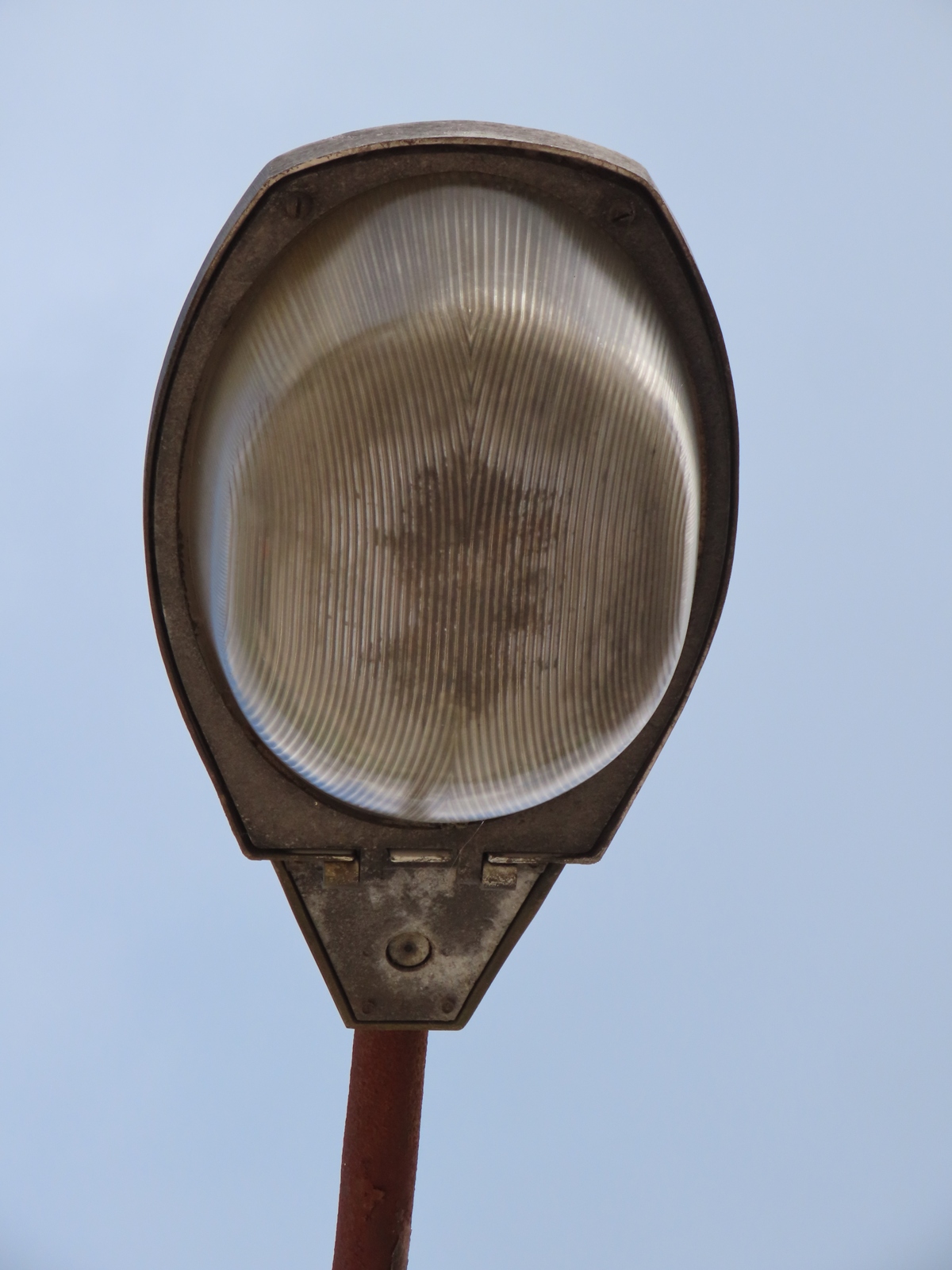
From the other side, one of the two slotted screws used in holding the hinged bowl support frame in place under normal circumstances is visible at the front of the lantern.
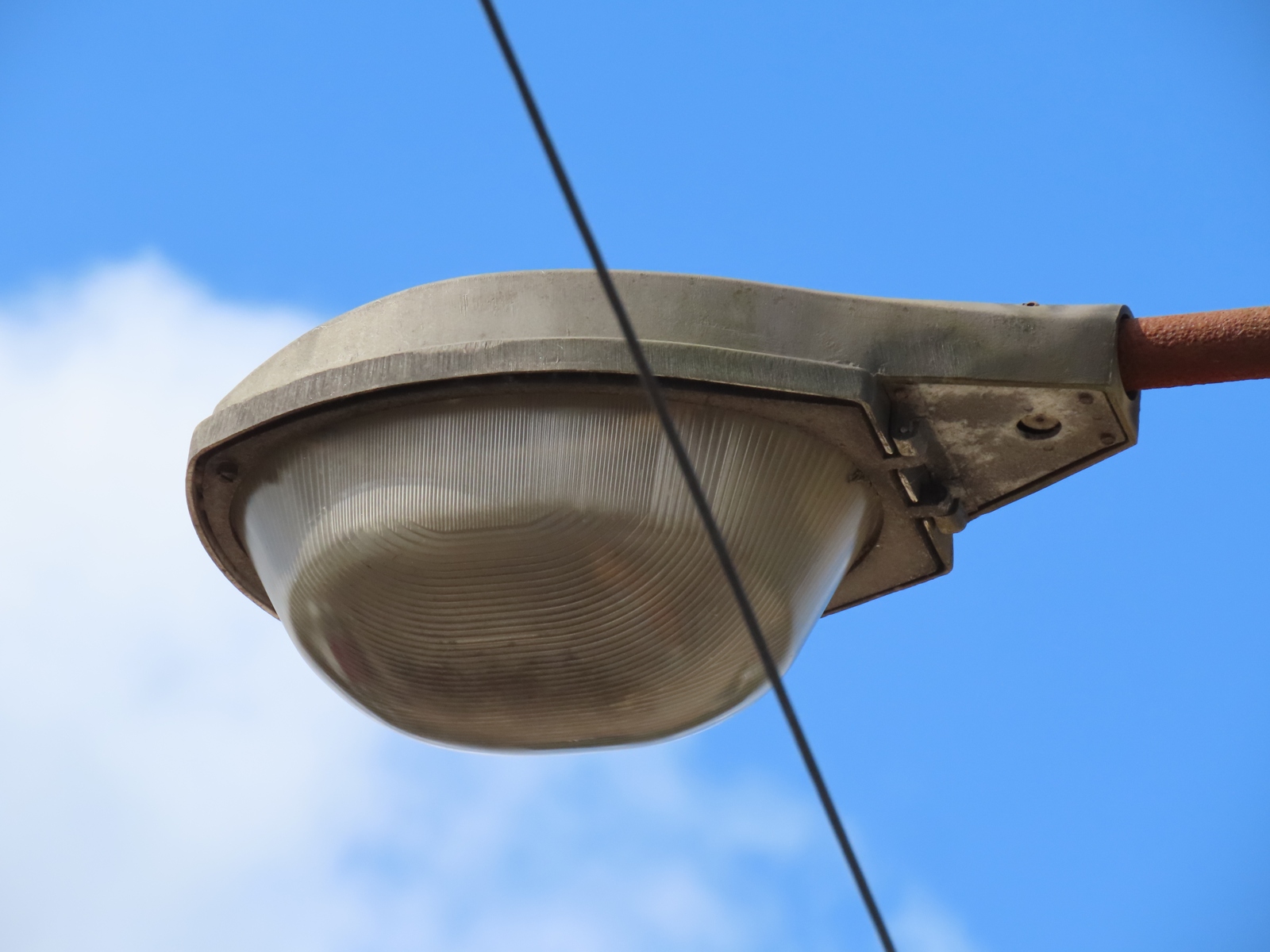
Moving to the main warehouse building, with its original steel-framed Crittal windows still present, another Alpha 7 is spotted.
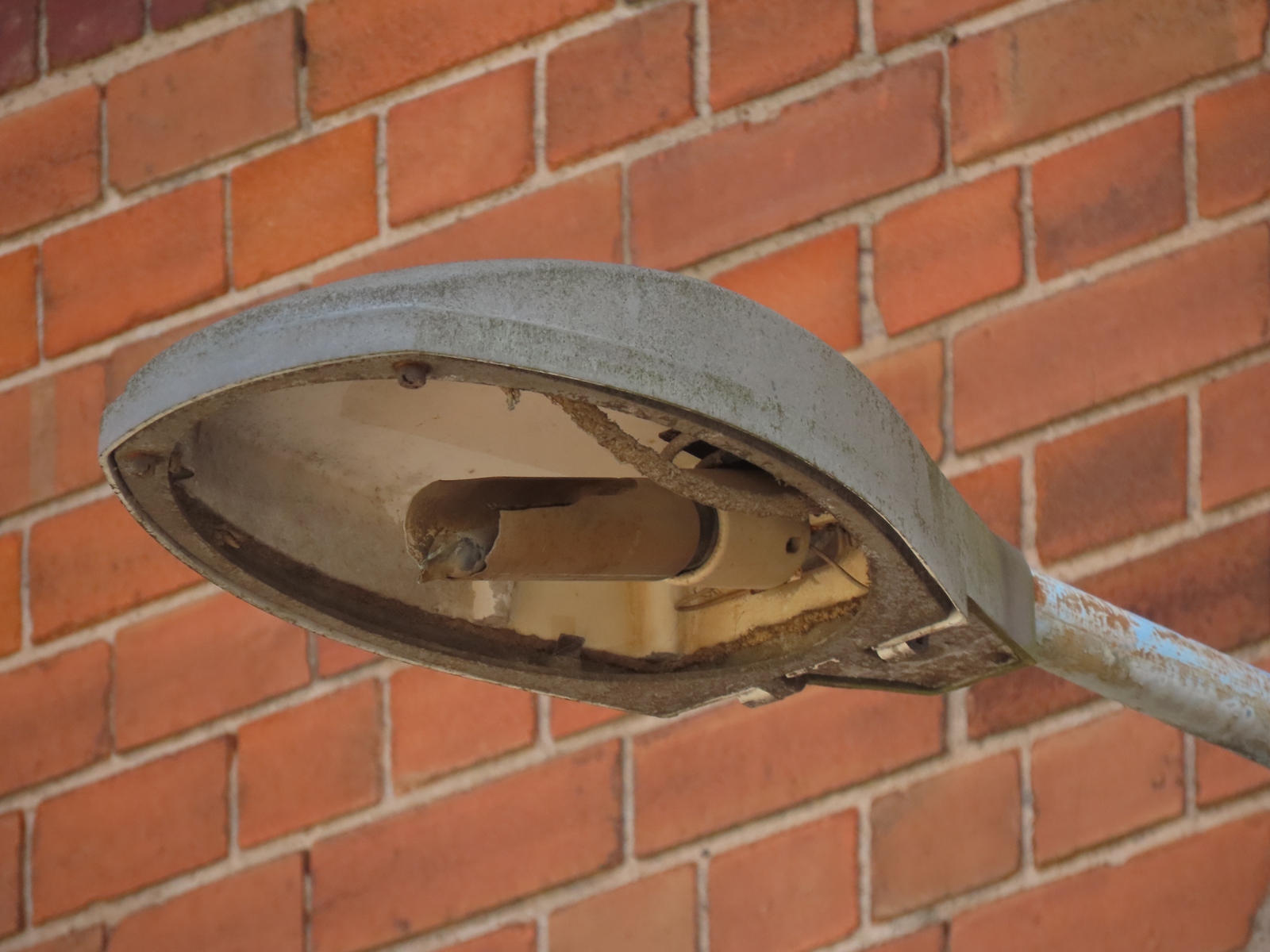
Sadly, the bowl is smashed here, as is the lamp. A small section of the asbestos gasket that would have provided a seal between the lantern body and the bowl support ring is visible.
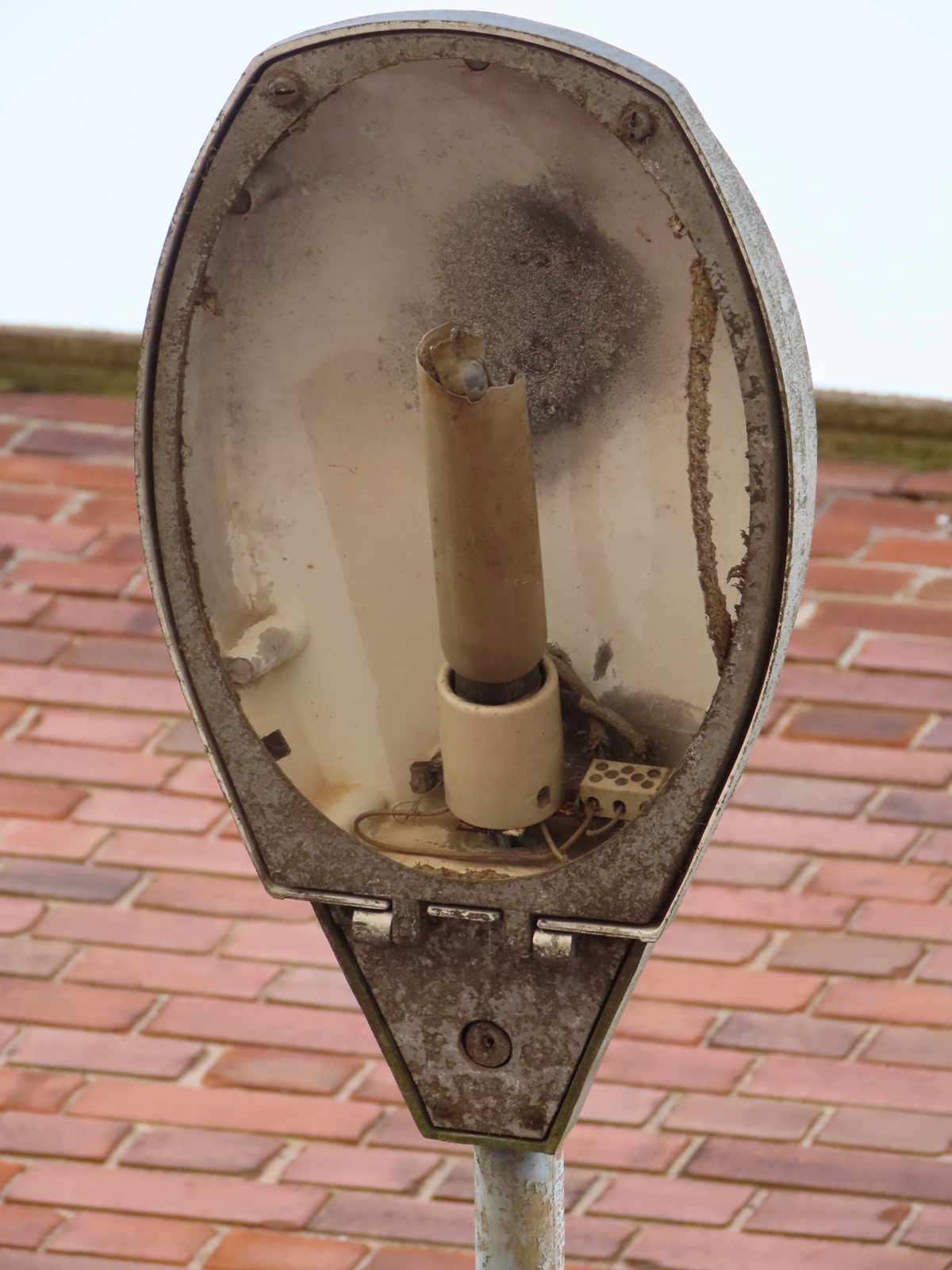
Judging by the style of the arc tube, the lamp appears to have been an MB/U type, rather than the fluorescent-coated MBF variant. The incoming wiring appears to be encased in sheathing that is also made of asbestos.
Three further examples were installed on the front of the building; this one is on the corner.
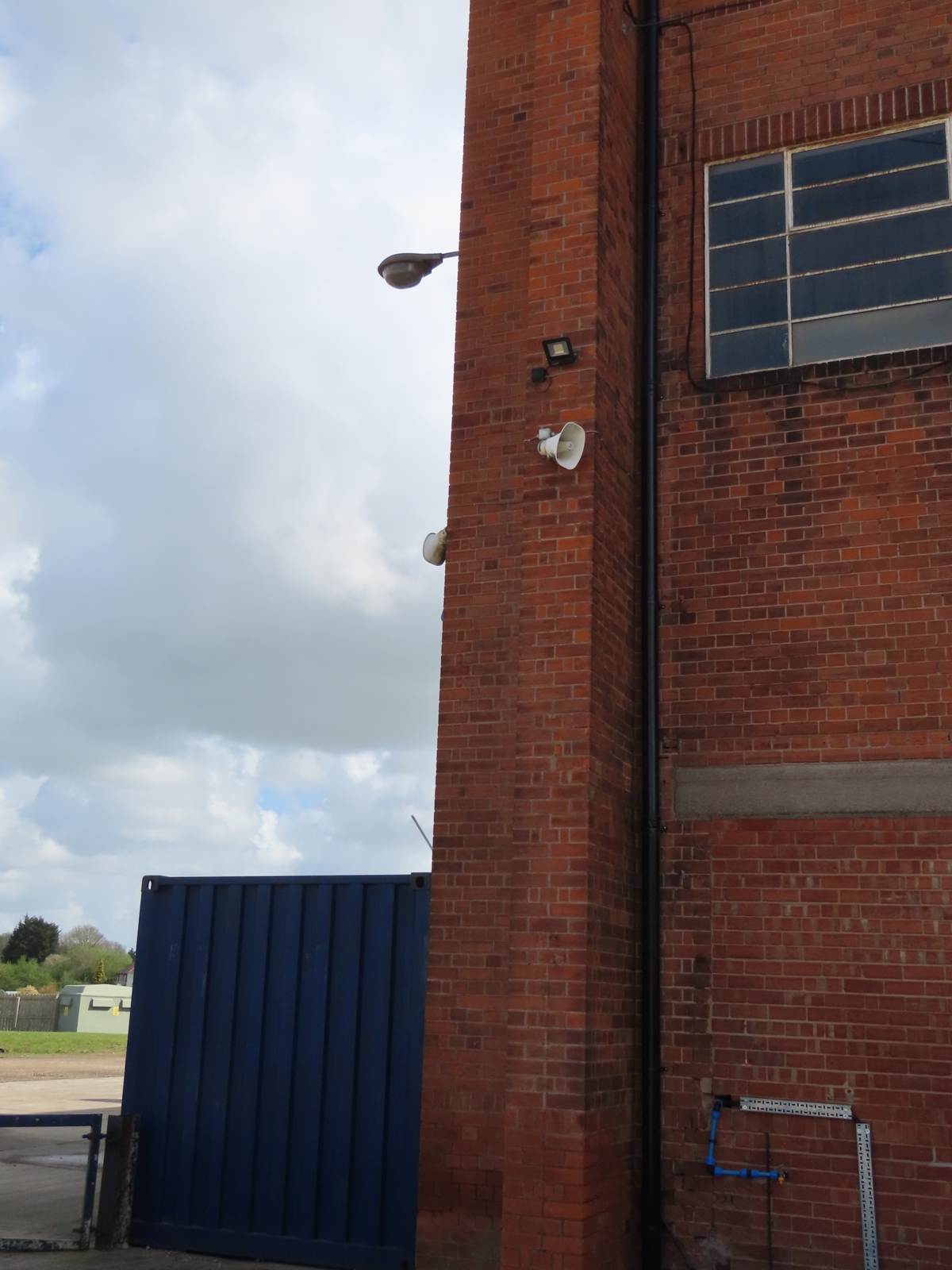
Thankfully, the bowl on this lantern is not only intact, but its gasket has kept the interior free of dirt and moisture ingress.
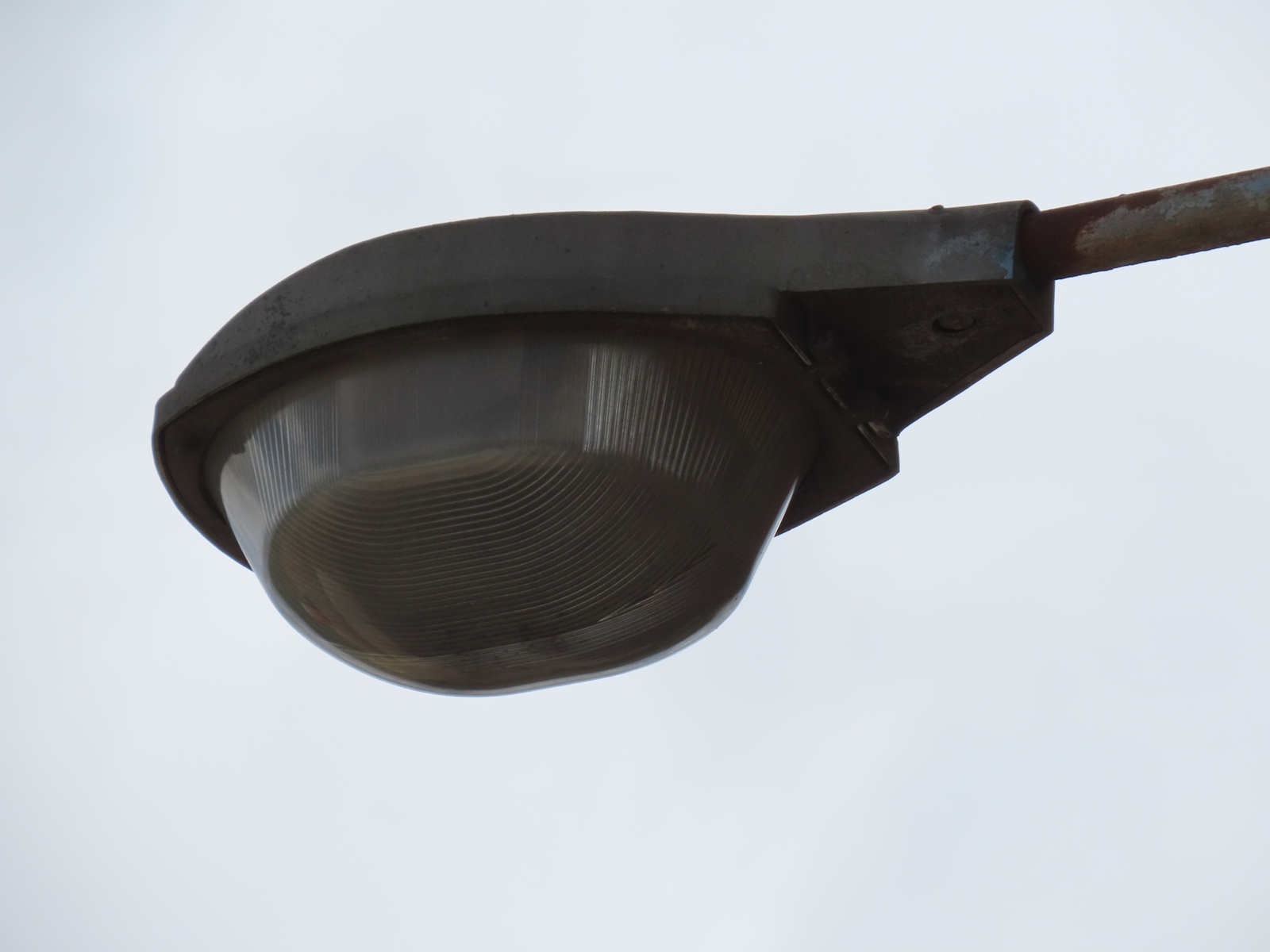
The final two examples are spaced equally with the one seen above.
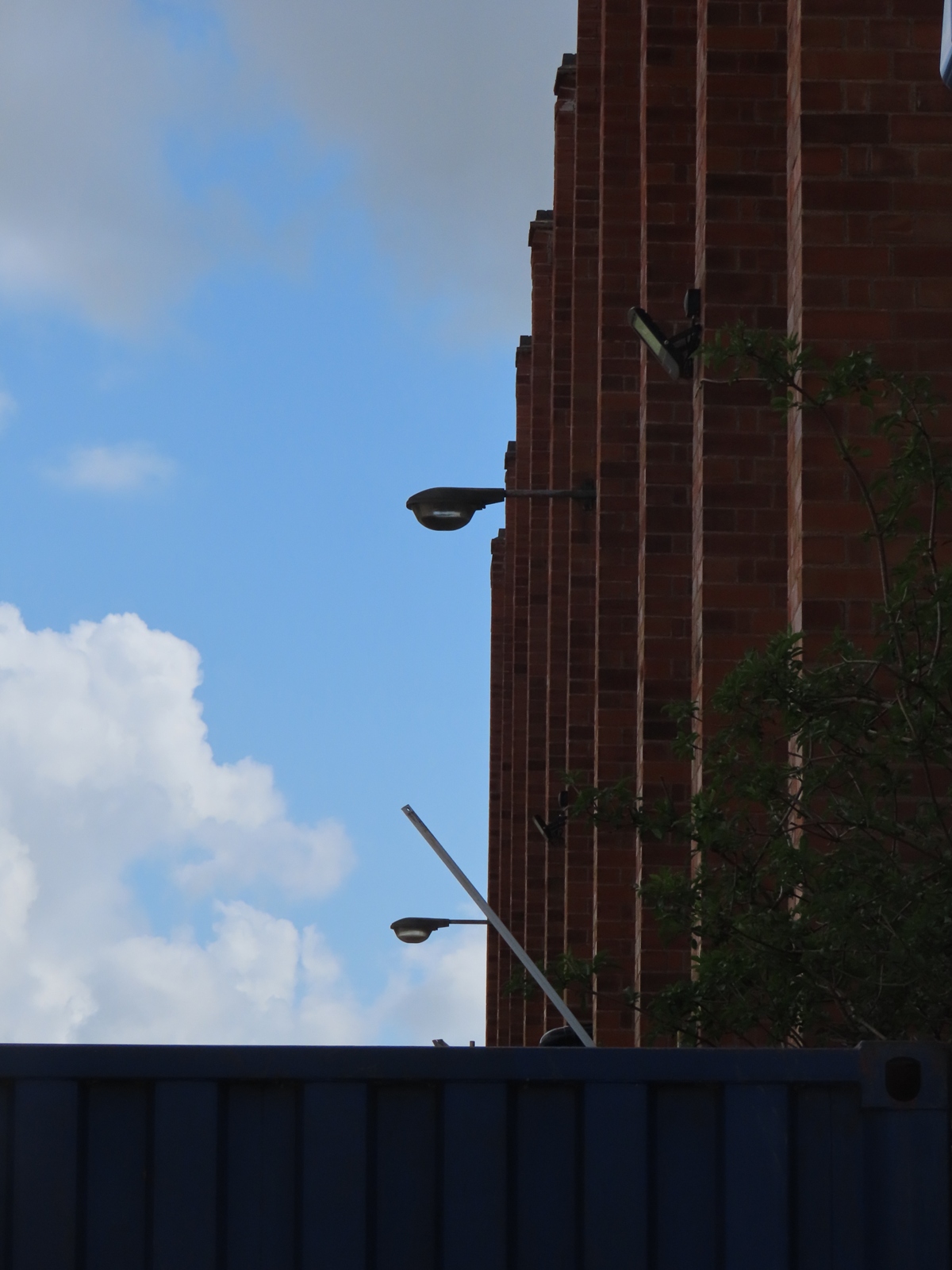
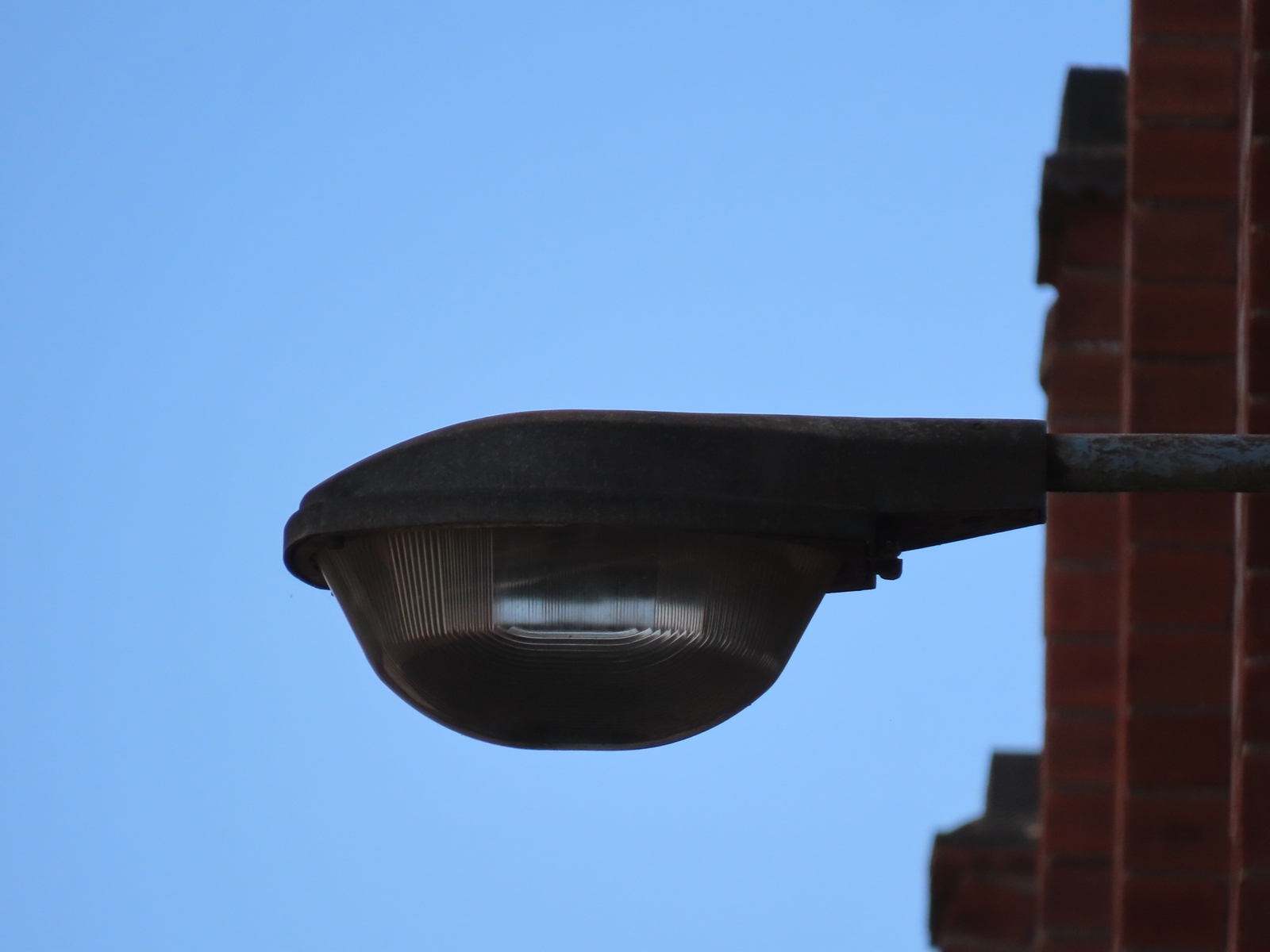
A lamp still survives in this example too.
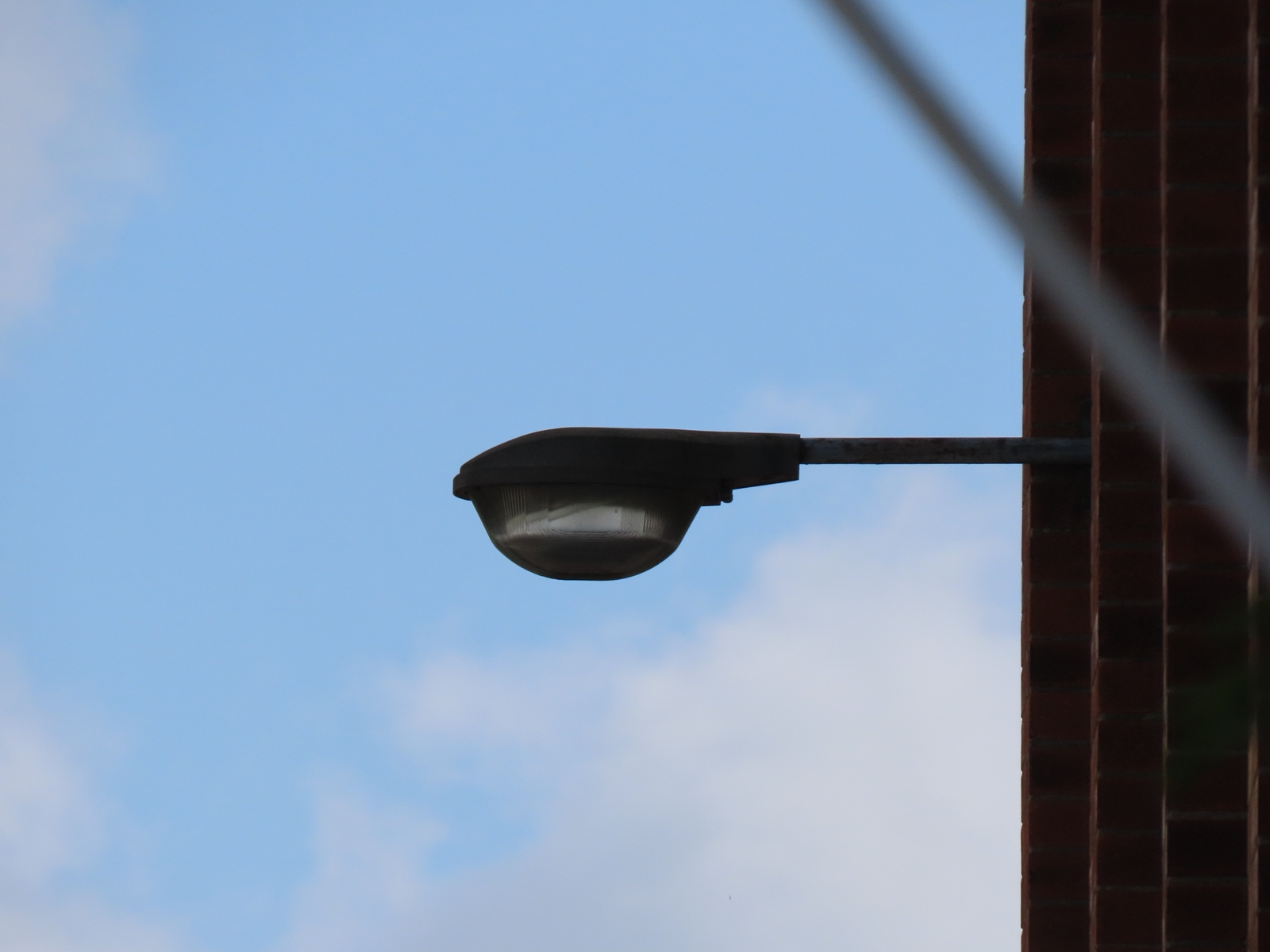
The furthest away example's positioning demonstrates how the lamp would appear through the refractors at this position on a roadway.
BACK TO SURVIVORS IN NOTTINGHAMSHIRE
CLICK HERE TO MAKE A MONETARY DONATION
© 2002 - English Street Lights Online