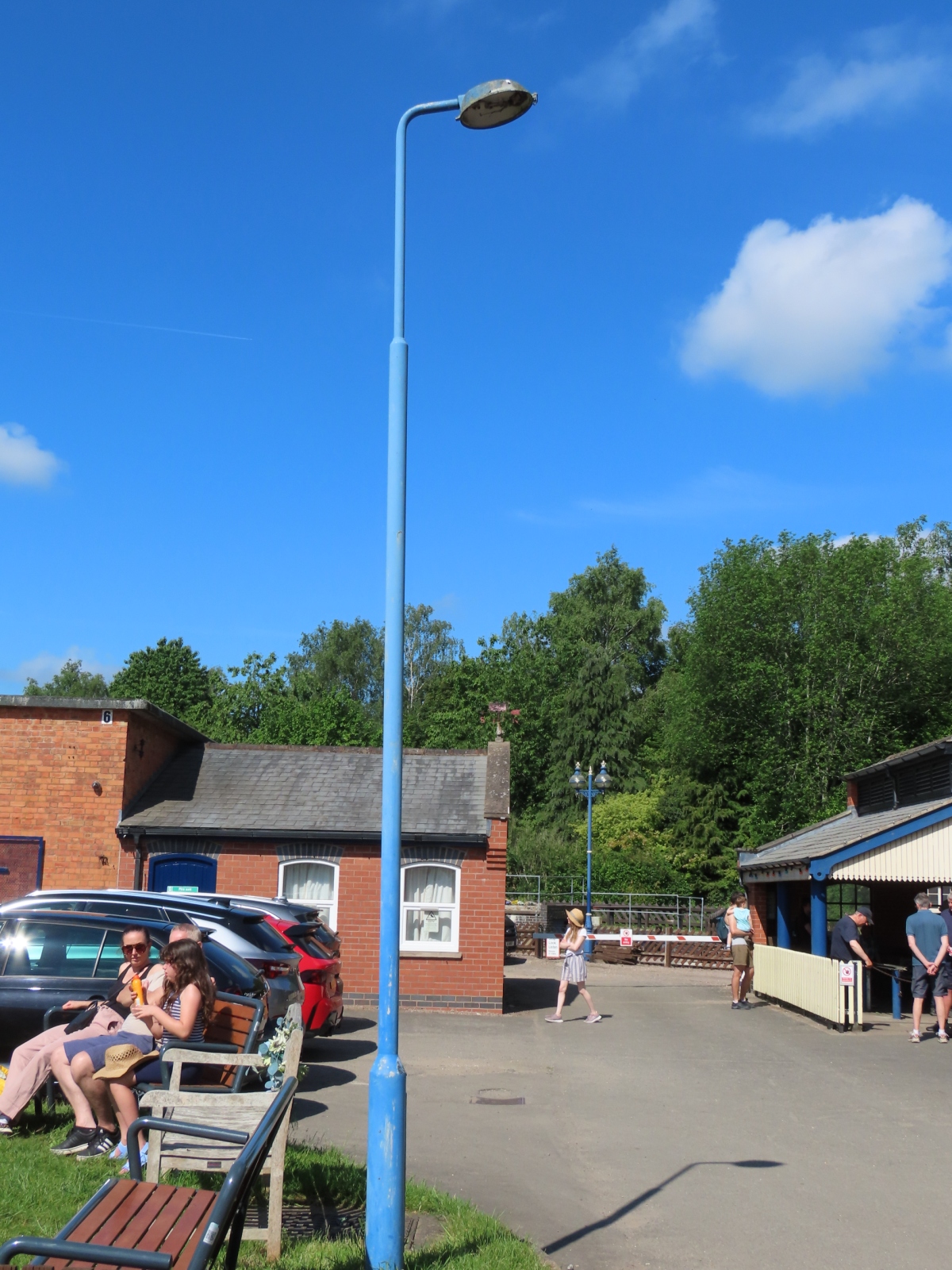
Great Central Railway (Nottingham), Mere Way, Ruddington Fields Business Park, Ruddington, Rushcliffe, Nottinghamshire Located within the GCR (Nottingham) / Nottingham Transport Heritage Centre's grounds is a 1970s' Fabrikat tubular steel column that supports a disused GEC Z8896 lantern. This installation may pre-date the current occupancy of the site, being a possible remnant from the Ministry of Defence's ownership, when the site was part of the expansive Ruddington Depot, which was constructed during the Second World War for use as a Royal Ordnance ammunition filling facility, but decommissioned in 1945, after the war ended, and was then used by the MoD as storage for, and auctioning off of, surplus vehicles and equipment. This continued until 1983, when operations transferred to the MoD Bicester site instead. Thus, the column may have outlived the MoD's use of the land, being inherited by the new owners. Given that the site was derelict for a few years after being vacated by the MoD, the lantern could have been vandalised during this period, and never returned to operational condition. The small grass verge, upon which the column is installed, remains the same size today as it was back then, as this old map indicates.
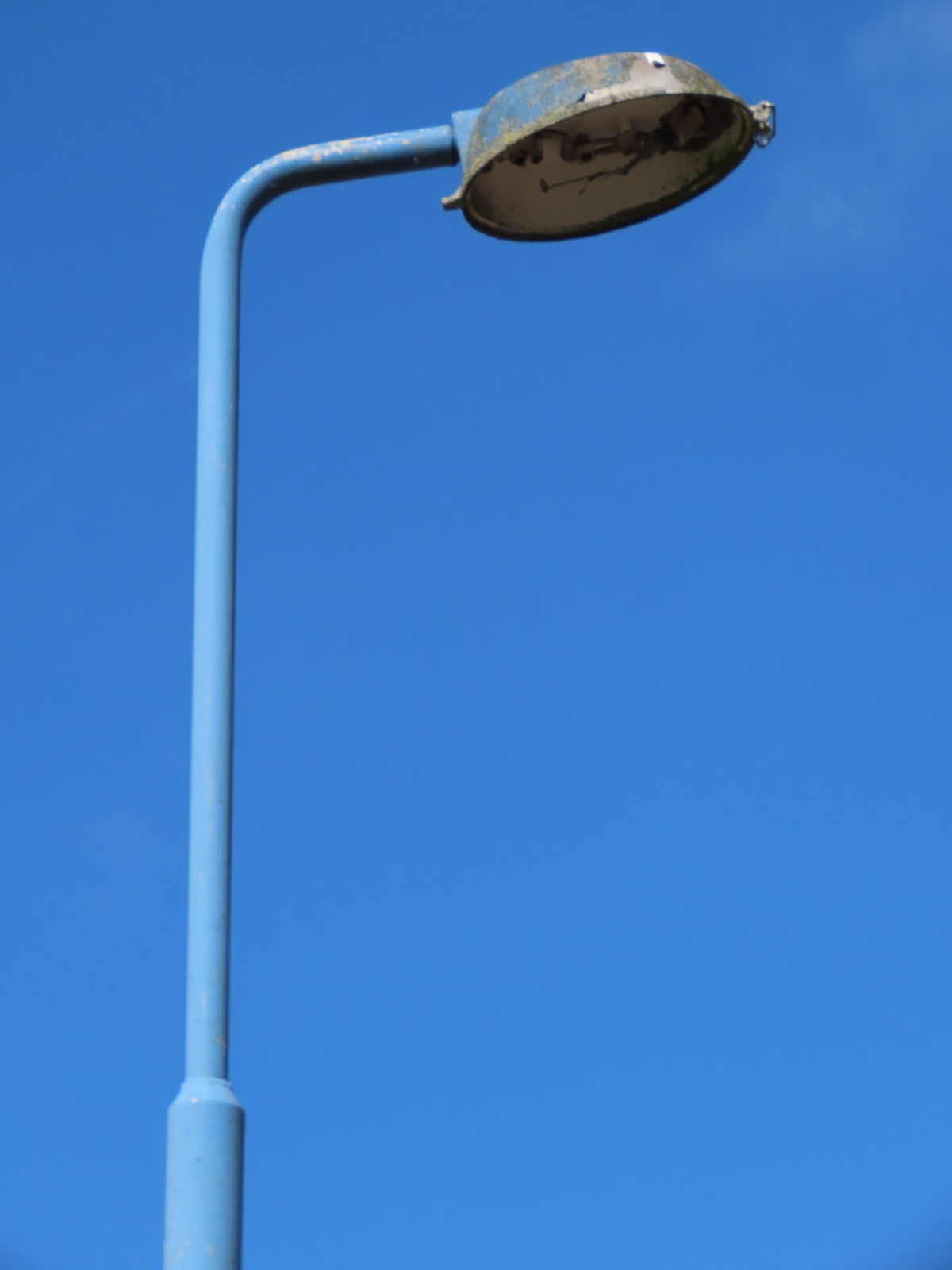
Despite being disused, the column is still painted by volunteers at the Museum, and blends in rather too well with the bright May sky in this picture.
The bracket on these columns is welded to the column itself, rather than being a separate, removable, piece.
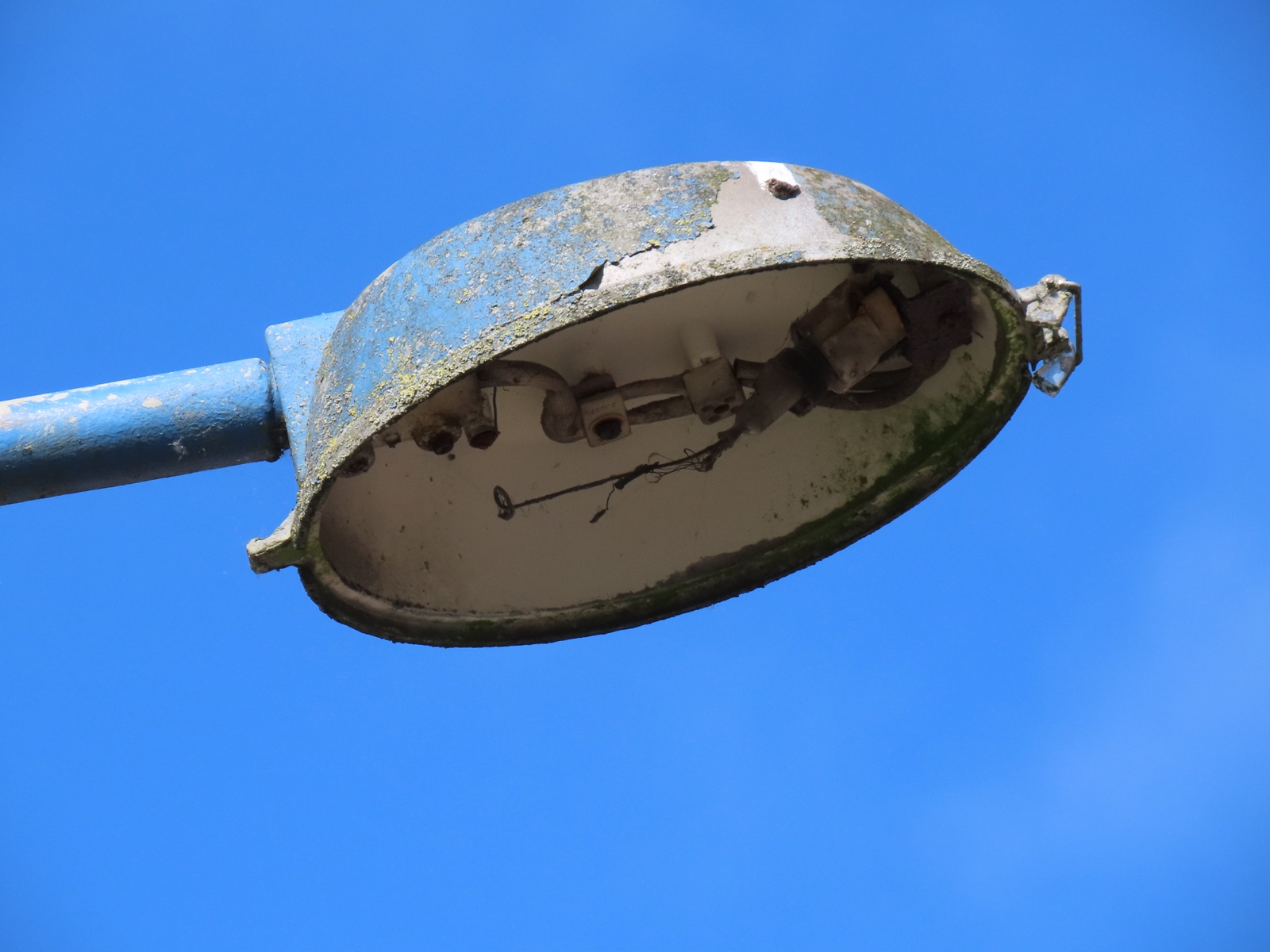
The close-up of the lantern reveals that the bowl is missing (though the very front section that formed part of the hinge mechanism remains in place), while the smashed remains of an MBF (mercury vapour) lamp (either 80 or 125 Watts) are still fitted in the three-pin bayonet holder.
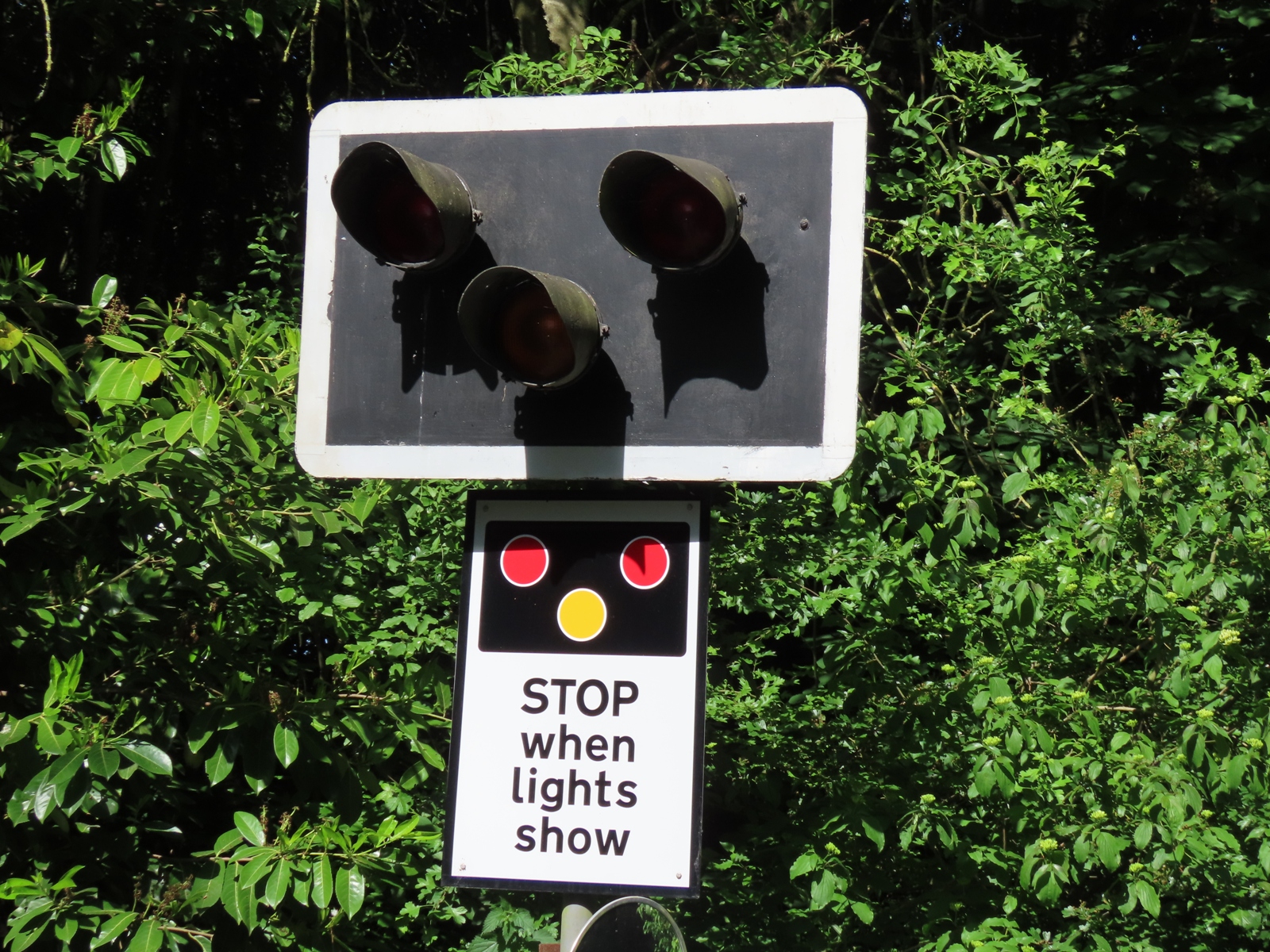
The site's miniature railway crosses the access path twice, with both level crossings protected by these wig-wag heads. These must be old crossing lights that were re-installed here, as no rail crossings are indicated on the archival map images at these points of the site.
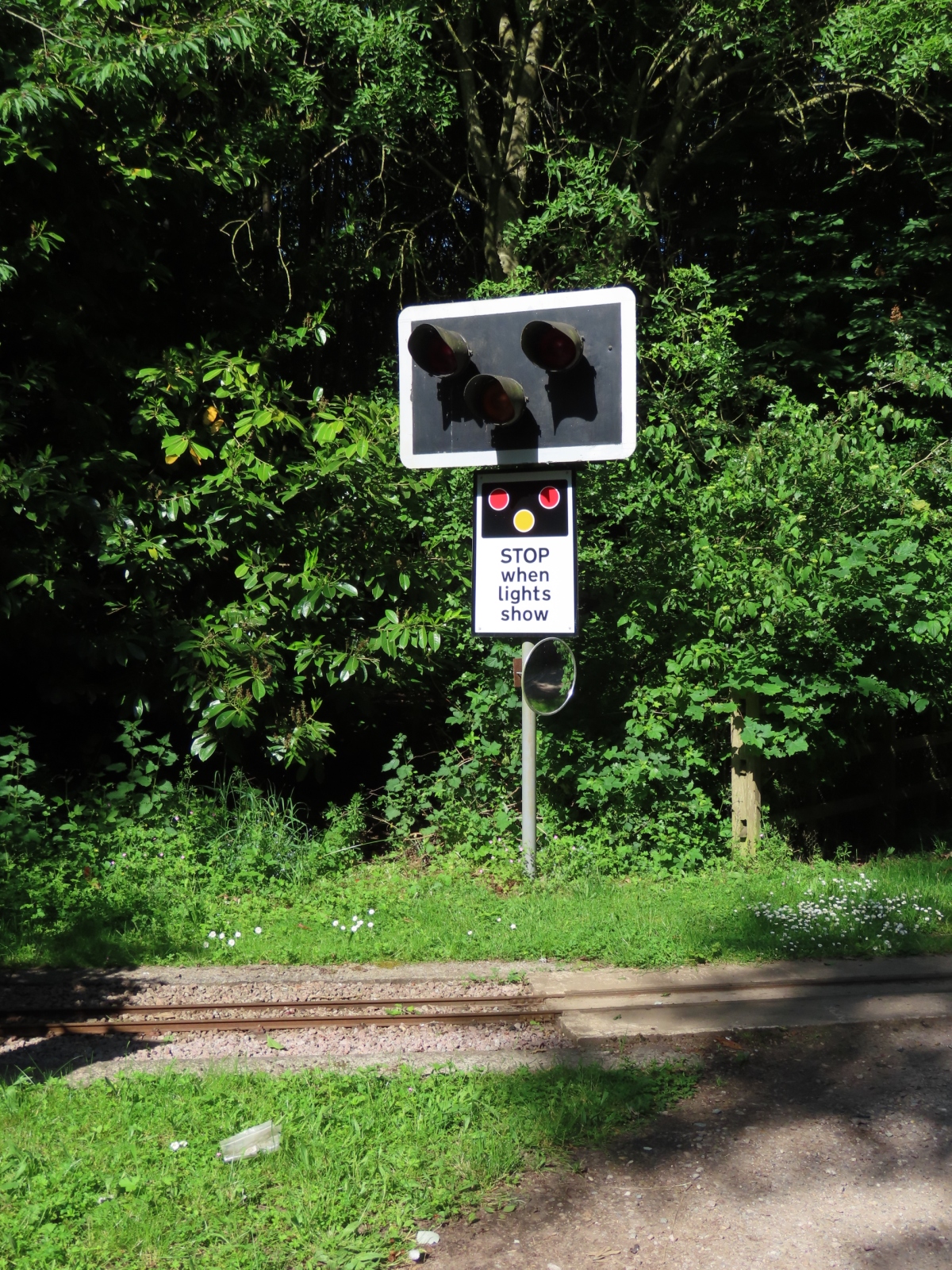
The lights still work too, and activate whenever a train is about to pass. For a miniature railway, some rather advanced signalling exists throughout the route, and so the crossing lights could be controlled automatically by track circuits. As the lights do not feature the classic halogen 'fade' when flashing, I assume that LED lamps are now employed.
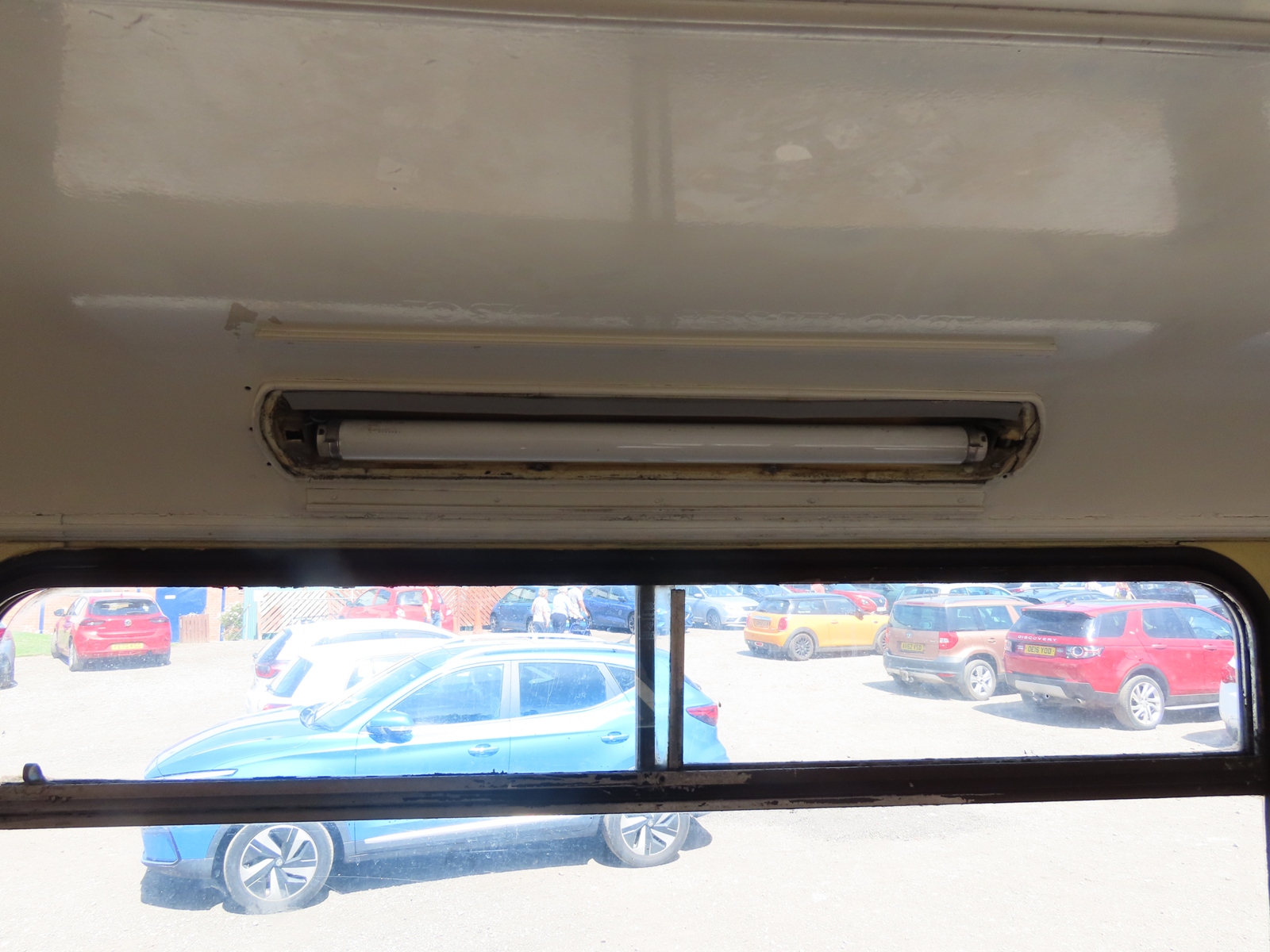
As steam locomotives 60103 'Flying Scotsman' and 60163 'Tornado' were visiting the Museum at the time of my visit (hence, the reason that I was also visiting!), one of the vintage open-top buses (Leyland Atlantean AN68/1R A15 ORC 545P) was parked alongside the platform area to provide a makeshift viewing platform for the two locomotives. While having a look around the lower deck, I noticed that one of the fluorescent fittings was missing its diffuser, so naturally, I had a close look at the lamp contained therein!
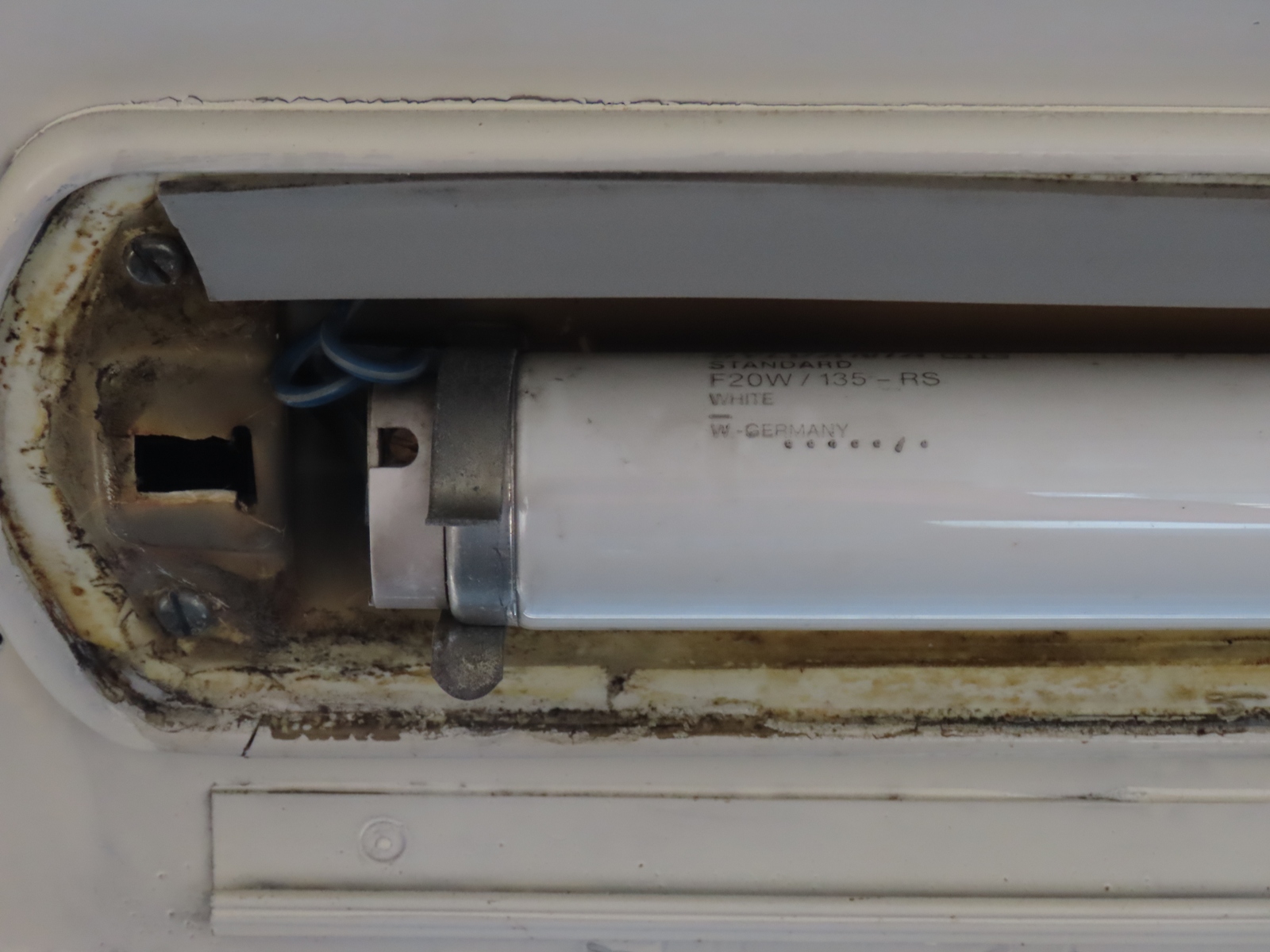
The West German-made Sylvania GTE 20 Watt lamp carries the date code ..... / . (with a dash over 'W. Germany', but with no dash alongside the production month) , which translates as (I think) August 1986. For additional images of the bus itself, click here.
For more information on the Museum, click here to view their website.
BACK TO SURVIVORS IN NOTTINGHAMSHIRE
CLICK HERE TO MAKE A MONETARY DONATION
© 2002 - English Street Lights Online